Showing posts with label Singles. Show all posts

Monday, 21 September 2015

10:48 Hey Jude (pt.2) Lyrics - How Do You Solve A Problem Like McCartney?


I'll be honest folks. When I started work on Hey Jude I was tempted to induct it into the Lyrical Hall Of Shame. The combination of dummy lyrics that never got replaced, words chosen for the way they sound, and 'it-means-whatever-you-want-it-to-mean-man' attitude adds up to a lame lyric riding the coattails of a world class melody. And that's before you realise that half the song consists of the word 'nah' sung 209 times.

But digging deeper I've realised the lyrics display such structural genius that I'm more than willing to give Paul a pass on this one. But let's look at the negatives first.


Star Wars For Dummies

As was often the case, McCartney had the music locked by the time the recording started but the lyrics were still in flux (like Rocky Racoon and I Will). If you listen to the Anthology 3 rehearsal Paul doesn't have them all (or he doesn't know them). He indulged in a Yodaism in the phrase “for well you know that it's a fool” and the song contains placeholders lines, as Paul admitted

I remember I played it to John and Yoko, and I was saying, 'These words ['The movement you need is on your shoulder,'] won't be on the finished version'... and John was saying, 'It's great!' I'm saying, 'It's crazy, it doesn't make any sense at all.' He's saying, 'Sure it does, it's great.'" *


Creepy Words Of Wisdom

Secondly, the song had an odd genesis, which goes some way to explaining the bizarre interpretations that have followed.
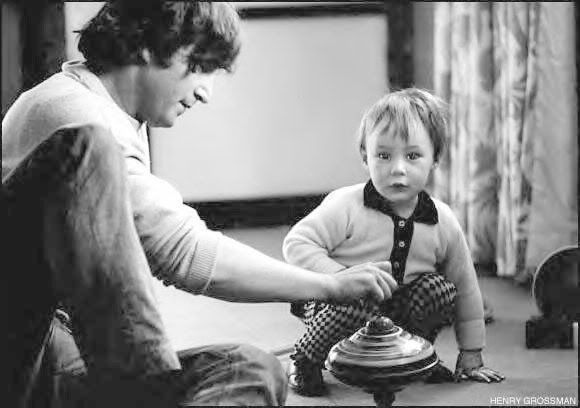
It was optimistic, a hopeful message for Julian: 'Come on, man, your parents got divorced. I know you're not happy, but you'll be OK.' I eventually changed 'Jools' to 'Jude'**

Changing Jools to Jude cos it 'sings' better is all well and good. But this is a song written to comfort a 5 year old boy about his parents divorce, yet it seems to consist of philosophical advice on getting a girlfriend - a flower-powered take on the 'love life advice' sub-genre that dates back to She Loves You.


There were clearly other biographical currents bubbling up into the song. Paul was in the no(wo)mansland between Jane Asher and Linda Eastman. John heard it as an endorsement for his relationship with Yoko, a thumbs up from Macca's subconscious. Both Beatles were caught between their commitment to making art with multiple (even unintended) meanings and their contempt for the public reading their own meanings into Beatles lyrics. John in particular felt embarrassed at doing exactly what he condemned in others

He said it was written about Julian … But I always heard it as a song to me. Now I'm sounding like one of those fans reading things into it... Think about it: Yoko had just come into the picture. He is saying. 'Hey, Jude'-- 'Hey, John.' Subconsciously, he was saying, 'Go ahead, leave me.' On a conscious level, he didn't want me to go ahead. The angel in him was saying, 'Bless you.' The devil in him didn't like it at all, because he didn't want to lose his partner***

The debate over open interpretation was thrown into sharp focus once Charles Manson got his hands on a copy of the White Album, read murderous things into the lyrics of Helter Skelter and Piggies, and put his crazy interpretations into action.

Advice on preschool love and loss? The Pre-Ballad Of John And Yoko? Or a Dear Jane letter, containing a deep and meaningless line about a parrot?**** No wonder Manson et al had a field day.

Lennon for what it's worth never changed his assessment, calling Hey Jude

“[Paul's] best song" and “a damn good set of lyrics” *****

So what do I know? Let's look at the good stuff.


A fine line between stupid and clever

For starters verse 4 is a mutated hybrid of verse 1 and 2. This makes it feel familiar but not totally predictable. As usual the song is full of parallel words and phrases (Ticket 24)

make it bad/better/you were made

let her into your heart/under your skin

let it out/in

don't make it bad/be afraid/let me down

remember to/the minute you let her into your heart

plays it cool/a little colder

carry the world upon your shoulders/movement you need is on your shoulder


Also McCartney manages to 'break' the rhyme scheme in the second bridge without making it feel wrong or awkward.

In the first bridge the rhyme scheme is

AAB - CCB (pain/refrain/shoulders – fool/cool/colder)

but the second bridge is

AAB – CCD (in/begin/perform with – you/do/shoulder).

Feels really jarring when you focus solely on the last words doesn't it? (Another case for not keeping a meaningless dummy lyric) but in the song it sounds fine. (Be honest. Have you ever noticed it before?). McCartney's masterstroke is that he breaks the rhyme using a word that rhymes with the first bridge, so it feels right even though it's totally 'wrong'.

We've encountered this technique before in The Long And Winding Road (and Ringo break a rhyme for a different reason in Octopus's Garden) so it's high time it got it's own ticket. Welcome Ticket 73.


But the crowning achievement is the way Paul uses internal rhymes to create a kind of odd-meter, seven line stanza that transforms the verse from this

Hey Jude, don't make it bad
Take a sad song and make it better
Remember, to let her under your skin
Then you'll begin to make it better

into this

A7 - Hey Jude, don't make it bad
A3 - Take a sad

B6 - song and make it better
B6 - Remember to let her

C4 - into your heart
C4 - Then you can start

B5 - to make it better

More amazingly he maintains this punishing rhyme scheme perfectly through the three remaining verses

Hey Jude, don't be afraid
You were made
to go out and get her
The minute you let her
under your skin
Then you begin
to make it better

Hey Jude, don't let me down
You have found
her, now go and get her
Remember to let her
into your heart
Then you can start
to make it better

And there's a few other internal rhymes scattered around. The first verse contains a bonus rhyme

Hey Jude, don't make
it bad, Take
a sad song...

Beautiful. And we're not done yet. There's a few more things to say about lyrics...

Footnotes

* Paul 1974  Beatles Songwriting And Recording Database
** Paul Anthology (p.297)
*** John in David Sheff: All We Are Saying
**** Paul called the line “a stupid expression; it sounds like a parrot" Anthology (p.297)
***** John 1972 interview and All We Are Saying Beatles Songwriting And Recording Database 


Links

Monday, 14 September 2015

10:47 Hey Jude (pt.1) – Mistakes And Myths In A Song Of Two Halves


Hey Jude was written by McCartney on the way to visit Lennon's newly-estranged family. He crooned his way though rehearsals at Abbey Road (as heard on Anthology 3) but recorded at Trident Studios in Soho, lured no doubt by the relative ease of doing orchestral overdubs on 8 track tape.

The recording itself was a comedy of errors - some cool, some not.

Ringo walked out to go to the toilet … but … I still thought he was in his drum booth. I started what was the actual take … and while I was doing it I suddenly felt Ringo tiptoeing past my back rather quickly, trying to get to his drums. And just as he got to his drums, 'boom boom boom', his timing was absolutely impeccable. So I think when those things happen, you have a little laugh and a light bulb goes off in your head and you think ... “this has got to be the take, what just happened was so magic!”

Paul McCartney in Many Years From Now (p.466)

At some point during the tracking someone shouted an expletive which remained undetected (or at least 'uncorrected') in the finished mix [at 2:58]. The usual suspects are

Paul McCartney hitting a wrong chord on the piano track and shouting “Wrong chord! F***in hell!”

John Lennon hitting a wrong chord on the acoustic guitar track and shouting “Wrong chord! F***in hell!”

John Lennon recording backing vocals finding the volume levels in his headphones way too loud shouting “Oh! F***in hell!”

According to John (via Geoff Emerick/John Smith) it was Paul* (in which case it was allowed to stand with their full knowledge like many other Beatles 'mistakes'). Personally I'd accuse Lennon in the studio with the guitar, though I can't hear anyone play a wrong chord and the mystery voice seems to have a yorkshire rather than scouse accent.

Problems with the equipment at Trident meant that once the tapes got back to Abbey Road for mixing they had to be heavily re-EQ'd by Geoff Emerick (the cymbals still sound particularly horrible at 0:52).

There's an urban myth that Paul used the same piano as Freddie Mercury used on Bohemian Rhapsody – he didn't**. And Walter Everett*** say the bass guitar was muted in the coda to make room for the 'bottom heavy orchestra', but Paul's bass track is clearly audible until 6:54, where it stops for 6 seconds and then comes back in.


Let's talk about that coda.

The song is a standard AABA structure (Ticket 26) with a huge C section on the end that doubles the running time. While it may sound like a remnant glued on from another song it was always part of Hey Jude and shares a number of musical elements with the A and B sections.

Imagine the song without the coda (and the 'better, better...' link). Perhaps the final verse winds down with Paul delivering the final line solo. What's left is a sweet little ballad. A great example, but one of many piano ballads by Paul McCartney, one of many gifted piano balladeers. But with the C section the song is lifted into a different league. The coda is literally a 'release', a huge, joyful, inarticulate yet cathartic, 'musical group hug'.

Repeated chord cycles of any length are rare throughout the entire Beatles catalogue****. and very long ones even rarer***** (as are fade outs) yet this slow moving four bar melody cycles round NINETEEN TIMES(!) which does become tiresome when the only real variations are George Martin's uncharacteristically bland orchestration and Paul's impression of Little Richard with Tourette's.

So why is it so long?

McCartney says they were having so much fun jamming they decided to keep going******. Others think that Paul had a point to prove, wanting to outdo other artists. Richard Harris had recently scored a hit with MacArthur Park which ran for 7:21. Composer Jimmy Webb (who visited Abbey Road around this time) said George Martin once told me the Beatles let Hey Jude run to over seven minutes because of MacArthur Park”. Webb's story is believable (the band were in the process of recording a really long album) but, if length was Paul's goal he would never have settled for Hey Jude falling 14 seconds short of the record. Whatever the motive was for the coda's length it probably wasn't an artistic consideration. How long it should be is up for grabs but the coda is 'too' long.

In future posts we'll look at one way to write meandering McCartney melodies and why the lyrics look terrible but are actually brilliant.

Footnotes

*Here There And Everywhere p. 262-3
**Queen did use this studio (and piano) but not for Bohemian Rhapsody. See the long thread here if you have time to kill
***The Beatles As Musicians Vol 2
**** See The Band Who Kept Expanding
***** I Want You (She's So Heavy) is a similar length and similarly structured
******But I can't for the life of me find the source. I am a bad researcher. BAD RESEARCHER!


Links

Monday, 2 April 2012

11:15 Get Back (pt. 2)


Get Back is a songwriting master class in building something interesting out of a few very simple elements. But that doesn't mean it doesn't have any weak points. Get Back suffers mildly from the same lyrical mix of deliberate vagueness and slap-it-together-itis that ruins She Came In Through The Bathroom Window. It's not hall of shame material, it's fun, in a meaningless way (I don't subscribe to the 'it's about Linda's ex-husband' conspiracy theories), but

  • Why couldn't JoJo's loner lifestyle continue? What happened?
  • Why was California a bad idea?
  • Why does Loretta suffer such extreme gender confusion?
  • Why don't the other girls like her/him?
  • Did Jo Jo and Loretta meet? What happened next?

It's quite possible the answer to all these questions is “who cares!” but that's not the response any of us should be looking to get from our lyrics. The fact that Paul gets away (quite spectacularly) with such shoddiness shouldn't encourage us to emulate him here.

That said there's bags of 'ticket to write' ideas that are worth emulating

  • Ticket 3 – Make everything a hook, like Lennon's chorus guitar riff, a rare example of a good Lennon lead, that almost makes up for his abysmal slide on For You Blue.
  • Ticket 4 – Build the intro from another section of the song which in Get Back is a minimalist take on the chorus.
  • Ticket 5 – Contrast between the melodies. Here the verse is busy and starting on the 1st beat and the chorus is sparse and starts on the '4'.
  • Ticket 7 – Avoid using the I, IV and V chord early on. McCartney doesn't just avoid overusing them, he never uses the V (E major) at all. This is a result of writing in the mixolydian mode for sure, but the 'replacement' major chord (G) barely gets a look in too. All of which keep the song fresh.
  • Ticket 9 – Reuse melody fragments. The F# G of “Get back” may be a measly two notes but they appear on the same beat over the same chord in “Loretta MarTIN THOUGHT” part of the verse.
  • Ticket 13 - Make the vocals stay on non-chord tone like the ever present b7 (G).
  • Ticket 18 – Finish on a single ringing chord.
  • Ticket 22 - Use the bluesy b3 in the vocal line you once belo - o – ng (C – B – A).
  • Ticket 23 – Use fewer words (like a seven word chorus).
  • Ticket 24 – Use parallel lyrical (thought he was a loner/thought she was a woman).
  • Ticket 25 – Transplant stock musical progressions into other genres – like the A5 A6 blues shuffle in a non 12 bar non blues. (David Bowie's Suffragette City is another good one).
  • Ticket 27 – Have your musical high point (F# and G) match your key lyrics (Get Back)
  • Ticket 50 – Keep things unsettled by staying off the root note in your melody.


Tune in next time. Please, don't let me down...


Monday, 26 March 2012

11:14 Get Back (pt. 1)


Get Back is an ultra simple bluesy rocker than manages to transcend the basic raw materials. Saved from being a cheery racist rant by McCartney's characteristic vagueness (the original, allegedly satirical, lyrics about "too many Pakistanis living in a council flat" needing to “get back where they once belonged” were wisely scrapped) it ended up as a cool relentless song about nothing at all.

The simplicity is stunning. There are three chords and essentially one progression, with a few slight variations. The main progression (heard in the verse) is

A, A, D, A


The chorus adds in a G and a D on the last two beats

A, A, D, A (G D)


The final chorus and the chorus before the piano solo alters the progression to

A, A, A, D


The very loose jamming feel creates the illusion of more variations, as different band members miss the G D part at different times and McCartney consistently ignores it on bass.

Lyrically we have only two short verses and a chorus with seven words that repeats the title six times! How do McCartney manage to stop such a simple tune getting monotonous?

First, the melody is in the Mixolydian mode. Though this song is light years from the Beatles 'Indian songs' it does share this scale in common with many of those 'three/two/no chord wonders'. The Inner Light, Tomorrow Never Knows, She Said She Said, Within You Without You, Paperback Writer, Rain all share this scale as do parts of Ticket To Ride and Getting Better. So the unfamiliarity of the scale helps to balance the blandness of the chords.

Second, the vocal melody almost completely ignores the root note. The verse starts on a high E, climbing to a G, before walking down to a low E. The chorus starts on F# again moving up to G before descending to the A root note. So the only root notes in the whole melody are

But, he knew it COULDn't last...
For some CaliFORNia grass...
Get back to where you once belonGED

and the chorus is the only place you come to rest on the root note (and even then, the 2nd and 4th choruses retain an unsettled feeling by ending on a D major chord (the IV).


But that's not all. The 3rd (C#) doesn't appear in the melody AT ALL! It's only due to the occasional A or A7 chord (both of which contain C#) that we hear it as the major sounding mixolydian tonality at all. With the emphasis on E and G, and the passing C natural near the end of the chorus, the melody sounds more like E minor.

In fact the strongest note, apart from the E, is G natural - the b7th in the key of A, and the essential note in the mixolydian mode. (E's are bold and underlined, G's are bold and CAPS)

Jo Jo was a man who THOUGHT HE WAS A loner,
But, he knew it couldn't last.
Jo Jo left his home in TUCSON, ARIZONA,
For some California grass.
Get BACK! Get BACK! Get BACK to where you once belonged.

Melodically speaking this is so 'out there' that it might be better to say that, rather than the melody compensating for boring chords, we need the simple A5, A6 blues boogie part to ground such an unconventional melody.

Ticket 6 is 'stay off the root CHORD'. But now we have a new one - Ticket 50 - 'stay off the root NOTE'. This can produce a restless, 'driving ever onwards' feel.

Try it out.

Next time, we try to decipher the lyrics and find lots more tickets


Friday, 23 March 2012

The Best Of Let It Be pt.7 (Get Back)


Get Back

PM - Single version. 27 January 1969*, plus a coda edit (starting at 2:34) from a later take (recorded 28th Jan). Produced by Glyn Johns with little or no involvement from George Martin. Mixed by Johns (though possibly remixed by McCartney and Johns), there was also a rejected mix by Jeff Jarratt. The vocals and lead guitar are distant and reverb laden and the rest of the band sound small and squashed.

LIB - 27 January 1969 plus extra studio chatter (from 27th) and the final dialogue from the rooftop concert (30th) but without the single's coda. Produced by Spector. Cleverly using dialogue to create the illusion that this is the live on the roof version, Spector opts for a dryer mix than some of his other LIB tracks.

LIBN - 27 January 1969 without the single coda and album's framing dialogue. Produced by Paul Hicks. Harrison's rhythm track and Ringo's toms are very slightly clearer.

A3 – 30 January 1969 Rooftop Concert on the Apple Building. The genuine final take (there were 3 versions recorded) which was interrupted by the police. The structure resembles the single with the coda ending. The band play faster and more aggressively (for obvious reasons) Lennon doing some terrible guitar fills in the first verse before the guitars and vocals cut out all together as the amps are switched off, then back on. Ringo, for one of the few times in his career, goes completely out of time on the final two choruses before righting himself just before the end. Paul ad-libs over the final chorus


“you been out too long Loretta, you've been playing on the roofs again, and that's no good, 'cos you know your mammy doesn't like, oh she gets angry, she's gonna have you arrested! Get back!”.

The song ends with Paul's “thanks Mo!” but cuts John's announcement.

The live take is fun, and could have been a contender but for the total breakdowns. If Spector had had protools I'm sure this would have made the final cut. The single mix is awful, Spector at his most muddy and reverb drenched – except it isn't Spector, it's Andy Johns. Spector's actual album mix is Martin-like, clear, dry and punchy, with everything cleanly separated. No wonder the Naked team (ew!) struggled to improve on it. Having the bookend edits gives Spector's mix the advantage.

Verdict

LIB

*The main take could have been recorded on 28th Jan. If you have any interest at all in that read this.


Wednesday, 21 March 2012

Get Back To The Drawing Board


Boring And Unimportant

Disclaimer: This may interest you if your an uberFABnerd otherwise feel free to give this post a miss. Even I find it boring!

It takes a brave man or a fool to say Mark Lewisohn has got his facts wrong, especially when he's backed up by producer Paul Hicks, but I am that man. And though I hate myself for descending to this level of geekiness I have to include this footnote. While The Beatles Chronicle, The Complete Beatles Recording Sessions and Mix Online's interview with the Let It Be … Naked production team all state that the album and the single versions of Get Back use different takes...

THEY DON'T.

How do I know? I used my ears. While there are numerous edits and mixes involved the body of the track is exactly the same. And while the Beatles even at this late stage could be very consistent there are too many little details that no one could reproduce.

Here are three examples from McCartney vocal track and the places they occur.

Laugh 1:03 LIBN - 1:03 PM - 1:23 LIB
Weird vocal noise 1:09 - LIBN 1:09 PM - 1:29 LIB
Two woops 1:59 PM - 2:19 LIB - 1:59 LIBN

I don't know for certain whether the session is 27th or 28th of Jan, but I'll go for the former as The Beatles Bible says so, and it's the only source I've read that agrees with me.

Just be glad I haven't got into the “who is really blowing his nose on Dig A Pony?” controversy...

Tuesday, 17 January 2012

Get Back To Making Mashups

Hot on the heels of the new that McCartney is calling his new album "Kisses On The Bottom" here's an interesting mashup for you.


And if you want to hear The Beastie Boys go head to head with Black Sabbath here's one I prepared earlier...

Monday, 9 January 2012

11:9 Let It Be


Let It Be is a great song, even though it is remarkably straight forward musically. Usually there's a clever concept lurking under the simplest Beatles track (see The Long And Winding Road) but if there's one here I can't find it!

Stylistically Let It Be is a gospel hymn, from the chord changes and the standard piano/electric organ paring,to the elastic timing in the lead vocals and the the celestial BVs. Inspired by a dream of Paul's deceased mum Mary ("Mother Mary" geddit?). It holds out a vague non-denominational hope's which means anyone can claim it as their own - essentially "there is a reason for the suffering you're going through, you will understand one day, so don't worry now"

The reason why the song works so well is that it's a song of comfort that communicates a FEELING of comfort. There's more than the usual amount of repetition of musical themes and lyrics, which is comforting in itself, as is the predictable cadence from the IV (F major) down to the I (C Major) which ends EVERY SINGLE LINE in the verse and chorus and is the basic theme that's extended in the link section (see below).

Here's a couple of cool tricks to try and work into your own writing

First, the way McCartney develops the main lyrical theme. The 3rd and 6th lines in the verse repeat the same two phrases then the chorus reverses them

eg

Verse -
I would like to eat some - Sausage rolls
Chorus -
Sausage rolls, Sausage rolls, Sausage rolls, Sausage rolls
I would like to eat some - Sausage rolls


The next verse is slightly different, giving us a slightly different chorus but we can predict what it will be which gives us a comforting sense of predictability without the drudge of complete repetition

Verse -
Would you please go buy some - Sausage rolls
Chorus -
Sausage rolls, Sausage rolls, Sausage rolls, Sausage rolls
Would you please go buy some - Sausage rolls

This makes the chorus almost like folk style refrain.

Secondly, the way Paul creates a link (twice before the solo and once at the end) out of the little descending chord pattern that ends the verse. This is a masterclass in Ticket 4. Check out the way he

  • develops the theme doubling it's length
  • takes it out of key briefly simply by continuing the line downwards in the same way (F E D C repeated down a fourth Bb A G F )
  • takes something that was in the background in the verse and puts it front and centre in the link
  • adds lead guitar and organ to change the timbre


So, thumbs up, moving on...


Tuesday, 6 December 2011

The Many Guitar Solos Of Let It Be

Still confused about the four different guitar solos in Let It Be? So was I. So in the name of musical science I edited them all together. Then I thought I'd do a little video and share it with you. But hurry. I'm sure people who have no respect for fair use in musical education will want to spoil the party.. Which solo is YOUR favourite...


Monday, 5 December 2011

The Best Of Let It Be (pt.4) - Let It Be


Just like I Me Mine, Let It Be contains extensive overdubbing done by George Martin rather than Phil Spector.

Past Masters

This is the single version recorded and mixed by George Martin. The master take (take 27-A) was recorded on 31 January 1969 at Apple Studios. McCartney played grand piano, Billy Preston played organ (switching between organ and electric piano sound – compare 1:45 with 1:52), Lennon on six-string electric bass, and Harrison on electric guitar. On 30 April, Harrison overdubbed a new guitar solo using a leslie effect. On 4 January 1970 He overdubbed another more distorted solo and Martin added brass and nearly inaudible cellos (last verse, panned right). Ringo and Paul added extra drums and maracas to verse 3 and Harrison, Paul AND Linda McCartney added BVs. This version uses the first solo (panned right) though the second faintly audible (centre). There is almost no trace of the original guitar track. Just after Paul sings Though they may be parted (1:06) you can hear someone (George Martin?) saying “stop it!” in the right speaker.

This was the version used on the 1967–1970 'Blue' album, 20 Greatest Hits and the 1 album.

Let It Be

Phil Spector's remix. He used the second more distorted and aggressive solo (with the first overdubbed solo still faintly audible – both are panned centre), cut the BVs except for the first verse, added delay to the hi-hat in the second verse and brought the bass and brass up in the mix. Just as in I Me Mine Spector 'copied and pasted' to increase length, this time extending the final chorus from twice to three times.

Let It Be Naked

Spector's reverb and extra chorus, and Martin's overdubs are all removed (except the backing vocals?). This is the same basic track as LIB/PM but with numerous edits flown in from other takes, most obviously notably the guitar solo, and there is even evidence of auto tune (listen to the first WORDS of wisdom – 0:21). The solo (from take 27-B) appears to have been lifted with the entire section not just the lead guitar track (compare the piano and drums). The guitar tone is similar to the PM version but the track is much cleaner as there is no 'shadowing' from other takes. Because much of the 'original' guitar tracks are removed there is no real 'build' in the last verse or penultimate chorus.

The whole track is much clearer sonically and seems tighter rhythmically (listen to the cool way Ringo swings the rhythm in the second chorus).

Anthology 3

A completely different version. Take 1 of the song (recorded 25 Jan) is bookended by studio chatter from Jan 31st (take 23) -

John: Are we supposed to giggle in the solo?
Paul: Yeah.
John: OK.
Paul: This'll...this is gonna knock you out, boy.

followed by more chatter from take 25 -

John: I think that was rather grand. I'd take one home with me. OK let's track it. (Gasps) You bounder, you cheat! (a reference to abandoning the no-overdubs/double tracking position that Lennon himself had advocated for Let It Be).

This is simpler and rougher version. No organ at all, and a repeat of verse one replaces the (as yet unwritten) final verse. Harrison is strumming chords on the last verse with a fairly clean leslie'd guitar tone and the drums drop out completely in the last verse. Lennon/Harrison contribute BVs.

The opening is hesitant, the tempo wobbles and there are mic pops throughout. Lennon phones it in on an out of tune bass, playing his trademark bored staccato bass parts. John may have joked about Ringo not being the best drummer in the Beatles, but Lennon's performances on Let It Be and Long & Winding Road definitely earn him 'worst bass player in the Beatles' award.


Film Version

Take 27-B, like 27-A, was recorded at Apple Studios the day after the roof top concert, along with Two Of Us and The Long and Winding Road. Though the audio to this version has never been officially released (apart from the guitar solo), this is the version used in the Let It Be film. The chorus lyrics end “there will be no sorrow, let it be” instead of “there will be an answer, let it be”.


Though there's nothing wrong with the overdubs they're not up to Martin's usual standard and LIBN really benefits from their removal and all the other cleaning up. LIB's solo gives the latter half of the track energy that the LIBN lacks, the brass sounds like a collection of individual instruments rather than single entity and the organ and BVs blend angelically (all of which I like). Anthology is yet another horrible rehearsal tape of historic, rather than artistic, value. And every version has that horrible bass slide at the end!

Verdict

There's really not much to chose between PM, LIB and LIBN but because of the sonic fixing I'd go for LIBN.


abbreviations

LIB - Let It Be
LIBN - Let It Be Naked
A3 - Anthology 3
PM - Past Masters

You have no idea how long this post took to research. I think I would have gone mad without What Goes On - The Beatles Anomalies List and Mix Online. I also would have gone mad without Wikipedia, but Wikipedia was also part of the reason I was going mad in the first place!

Still not got your head around the many solos? There's a special treat for you tomorrow - for a limited time only!!!!!


Tuesday, 26 July 2011

12:43 John And Yoko Blues (The Ballad Of pt.2)


As I mentioned when I was trashing the Ballad of John and Yoko last time Lennon uses a variation on the 12 bar blues form (though he doesn't do anything interesting songwriting-wise with it)

a normal 12 bar would go

E E E E7
A A E E
B7 B7 E E


whereas Lennon's 16 bar pattern stretches the first four bars

E E E E
E7 E7 E7 E7
A A E E
B7 B7 E E


This is Ticket 19 – write a (non 12) bar blues

A traditional blues has three lines of lyrics, the first line, which is repeated, then followed by an answering line. The Ballad of... has four lines followed by another answering four line refrain.

This is Ticket 34 – write a blues but avoid the AAB lyric structure.


Check out how they messed around with the blues more effectively on Can't Buy Me Love


Friday, 22 July 2011

12:42 The Ballad Of John And Yoko


Oscar Wilde said "Some cause happiness wherever they go; others whenever they go”

That's how I feel about Beatles songs and here's one I'll be glad to show the door. Every so often you come across a song that offends you in some way that being objective about it's merits feels an impossible task. Sometimes it's issues of racism, sexism, blasphemy, profanity or crass commercialism. I find The Ballad Of John & Yoko so annoying that I'd rather have Two Virgins stuck on an endless loop through a sub woofer on the back of an Afro-Carribean carnival lorry driving over a million piglets than have to listen to it one more time.

Here's why I struggle with it.

Never has an artist gone from a healthy cynicism about the whole business to an unshakeable belief in his own self importance as completely as John Lennon. We have five verses (FIVE!) telling all about his woes with the press. Poor dear.

The reality is that Lennon, after leaving his wife and young child, had begun to indulge in a number pointless publicity stunts with then girlfriend Yoko Ono that were supposed to advance the cause of world peace and/or express some deep meaningful concept. These included making a 15 minute film of his penis (thankfully not featured on the Anthology DVD) giving interviews from inside a giant bag and, as the song relates, sending a pair of acorns to 50 world leaders. Because it was Spring the acorns had to be specially purchased. A pair of 'Acorns for peace' were also symbolically buried near Coventry Cathedral. A week later they were symbolically stolen by fans. Peace did not break out.


So Lennon was behaving in a ridiculous and pretentious manner and was reviled by the press. And he wrote this song to express his ire, with a persecution complex that took on messianic dimensions. The irony was that few years earlier, thanks to some ill advised remarks about being more popular than Jesus, Lennon was the target of death threats and record burnings from American fundamental Christians and the Klu Klux Klan. Now that would have been the ideal time to write an 'everybody's out to get me' song. It could have benefitted from the unique perspective of having self appointed defenders of the Prince of Peace baying for your blood.

The song is also rendered ridiculous in the same way as Imagine by John's altruistic claims. “Giving all [his] clothes to charity”, was a concept he never put into practice, in the same way he “imagined no possessions” from the comfort of his 71 room mansion.


Even if all this were not true the song still sucks for being a prime example of the “Millionaire Rock Star Blues.” If you are one of the very small minority to make yourself independently wealthy through a music career please don't write a song telling us how hard your life is. Even if we could understand, we probably wouldn't sympathise. I remember reading Def Leppard complaining in an interview about the 2 hours excitement/22 hours boredom of touring and thought “I know just how you feel” as I feasted on the finest cold meat pie the petrol station could provide and bedded down for the night on the floor of my band's beat up van.

In conclusion I'd rather see a infinite number of Bonos lecturing about waste management and listen all night to Jon Bon Jovi, sitting astride his steel horse banging on about the million faces that he's rocked than have to endure this self righteous tripe.

However

I'm here to blog about songwriting. I must put aside my personal feelings and prejudices long enough to analyse the song. Well, lucky for me – it's a load of rubbish. The music is a totally unoriginal 16 bar blues with an 8 bar bridge that is almost the same as I Saw Her Standing There. The lead guitar consists almost entirely of cheesy mariachi-style fills that are totally out of place,


the playing is unimaginative and the shakers are too louder. The reference to “Gibraltar near Spain” is a particularly awful result of rhyme fever (and it reminds me of the Indiana Jones film, where highly educated people keep reminding each other that Venice is in Italy).

But there are a few good things.

I like the 2 beat snare fill that comes after the bridge and ending on a 6th chord is a fun little self referential nod back to She Loves You (where the 6th is sung rather than played).

So I guess I'm saying there are about 4 seconds that are worth emulating.

If you disagree let me know!

Next time I'll take a quick look at the 16 bar blues structure and then move on to the final song from Abbey Road!!!!!


Monday, 11 July 2011

12:41 The Bridge of Something - Slight Return (Something pt.8)


Phew! Eight posts on one song! That's gotta be some kind of Beatles Songwriting Academy record. But this is the last post that I'm going to do on Something in it's own right. I promise. I mentioned way back when that the bridge might have originally been in the same key as the verse.

Wonder what that sounded like?

Roll the film!


Next up: A guest post - I know how you love those!

Lots of other posts on Something


Thursday, 7 July 2011

12:40 The End Of Something (Something pt.7)


Pop quiz – what the first instrument* you hear on Something? OK. Carry on ...

We're on the home straight with this motherlode of Beatles songwriting – two more posts to go. We'll also take a closer look at a chord progression which crop up in at least four other Beatles songs, but for now lets clear up all the other cool little songwriting odds and ends.

The End

We've already come across a ticket called the picardy third. That's where you have a song in the minor key but you finish on the major instead. This was widely used in Baroque music. But here we keep resolving to A major instead of the expected C major. That's major 6 (VI). It's worth filing away for future reference, because though Something doesn't end on the VI, And I Love Her does, and so does Lately by Stevie Wonder (Ticket 46).

Speaking of the ending – there's another cool idea here - using a false ending (Ticket 47). At the end of the 3rd verse it looks like Harrison is coming in to land, but tricks us by going to A instead of C (2:46), before he immediately loops around and comes in to land.

We have a minor example of an intro made out of another part of the song (see Ticket 4), in this case the end of the verse. I call this the school hymn intro as this is generally cranked out by elderly pianists during dreary school assemblies. The outro is cut from the same cloth.

Micro Recycling

As we said in the last post the fact that Harrison used (at least initially) the same two chords at the beginning of the verse and the bridge constitutes a micro recycling of themes (Ticket 9)

The wide vibrato used at 2:03 – 2:06 of the song mimics the crazy vibrato on George's voice on the line She woos me, aka She woo-ooo-ooo-ooos me (0:22). (BTW that solo was cut live with the string section. No pressure. Well done George).

Ringo's opening sextuplet tom fill* (did you get the right answer?) alludes to the hi hat part in the bridge (starting 1:17). These are the only places sextuplets are used. They really shouldn't fit. And yet they do.

Busy but beautiful

Does McCartney overplay on the track? Probably. But the fills in verse 3 (2:18, 2:37) are beautiful. And his BVs, though plain old ordinary 3rds, contribute to the wonderful lush sound.

Remember the 3 over 4 hemiola from Here Comes The Sun, The End etc? (Ticket 29) here it is again – in the bridge's descending bass line at 1:24 and 1:38.

Lastly, why are we so strongly drawn to the final verse C chord that we never really get? Not only do we have the descending line that leads down to a C but the last three notes of the lead guitar are an ascending line A A# B, It's a beautiful example of contrary motion (Ticket 12) - all roads lead to C major.

Next time I'm hoping to dust off the video camera...


Thursday, 30 June 2011

12:39 Something Different (Something pt.6)


One effective songwriting tool is to have the different sections of a song contrasting with each other (Ticket 5). We've already seen the Beatles use this in She Came In Through The Bathroom Window and Here Comes The Sun but in Something Harrison takes things to extremes and manages to pull it off yet again.

VERSE

Key of C
Tempo - Slow
Melody - mostly around root and lower
long, languorous melody with no real repeats
Lyrics - odd rhyme structure (only internal rhymes) no repeats
Descending motif in melody and harmony

BRIDGE

Key of A
Tempo - Double time feel
Melody - all around 3rd (and 5th) and higher
short, strong melody with a exact repeat
Lyrics - obvious ABAB rhyme structure
Descending motif in bass line

A different key, tempo and structure. With such extreme contrast between the two sections how does Harrison achieve any cohesiveness? Both sections start with the same chord change. root chord going to the root major 7th chord.

Verse - C Cmaj7
Bridge - A Amaj7

This is obscured by the bass line on the Abbey Road version which makes the Amaj7 sound like a C#m/G#. But listen to Harrison's demo on Anthology 3. Whether it made it into the final version or not he clearly envisaged both sections starting with the same chord sequence.


Monday, 27 June 2011

12:38 Something pt. 5 - Lyrics


Something is one of the most unusual classic songs around. We've already documented some of the musical curiosities, but lyrically the song tells you nothing about the beloved other than she moves him, woos him and shows him things. Oh, and she smiles.

Though details are sparse one thing that holds together is the amount of repetition in the lyrics.

First there is some direct repetition –

I don't want to leave her now, you know I believe and how

ends every verse and

I don't know

appears four times in the bridge

There's also some clever internal rhymes

Somewhere in her smile she knows
Something in her style that shows me


with similar instances in the other two verse

But Harrison's use of ticket 24 (parallel lyrics) is the glue that holds the whole thing together, most notably in

something in the way she moves/woos me/knows

something in the way/things

something in the things

some where/thing in her smile/style

attracts me like/that I don't need no other lover


not to mention the various

she knows/you know/I don't know

Next time we turn up the contrast.


Thursday, 23 June 2011

12:37 Old Brown Shoe


I SAID SHOE!...oh, never mind...

I'm going to deviate from my normal M.O. and post on a couple of songs at the same time. I'll continue with Something soon but let's pause to examine George Harrison's curious footwear.

It's interesting that Old Brown Shoe was recorded directly before Something as they're kind of peas in a pod. Both songs break all kinds of rules but one pulls it off in breathtaking fashion. And the other one is Old Brown Shoe.

It's too much of a good thing. There are numerous tickets to write on display here but they combine to make a really bad song. All the right ingredients but instead of a cake you get an inedible frisbee of death.

It's not difficult to say why this song is so bad. It's just difficult to say why Harrison does a lot of the same things wrong in Something and gets such great results.

But here's a couple of examples.

Putting a foot wrong

Staying off the root (Ticket 6) is a great way to increase some freshness and movement into tired chord progressions. But here we only get the root chord (C) for the first 4 bars of a 16 bar verse. We end on the Am (The Aeolian cadence - Ticket 10). The chord he uses as a root is itself an unsettled 7th chord. The root doesn't appear at all in the bridge (the only other section of the song). We also (as always) have multiple out of key chords (Ticket 28) but hanging on them for several bars at a time increases the tonal uncertainty. The melody makes things even worse by being based largely on the minor pentatonic instead of following the chords (Ticket 22).

So instead of starting somewhere unfamiliar and then heading for home She Loves You (intro) or heading out the front door then taking a quick detour Here Comes The Sun (bridge) we just wander around lost with a sharp stone in our old brown shoe for the full 3 minutes.

The most glaring weirdness in this song is the loping off beat drum part. Ringo was a genius (yes I did call Ringo a genius – deal with it) at coming up with fresh and inventive parts, with or without Paul's input. But Ringo was away filming The Magic Christian. So Paul stepped up. But messing around with the beat as he does means we have lost not only the root, we've lost the 'one' too (no pun intended).

Contrast this track with weird metre/syncopated songs by Led Zeppelin. The weirder the riff, the more likely you are to find John Bonham playing a solid AC/DC approved 4 to the bar (e.g. The Ocean, Kashmir, Black Dog). Paul's not entirely to blame though. No drum beat could have saved this song.


Lastly the lyrics are really poor. Harrison sometimes displayed a really cynical shoddiness when it came to lyrics and that's what we have here.

There are some interesting lines - right is only half of what's wrong, but I'm stepping out this old brown shoe? What does that mean? 'Out OF'? Has he moved in with the old woman who lived in a shoe? Or 'out IN'? What happened to his other shoe? And don't get me started on being in the queue for her sweet top lip. What's wrong with her bottom lip? Does she even have one?

The song is crammed full of lines that are not only vague, stupid or nonsensical but also really clunky and awkward sounding. The former is a minor infraction in pop music. The latter is unforgivable.

won't be the same now, when I'm with you
Not worry what they or you say
pick me up from where some try to drag me down
To miss that love is something I'd hate

This song hurts my feet.

The guitar solo is brilliant though...

Monday, 20 June 2011

12:36 Something's Always Going Down (Something pt.4)


Last time we began digging into the melody of Something to see what makes this very beautiful odd song work.

Even though the song is all over the map melodically and structurally there is one unifying theme I've found. Let me state it up front. There's a whole lot of going down...erm...going down.

Let Me Take You Down

First the main verse melody steadily descends in the first two bars (0:05 - 0:17)

C B Bb c d c A

The next two lines broadly descend (0:19 - 0:24)


D C d B A G

This brings us to bar 7 of the verse. There's no descending melody but there's a counter melody running through the chord progression (0:27 - 0:38) which goes

A G# G F# F Eb D C

Here's that line with the chords that contain it

A (Am) G# (AmM7) G (Am7) F# (D9) F (F) Eb (Eb) D (G) C (C)

Couldn't you construct any line, heading in any direction, from any set of chords? Possibly. But the fact that the A G# G is the only movement over a static Am chord really makes it stand out and draws your ear to the line. (By the way the top three note of the D9 chord are A C E = Am again!)

There's a nice contrast too because the first occurrence (in bars 1-4) is over a 'major' chord progression, whereas the second (bars 5-6) happens within a 'minor' chord. The second progression also moves twice as fast as the first.

So having seen this descending idea move from the melody to the harmony now we arrive at the bridge. And descending figure moves into the bass 1:16 - 1:22).

A G# F# E D appears underneath the following chords

A (A) G#(C#m) F# (F#m) E (A) D (D)

After a couple of bars rest we get the distinctive chromatic run (1:24 - 1:28),

A G# G F# F E

Descending of course. After a repeat of the descending chords we get another run (1:38 - 1:42). The notes are different but the direction is the same -

C B G E D C

There's one final downward chromatic line. Check out the cheeky little guitar fill Harrison adds at 2:48.

Next time we'll take a closer look at what ties the lyrics together so effectively. But first we might see if George has Something on his Old Brown Shoe.

Friday, 17 June 2011

12:35: Something Melodic (Something pt.3)


Last time we began asking how Something managed to become a songwriting classic when it's so odd structurally.

Taking a look at the melody only seems to deepen the mystery. Out of 45 notes in the verse, 38 are chord tones*. Normally having a melody consisting largely of chord tones is a recipe for boredom. Where's the tension and resolution? It's like watching the 24 hour paint dry channel.


Harrison gets away with it because the chord progression is filled with interesting extended (7ths and 9ths) chords as well as the usual out of key chords that we've come to expect in a Beatles song.

The extended chords are Cmaj7, C7, D7, Am maj7, Am7 and D9 and C7, D, D7, Am maj7, D9 and Eb are out of key. When the key changes to A major for the bridge G major becomes 'out' and if that wasn't enough atonal action the first descending run in the bridge is a chromatic figure (A, Ab, G, Gb, F, E).

So George gives us is a very odd, almost atonal melody, wrapped up in lush close fitting chords, which take the edge off any dissonance.

To finish with one very small example the melody starts on the root (C) then goes down to the maj 7th (B) and leaves us hanging on this unstable note for a whole bar. Then it drops to the b7 (Bb) which is both dissonant and out of key before resolving to the A which is the third of the F chord is lands on.

It's hard to get away with this kind of death defying melodic high wire act but Harrison pulls it off with style.

Next time we'll look at one element of the melody that ties together practically the whole song.

*Here's where the seven non-chord tones crop up.

The 'uh' of other lover
One note in the middle of the long 'woos me'
'I' and 'leave' in 'I don't want to leave'
'I' and 'leave' in 'you know I believe'
And the B natural release bend passing note in the mini solo.

Monday, 13 June 2011

12:34 Say Something Odd (Something pt.2)


After setting the context last time, we're ready to start dismantling Something to see what makes it tick. But before we can understand why it works so well we need to grasp why it shouldn't work at all.

The verse (which makes up the bulk of the song) is bizarre. Structurally, lyrically, harmonically, melodically it seems to have no recognisable shape.

The lyrical structure is ABACCd.

A Something in the way she moves
B Attracts me like no other lover
A Something in the way she woos me
C I don't want to leave her now
C You know I believe and how

d - - - - - -

The two C's are a neat rhyming pair with the same syllable count. But the two A's only match because of the beginning, (Something in the...) not the end (she moves/ she woos me). The tune of the second A bears a slight resemblance to the first but moved up a tone. B and d don't seem to have any relation to each other or anything else. 'd' doesn't even have lyrics – it's played on electric and organ.

This final melody (d) seems to inhabit the middle ground between being an extremely short counter melody and an extension of the vocal line (much like Harrison's “do do do do” in Here Comes The Sun). It's too short to really be though of a part in it's own right like the guitar 'solo' in Eric Clapton's Wonderful Tonight.

Whichever way you slice it the phrase is not answered or concluded musically or lyrically. The first verse is nine bars long. After the ninth bar it immediately loops back to the beginning, so the resolution we're expecting from hearing a C major chord (the I) in the 10th bar happens in bar one instead so that we've started another verse almost before we realise it (this 'missing' 10th bar is another example of what I call the Lennon Edit). When we get to the end of verse 2 Harrison gives us a 10th bar but denies us the resolution altogether by jumping to a C# melody note on top of an A major chord.

The next 'verse' section is the guitar solo, where we loop back after 9 bars to a final 10 bar verse. Surely now we'll come into land on C?! No. We get the rug pulled out once more with the C# and A chord combination. But wait! It was a false ending and two bars later we finally get the single sustained C major chord pay off. In essence Harrison has made us wait the entire 3:03 for a proper resolution.

Lyrically we fare no better. How does George sum up his attraction to this person? “You know I believe and how....na na na naaa naaa naaaaaaaa”.

Thanks for clarifying that then.

Knowing Harrison struggled to come up with the lyrics I'm intrigued to know if he tried to, or intended to, put any here? Frank Sinatra, for one, seems to think it needs some, as he 'sings' this part, but as George plays the lick within the rhythm guitar part on the Anthology demo, I suspect he always thought of it as distinct from the vocal melody.

So to sum up, There's very little structure or repetition in the melody, harmony or lyrics, all the phrases are odd lengths, the verses are 5 lines long (instead of the usual 4, 6 or 8) and 9 or 10 bars long (instead of 8, 12 or 16). And, of course, there are lots of chords that don't belong in this key.

It should be a terrible random mess of a song. But it's a classic. Why? Next time we'll dig a little deeper and find some answers.