Showing posts with label I Saw Her Standing There. Show all posts

Tuesday, 7 April 2020

10:66 Revolution (pt.6) Fake Mistakes


Embrace (or Fake) Your Mistakes


One little detail that gives Revolution 1 the edge over Revolution for me are the little editing mistakes in the album version (Ticket 72: Embrace your mistakes).

At the beginning of the track there is studio chatter, a false start on guitar, followed by engineer Geoff Emerick saying "take 2"* and Lennon saying "OK" and near the end (3:23) a tape edit spliced together incorrectly resulting in an unintended 2/4 bar*. Lennon can be heard talking on an unmuted track (3:28) and you could even make a case for Lennon's "count me out … in" as something of a 'deliberate' error.

These all contribute to a very specific loose vibe for the track and what's important to remember is that though all of these things were genuine 'accidents', their appearance on the finished recording were not. Even with the fairly primitive recording gear available, they had the opportunity to go back and mute channels, redo tape edits and even take five minutes to say "John, make up your mind – are you 'in' or 'out'?". But they didn't. They chose to 'put a frame' around the mistakes and make them part of the art. Sometimes mistakes will result in a musical choice that you would never have thought of (the 2/4 bar) and sometimes it just helps to communicate a mood. Here the band wants to say "we're just having a jam, everybody join in" but rather than play sloppy with no rehearsal, the band is tight but communicates the mood by these little extras*.

Every time you hear a count-in on a Beatles record it's a deliberate choice. After all, most takes started with a count-in and almost every one was later edited out. But I Saw Her Standing There, Yer Blues and Taxman retained theirs, to communicate the "we're gonna rock out!" vibe. And not just retain them. Each count-in was edited in from a different take, presumably one that had more energy*.
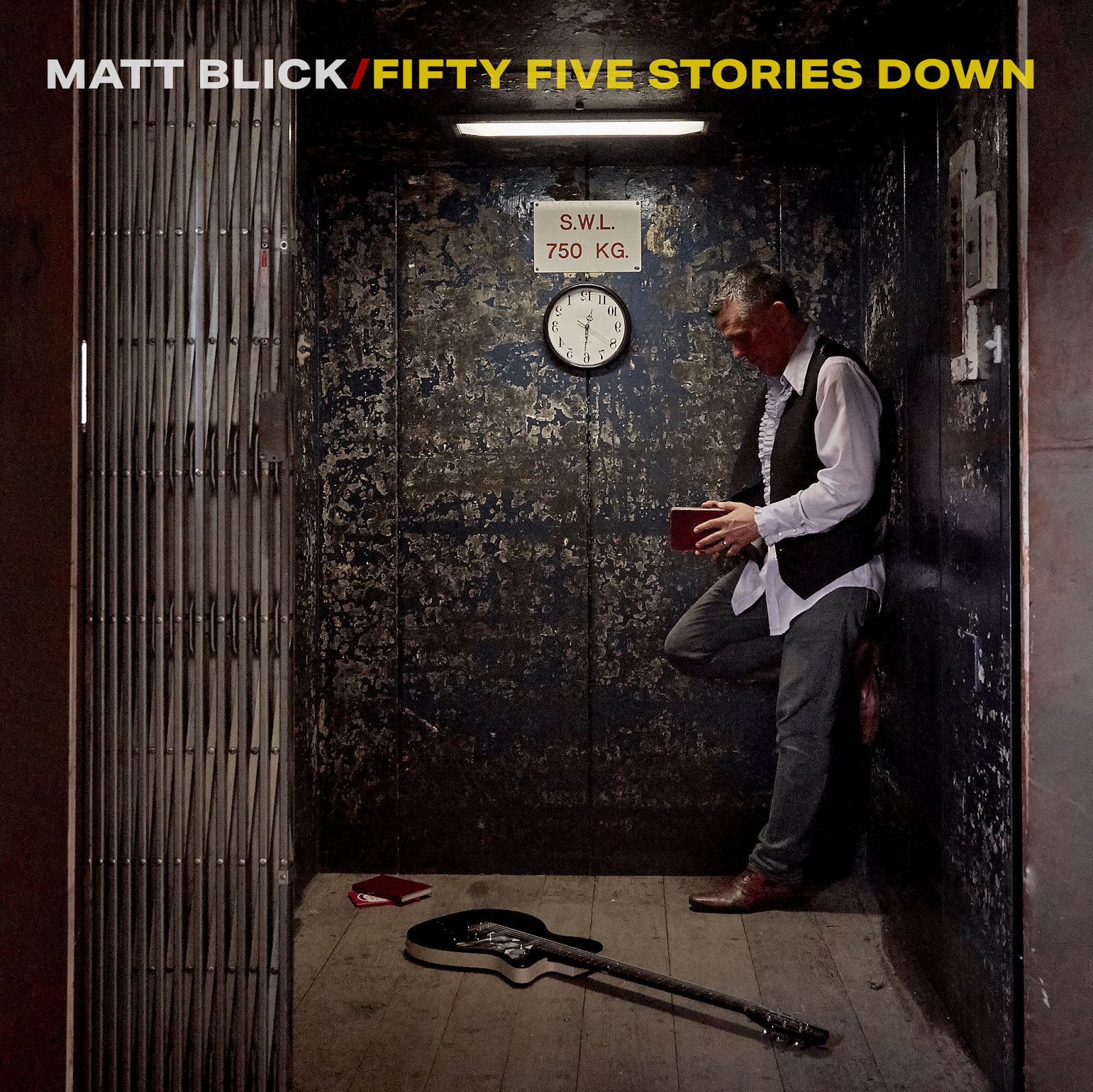


On my album Fifty Five Stories Down I wanted the listener to have the feeling of being 'in the room' rather than being a distant audience. So I recorded every sessions in entirety and cherry picked snippets of conversation between me and producer Daniel Wright to bookend the tracks (some so long they merited their own track). Nothing was staged or scripted* but comments were spliced together or moved to different songs to improve the flow. And there were happy accidents too like the mournful police siren during the song River of Suffering (3:08).

Edits And Extensions: The Strange Rhythm Scene Of John Lennon

I dig the people that notice that I have a sort of strange rhythm scene, because I've never been able to keep rhythm on the stage. I always used to get lost. It's me double off-beats.
John Lennon: The Rolling Stone Interview (Nov 23 1968)

The unintended tape edit in the chorus is not the only 2/4 bar. Every other section has one as part of the composition. The verse is a classic example of The Lennon Extension (Ticket 52) where his "well you know" needs a extra space to fit in. Try singing without the "well..."

You say you want a revolution, you know
We all want to change the world

The lyrics fit into 4/4 and is the way someone without 'double off-beats' might play it. The single-only solo retains the same half bar. The end of the pre-chorus has a 2/4 bar to allow a full two bars of building.


Cool And Unusual Embellishments


Though the 'shooby doo' is a pretty mundane example of a descant (Ticket 58) it's also a musical idea borrowed from another genre, in this case Doo-Wop. The guitar's shuffle pattern is borrowed from the blues and the switches from A to D and E hint at a 12 bar blues progression. The vocal melody utilises the major pentatonic scale almost entirely except for 'bluesifying the melody' (Ticket 22) with a b3 on "it's gonna be AL – right". All of which gives this folk song a playful, doo-wop/blues flavour (Ticket 25).

The song has some great instrumental hooks (Ticket 3) - the acoustic guitar riff at end of each chorus, the electric guitar fill at the end of verse 2 and the 'Indian' bass run down in the (album version) pre-chorus.

There's a couple of unusual choices too. It's normal practice to edit down a song for single release and the first thing to go is usually the solo but Revolution one of the few songs to add a solo rather than take it out. The single's solid blues ending is an improvement on the album's fade out. Fading is something the Beatles hardly ever did but on this song even the Esher demo fades.

Footnotes


Geoff Emerick saying "take 2"
As the take is actually Take 18, It's unclear why he is saying "take 2." It may be in response to Paul "humorously announcing the next take off mic as "take three?" or be a clipped part of a longer phrase "I'll take it to...".

Humorously announcing the next take off mic as "take three?"
Beatles Book.com

Unintended 2/4 bar
As 2/3rd of a triplet you could make a case for it being a 5/4 bar or even a 14/8. But that's above my mathematical pay grade.

The band is tight but communicates the mood
Ironically Give Peace A Chance uses the opposite method to achieve the same effect. It genuinely is sloppily performed and badly recorded and required later studio vocal overdubs to make it acceptable for release.

Each count-in was edited in from a different take
If you listen to Taxman you can hear two overlapping count-ins.

Nothing was staged or scripted
As a example of 'staged recording' listen to the start of Cigarettes And Alcohol by Oasis. The hissing guitar amp (and whistling) was overdubbed later for effect on top of the track, which becomes clear when it slowly fades out when the rest of the band enters.

Other posts on Revolution/Revolution 1

Monday, 7 October 2013

Lennon, McCartney and Taylor? - The Beatles Uncredited Co-Writers


We were the biggest nickers in town. Plagiarists extraordinaire.
Paul McCartney
(Musician Magazine, Feb 1985, p.62)

Though they were not as bad as Led Zeppelin the fab four's back catalogue has more than it's share of music and lyrics that were begged, stolen or borrowed. For the most part the boys have been ready to admit it in print. But just not the kind of print found on royalty cheques. Here's a long overdue tribute to the unsung backroom boys (and girls). Maybe you'll be amazed...

A Day In The Life
(Lennon/McCartney/Doran)


Lennon said “I knew the line had to go 'now they know many holes it takes to ____ the Albert Hall'. It was a nonsense verse really, but for some reason I couldn't think of the verb. What did the holes do to the Albert Hall?” Terry Doran, the Beatles favourite 'man from the motor trade' (and the maraca player on Strawberry Fields Forever) said “fill the Albert Hall”
(The Beatles: Davis p.299)

All You Need Is Love
(Lennon/McCartney/Bach/Rouget de Lisle/Manone/Unknown)


Both the intro and the outro quoted from previous written music - The French National Anthem (La Marseillaise), composed by Claude Joseph Rouget de Lisle, Greensleeves, J.S. Bach's Invention No. 8 in F major and Glenn Miller's arrangement of In The Mood, which in itself was a wholesale theft of Wingy Manone's Tar Paper Stomp.


Being For The Benefit Of Mr Kite
(Lennon/McCartney/Sousa/Unknown)


The lyrics, taken almost wholesale from an advertisement Pablo Fanque's Circus, were probably written by someone in the circus and chopped up 'samples' of John Phillip Sousa marches featured in the middle section.


Can't Buy Me Love, Help, She Loves You
(Lennon/McCartney/Martin)


George Martin displayed his unerring genius for musical development and pop catchiness by composing the intro sections for each of these songs.


Come Together
(Lennon/McCartney/Berry)


The line “Here comes old flat top” and the general melody were consciously stolen from Chuck's song Catch Me If You Can. Though Paul McCartney attempted to disguise this by changing the feel, Berry's publisher, Morris Levy, sued Lennon anyway and won.


Eleanor Rigby
(Lennon/McCartney/Harrison/Martin/Shotton/Starr)


The only song (apart from Dig A Pony and Flying) that features all four Beatles as co-writers, George and Ringo contributed “all the lonely people” and “darning his socks” respectively. School friend and Quarrymen washboard player, Pete Shotton suggested bringing Eleanor & Father McKenzie back in the last verse and George Martin came up with singing the bridge over the final chorus.
(Revolution In The Head p.204)


Golden Slumbers
(Lennon/McCartney/Dekker)


Paul used 17th century dramatist Thomas Dekker's words almost unchanged for the Abbey Road track.


If I Needed Someone
(Harrison/McGuinn)


When George Harrison heard The Byrds cover version of The Bells of Rhymney he loved Roger McGuinn's 12 string riff so much he lifted it entirely for his Rubber Soul track.

George was very open about it, he sent [the record] to us in advance and said, 'This is for Jim' - because of that lick.
Rolling Stone magazine 


I Saw Her Standing There
(Lennon/McCartney/Berry)

McCartney admits the bassline was 'borrowed' from Chuck Berry's song I’m Talking About You
Many Years From Now (p.94)


Happiness Is A Warm Gun
(Lennon/McCartney/Taylor)


Beatles publicist Derek Taylor brainstormed lyrics with Lennon for the first section contributing the “lizard on the window pane” and “velvet hand” lines.


The Inner Light
(Harrison/Li)


The lyrics are taken wholesale from chapter 47 of the Tao Te Ching, written c400 BC by Lao Tzu (The philosopher formerly known as Li Er)


Michelle
(Lennon/McCartney/Martin/Vaughan)


Ivan Vaughan, the man who introduced Paul McCartney to John Lennon, also introduced Paul to french via his language teacher wife Jan who co-wrote the lyrics with Paul at Jane Asher's family home in 1965. Paul said “Years later I sent her a cheque around. I thought I better had because she's virtually a co-writer on that. From there I just pieced together the verses”.

During the recording session George Martin composed the melody that George Harrison played in the solo.
Paul McCartney: (Many Years From Now)


Ob La Di Ob La Da
(Lennon/McCartney/Scott-Emuakpor)

Journeyman Jimmy on the floor with his pet dog

“Ob la di ob la da - life goes on bra” was conga player Jimmy Scott-Emuakpor's catch phrase. So he understandably miffed when it surfaced in a hit song (especially as Jimmy had played on an early version). He sued McCartney, but after being taken to prison for unpaid alimony, Scott agreed to drop his case in return for McCartney footing his huge legal bills.
MTVPower PopMarco On the Bass


Piggies
(Harrison/Harrison/Lennon)


George's mum Louise came up with the lyric, "What they need's a damn good whacking" and John added "Clutching forks and knives to eat their bacon".
Beatles Bible 


Run For Your Life
(Lennon/McCartney/Gunter)


Arthur Gunter wrote Elvis' hit Baby Let's Play House which contained the lyrics “I'd rather see you dead, little girl, than to be with another man”. 11 years later so did John Lennon's Run For Your Life. Coincidence? Nope.


Savoy Truffle
(Harrison/Taylor)


When he wasn't holding John's hand, Derek Taylor also helped out George with the bridges adding "You know that what you eat you are".


She Said She Said
(Lennon/Harrison)

Curing writer's block with acupuncture?

Harrison said “I was at [John's] house one day and he was struggling with some tunes. He had loads of bits, maybe three songs, that were unfinished, and I made suggestions and helped him to work them together so that they became one finished song - She Said She Said. The middle part of that record is a different song”.

Following an argument with Lennon, Paul stormed out of the studio, leaving the band to record the final Revolver song without him. Meaning Paul is credited as a co-writer on a song that he neither wrote nor played on while Harrison isn't!


Something
(Harrison/Taylor)


...but a different Taylor! American singer/songwriter James Taylor released Something In The Way She Moves in 1968 on his self titled debut album, which appeared on a small indie label called Apple. In 1969 George Harrison appropriated it as a title and opening line. Ironically Taylor had intended to call his song I Feel Fine, after the final line in the chorus, but didn't want to nick someone else's title!


Taxman
(Harrison/Lennon)


John helped George finish off the lyrics to this song “[throwing] in a few one-liners to help the song along” and name-checking prime minister Harold Wilson and opposition leader Edward Heath.
David Sheff: All We Are Saying 


We Can Work It Out
(Lennon/McCartney/Harrison)


Harrison provided one of the highlights of the track - the idea of doing parts of the bridge in waltz time.


 Yellow Submarine
(Lennon/McCartney/Donovan/Krier/Helmer)


Donovan wrote the line, “sky of blue, sea of green” at Paul's request and Geoff Emerick and George Martin chopped up a recording Georges Krier and Charles Helmer's brass band tune Le Rêve Passe beyond recognition.
(Revolution In The Head p.206)

Monday, 10 September 2012

10:6 Julia (pt. 5) The Last Post - Structure


Having looked at the songwriting magic that Lennon casts over Julia with imagery, weird chord progressions and odd scales lets finish with the big picture.

The coolest thing for me is that the song has two different (though not unrelated) verses. I don't just mean 'verse one' and 'verse two'. I mean verse 1 and 5 are constructed differently to verses 2-4 and 6-7. Different chord pattern, structure, amount of lines and bars. The only similarity is the 8 bar 'intro' verse has same last 4 bars as the 'regular' 12 bar verse (the latter, being a 'non-blues 12 bar pattern', is another example of ticket 35).

The inspiration for this unusual 'intro-verse' is clearly the jazz showtunes of to 20's, 30's and 40's - songs like I Got Rhythm, That Old Black Magic and The Lady Is A Tramp. If the source seems unlikely, remember that the Beatles covered songs such as Falling In Love Again and True Love while serving their apprenticeship in Hamburg.

You could also explain the genesis of the section as either ticket 4 - creating an intro from another section of the song (the 'normal' verse) or ticket 41 - using the same ending for two section (making it a relative of Golden Slumbers).

Either way, this 'introductory verse' idea can be heard on Beatles songs as diverse as Honey Pie, Here There And Everywhere and Do You Want To Know A Secret.

Regardless of versal weirdness (hey, I just invented a word!) the song is a solid member of the ticket 26 club. Julia is essentially an AABA structure with no chorus, just like I Saw Her Standing There or Eleanor Rigby.

We can spot a Lennon edit (ticket 37) on the end of most verses because stretching the title out for 7 beats (Ju-------li-a) means Lennon would have had to tack on an extra bar or two to finish the verse before the next one starts.

The song ends on a single ringing chord (ticket 18 - a favourite ending from the early days) made fresher by the fact that the only time Dmaj7 appears is as the last chord in the song!

Next time, a very different kind of love song - Why Don't We Do It In The Road?

Friday, 16 December 2011

Under The Influence: Lemmy (Motorhead)


The Beatles just had great melodies – In My Life, If I Fell, And I Love Her and Eleanor Rigby were all excellent.

[I Saw Her Standing There] was the first track on their first album. Paul counted them in with 1,2,3,4, - a great introduction to the greatest rock band of all time. Nobody even comes into the same planetary system in terms of songwriting and presentation, They never repeated themselves, they kept going from strength to strength. 

Liverpool was only 60 miles from where I grew up in Wales, and lots of girls would come down from there for holidays … this one girl wrote ‘Beatles’ all over my wall, and I asked who they were. She said they were this incredible new band in Liverpool. So I hitch-hiked up there - this was late 1961- and saw them play a number of times at the Cavern. And I can tell you the intensity and excitement everybody felt a couple of years later was already happening … a magic time. 
 Lemmy: Lava Magazine 

Friday, 9 December 2011

Under The Influence: Lindsey Buckingham (Fleetwood Mac)


When you think about the Beatles, it’s usually about the sophisticated way they used pop elements and whatever they were being turned on to by George Martin to do things that hadn’t been done before. [I Saw Her Standing There] is just a standard three chord song, but it’s a rock and roll classic. It still explodes at you when you hear it today. There’s even a terrific live version on [Anthology 1] that made me go, “My God, these guys could really play." It represents in its earliest and most naïve incarnation all the buoyancy the Beatles had to offer. 

Lindsey Buckingham Lava Magazine 

Friday, 12 February 2010

I Saw Her Standing There


Now we enter the realm of the totally subjective. I would agree with McDonald’s assessment of it being “a rock and roll standard” (RITH p.69) but for me that doesn’t quite translate into ‘classic song’. Sure, it the main sequence is 16 bar verse (with a 10 bar bridge) rather than the traditional 12, and the melody contains intervals untypical in the blues (like the 2nd and major 7th) but it seems a little too stuck in it’s own genre to have much to teach unless you’re writing straight blues songs (which I'm not).


(...and describing someone’s heart as going ‘boom’ just seems to destroy any credibility you might have built up too...)

Tickets To Write


T1 - the bVI (C maj) reappears at the end of the “So how could I dance with another? oohhh!” line. Here it’s not replacing the I (E major chord) but it still adds the same surprise.

T18 Finish the song on a single ringing chord (here it’s an E7).

This is an arrangement thing, but it’s worth noting that the vast majority of Beatles songs do not fade out, whereas a large percentage of modern songs (if not the majority) do. There are two aspects to this that are worthy of consideration.

First it’s another expression of the Beatles economy – a song with an ending will always be shorter than a fade.

Secondly, fading a song is often a sign of laziness. It’s not the result of a musical decision to fade but rather the sign that a decision on how to end the song has not yet been made (we’ll worry about that when we play live).

T19 If you’re writing a blues song consider subverting it by subtly changing the chord sequence or number of bars.