Showing posts with label Taxman. Show all posts

Tuesday, 7 April 2020

10:66 Revolution (pt.6) Fake Mistakes


Embrace (or Fake) Your Mistakes


One little detail that gives Revolution 1 the edge over Revolution for me are the little editing mistakes in the album version (Ticket 72: Embrace your mistakes).

At the beginning of the track there is studio chatter, a false start on guitar, followed by engineer Geoff Emerick saying "take 2"* and Lennon saying "OK" and near the end (3:23) a tape edit spliced together incorrectly resulting in an unintended 2/4 bar*. Lennon can be heard talking on an unmuted track (3:28) and you could even make a case for Lennon's "count me out … in" as something of a 'deliberate' error.

These all contribute to a very specific loose vibe for the track and what's important to remember is that though all of these things were genuine 'accidents', their appearance on the finished recording were not. Even with the fairly primitive recording gear available, they had the opportunity to go back and mute channels, redo tape edits and even take five minutes to say "John, make up your mind – are you 'in' or 'out'?". But they didn't. They chose to 'put a frame' around the mistakes and make them part of the art. Sometimes mistakes will result in a musical choice that you would never have thought of (the 2/4 bar) and sometimes it just helps to communicate a mood. Here the band wants to say "we're just having a jam, everybody join in" but rather than play sloppy with no rehearsal, the band is tight but communicates the mood by these little extras*.

Every time you hear a count-in on a Beatles record it's a deliberate choice. After all, most takes started with a count-in and almost every one was later edited out. But I Saw Her Standing There, Yer Blues and Taxman retained theirs, to communicate the "we're gonna rock out!" vibe. And not just retain them. Each count-in was edited in from a different take, presumably one that had more energy*.
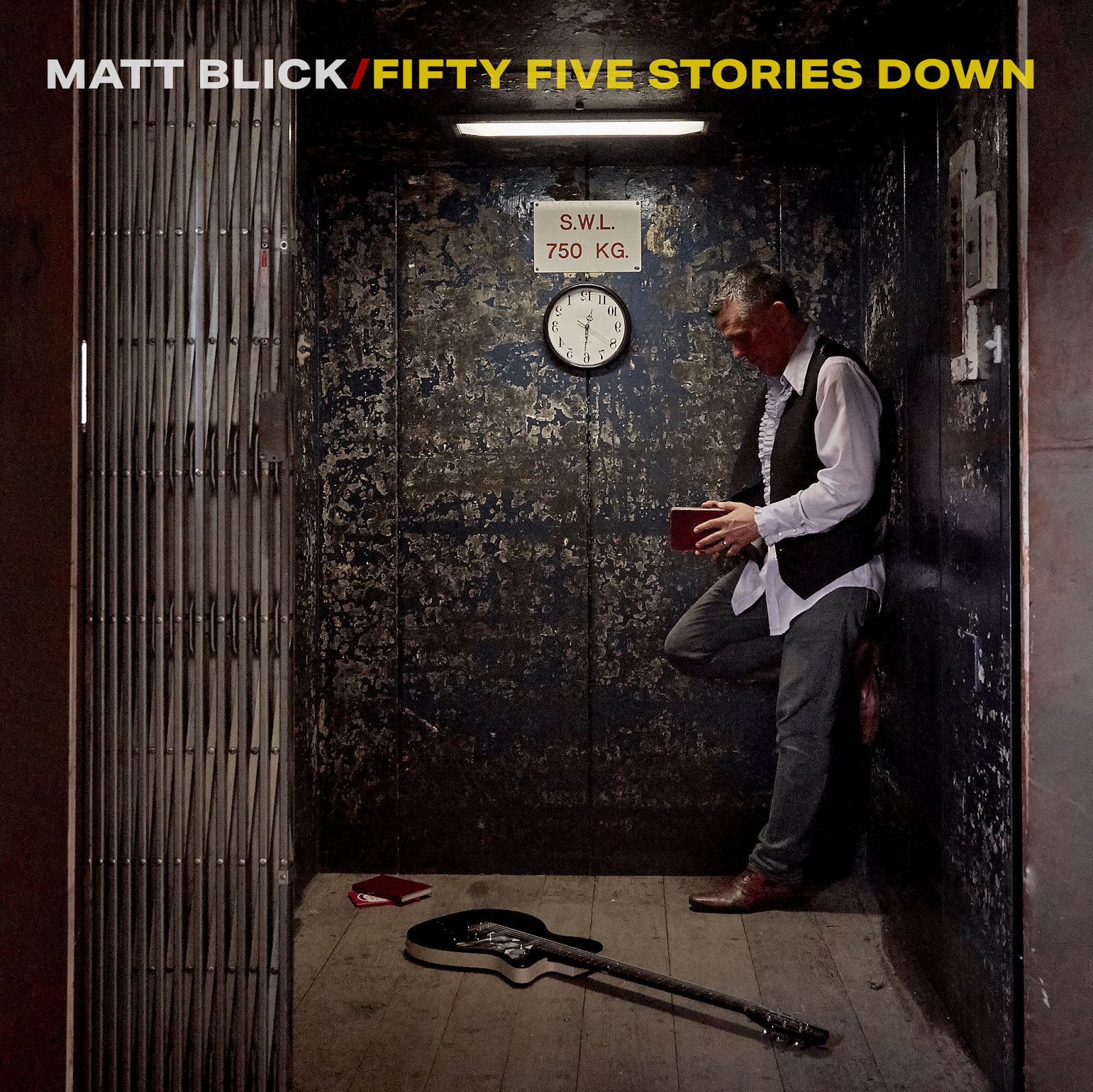


On my album Fifty Five Stories Down I wanted the listener to have the feeling of being 'in the room' rather than being a distant audience. So I recorded every sessions in entirety and cherry picked snippets of conversation between me and producer Daniel Wright to bookend the tracks (some so long they merited their own track). Nothing was staged or scripted* but comments were spliced together or moved to different songs to improve the flow. And there were happy accidents too like the mournful police siren during the song River of Suffering (3:08).

Edits And Extensions: The Strange Rhythm Scene Of John Lennon

I dig the people that notice that I have a sort of strange rhythm scene, because I've never been able to keep rhythm on the stage. I always used to get lost. It's me double off-beats.
John Lennon: The Rolling Stone Interview (Nov 23 1968)

The unintended tape edit in the chorus is not the only 2/4 bar. Every other section has one as part of the composition. The verse is a classic example of The Lennon Extension (Ticket 52) where his "well you know" needs a extra space to fit in. Try singing without the "well..."

You say you want a revolution, you know
We all want to change the world

The lyrics fit into 4/4 and is the way someone without 'double off-beats' might play it. The single-only solo retains the same half bar. The end of the pre-chorus has a 2/4 bar to allow a full two bars of building.


Cool And Unusual Embellishments


Though the 'shooby doo' is a pretty mundane example of a descant (Ticket 58) it's also a musical idea borrowed from another genre, in this case Doo-Wop. The guitar's shuffle pattern is borrowed from the blues and the switches from A to D and E hint at a 12 bar blues progression. The vocal melody utilises the major pentatonic scale almost entirely except for 'bluesifying the melody' (Ticket 22) with a b3 on "it's gonna be AL – right". All of which gives this folk song a playful, doo-wop/blues flavour (Ticket 25).

The song has some great instrumental hooks (Ticket 3) - the acoustic guitar riff at end of each chorus, the electric guitar fill at the end of verse 2 and the 'Indian' bass run down in the (album version) pre-chorus.

There's a couple of unusual choices too. It's normal practice to edit down a song for single release and the first thing to go is usually the solo but Revolution one of the few songs to add a solo rather than take it out. The single's solid blues ending is an improvement on the album's fade out. Fading is something the Beatles hardly ever did but on this song even the Esher demo fades.

Footnotes


Geoff Emerick saying "take 2"
As the take is actually Take 18, It's unclear why he is saying "take 2." It may be in response to Paul "humorously announcing the next take off mic as "take three?" or be a clipped part of a longer phrase "I'll take it to...".

Humorously announcing the next take off mic as "take three?"
Beatles Book.com

Unintended 2/4 bar
As 2/3rd of a triplet you could make a case for it being a 5/4 bar or even a 14/8. But that's above my mathematical pay grade.

The band is tight but communicates the mood
Ironically Give Peace A Chance uses the opposite method to achieve the same effect. It genuinely is sloppily performed and badly recorded and required later studio vocal overdubs to make it acceptable for release.

Each count-in was edited in from a different take
If you listen to Taxman you can hear two overlapping count-ins.

Nothing was staged or scripted
As a example of 'staged recording' listen to the start of Cigarettes And Alcohol by Oasis. The hissing guitar amp (and whistling) was overdubbed later for effect on top of the track, which becomes clear when it slowly fades out when the rest of the band enters.

Other posts on Revolution/Revolution 1

Friday, 6 June 2014

Hurry Up George


One really got the impression that George was being given a certain amount of time to do his tracks whereas the others could spend as long as they wanted. One felt under more pressure when doing one of George’s songs.

Geoff Emerick in Mark Lewisohn: The Complete Beatles Recording Sessions

We tried to record [While My Guitar Gently Weeps], but John and Paul were so used to just cranking out their tunes that it was very difficult at times to get serious and record one of mine. It wasn’t happening. They weren’t taking it seriously and I don’t think they were even all playing on it ... [getting Eric Clapton into the studio] made everyone act better. Paul got on the piano and played a nice intro and they all took it more seriously.

George Harrison in Anthology

Almost every Beatles song has a 'story' – the 'story' of While My Guitar Gently Weeps is that Harrison asked Clapton to play on the track to make the rest of the Beatles 'behave' and take the song seriously. The bigger 'narrative' is that Harrissongs were second class citizens at Abbey Road and didn't have the same care lavished on them as Lennon & McCartney tunes.

But is that really true?

The band tracked the song on the 5th Sept 1968. Clapton recorded his part on the 6th. The only contributions on that day, other than George himself, were Paul's vocal harmonies and bass, and Ringo's tambourine and castanets overdubs. It's hard to believe that Eric's presence had any real effect on the band's behaviour at that late stage. UPDATE 50th Anniversary Edition reveals Clapton tracked his part live with the band on the 5th.

What about other tracks?

Here's a list of all George's Beatles tracks* with the number of takes spent on the rhythm track. I've used this as a rule of thumb because that's the only time the whole band would need to be involved. Overdubs might not require any other member.

One Take

Think for Yourself
If I Needed Someone
Blue Jay Way
Savoy Truffle

10 Takes Or Less

All Things Must Pass – 2
Love You To - 3
It's All Too Much - 4
Old Brown Shoe - 4
I Need You - 5
I Want to Tell You - 5
For You Blue – 6
You Like Me Too Much - 8
Only a Northern Song - 9

20 Takes Or Less

Don't Bother Me - 11
Piggies - 11
Here Comes the Sun - 13
Taxman - 15
I Me Mine - 16

40 Takes Or More

While My Guitar Gently Weeps - 43
Something - 49
Long, Long, Long - 67
Not Guilty** – 101


Abbey Road Scrapyard

Four of these tracks were not only laboured over, but recorded, then scrapped, and rerecorded.

Don't Bother Me - 7 takes, then scrapped. Version 2 - 4 more takes.
Taxman - 4 takes, then scrapped. Version 2 - 11 more takes.
While My Guitar Gently Weeps – demoed at Abbey Road 2 takes. Full band version 1 - 14 takes, then scrapped. Version 2 - 28 more takes.
Something -13 takes, then scrapped. Version 2 - 36 more takes.

In the case of While My Guitar Gently Weeps it wasn't merely the backing tracks that were scrapped. After tracking 'version 1' Harrison spent an entire eight-hour session trying to record a backwards guitar solo. The following day he recorded two lead vocal parts, alongside maracas, drums and lead guitar. Then he binned the whole thing, enlisted Eric Clapton and started all over again.

What to make of all this?

The proportion of 1st takes to 101 takes, and of scrapping recordings and starting again, looks broadly same as Lennon & McCartney's work on their own songs. Michelle was recorded (and mixed) in a single day. Happiness Is A Warm Gun took forever. Ob-La-Di, Ob-La-Da and Strawberry Fields Forever were scrapped and rerecorded, as were One After 909 and Hold Me Tight.

As I've written before it's one thing taking up your bandmate's time with something either world class (Strawberry Fields) or very complex (Warm Gun). But imprisoning them in the studio so you can flog a dead horse (Maxwell, Ob-La-Di, Not Guilty) is just going to make everyone crazy.

Looking at the figures it's hard to believe George got a raw deal when he'd made John 'world's shortest attention sp...oh look something shiny' Lennon sit at the Electric Harpsichord for 101 takes***.

George seems to have been indecisive or ill-prepared**** when working on his own songs and, perhaps understandably, lacking in confidence. Compared to the uber-confident, omnicompetent McCartney (who demoed a 'full band' version of Come And Get It on his own, in one hour!) and the laid back Lennon (who often got bored of his own songs before anyone else could) he was perhaps the least fun Beatles to 'work for'.


*I've not included The Inner Light and Within You Without You as no other Beatle was involved with the basic track.

**Not Guilty was not included on The White Album and remained unreleased until Anthology 3.

***Perhaps that explains why Lennon often excused himself when George was recording one of his songs. Of the 22 released, Lennon plays no part in 6, and contributes only backing vocals to 4 others.

****For example each 'version' of While My Guitar has different (or extra) lyrics.

Monday, 20 January 2014

Ray Davies Reviews Revolver


Paul McCartney was one of the most competitive people I've ever met. Lennon wasn't. He just thought everyone else was sh*t 

Ray Davies (The Kinks) in Revolver: How the Beatles Reimagined Rock 'n' Roll by Robert Rodriguez

As well as that gem, here's another I found via Rodriguez's book - Ray's review of Revolver for Disc and Music Echo Magazine in Aug '66


'Really, it's a load of RUBBISH'

Taxman - It sounds like a cross between the Who and Batman. It's a bit limited, but the Beatles get over this by the sexy double-tracking. It's surprising how sexy double-tracking makes a voice sound.

Eleanor Rigby - I bought a Haydn LP the other day and this sounds just like it. It's all sort of quartet stuff and it sounds like they're out to please music teachers in primary schools. I can imagine John saying: 'I'm going to write this for my old schoolmistress'.

I'm Only Sleeping - It's a most beautiful song, much prettier than 'Eleanor Rigby'. A jolly old thing, really, and definitely the best track on the album.

Love You Too - This sort of song I was doing two years ago--now I'm doing what the Beatles were doing two years ago. It's not a bad song--it's well performed which is always true of a Beatles track.

Yellow Submarine - This is a load of rubbish, really. I take the mickey out of myself on the piano and play stuff like this.

Good Day Sunshine - This'll be a giant. It doesn't force itself on you, but it stands out like I'm Only Sleeping. This is back to the real old Beatles. I just don't think the fans like the newer electronic stuff. The Beatles are supposed to be like the boy next door only better.

Got To Get You Into My Life - It just goes to prove that Britain's jazz musicians can't swing.

Tomorrow Never Knows - Listen to all those crazy sounds! It'll be popular in discotheques. I can imagine they had George Martin tied to a totem pole when they did this!

So, after listening to each track three or four times, the Ray Davies verdict: This is the first Beatles LP I've really listened to in it's entirety but I must say there are better songs on 'Rubber Soul'.

Go to KindaKinks.Net to read the whole review

Monday, 25 November 2013

10:25 Piggies (pt.1) The Once And Future George Martin


Chris Thomas and George Harrison - pork curry?

Piggies is a dark children's ditty, a social commentary about class difference, and a song that inspired the Manson murders.

George Harrison began working on the track in 1966 - the same time as Taxman. And it shares the same dour cynicism that seems to be in Harrison's DNA. The year after it was released Charles Manson took the song as an incitement to murder and his followers used “forks and knives” as murder weapons daubing "death to pigs" in victims' blood on the walls. Understandably for some people this has tarnished the song. Ian McDonald calls the track an “embarrassing blot on [Harrison's] discography” referring to “misanthropy” and “the song's uncharitable karma” (p.317-18).

Walter Everett points out the "Orwellian comparison of pigs to socially horrid though outwardly refined tyrants”. Which comes through in an unused verse -

Everywhere there's lots of piggies
Playing piggy pranks
You can see them on their trotters
Down at the piggy banks
Paying piggy thanks
To thee pig brother

Pig Brother is watching you? The harpsichord was played by co-producer Chris Thomas, Ringo played tambourine and tiny bit of bass drum. Lennon's only contribution was editing a tape loop of pigs grunting.


Lennon grapples with analogue sampling

It was thought that Harrison provided all the vocals including the full-on bass vocal in the last verse but the 50th Anniversary edition reveals that John sang bass and Paul helped out with BVs. (What's up with all the bass vocals recently? Previous song Happiness Is A Warm Gun and next-but-one track I Will feature John and Paul, respectively, doing their best Barry White impression).

George Martin, contributes the wonderful string octet arrangement using the same personnel as Glass Onion (which was tracked at the same overdub session).

We're Not In Esher Any More

The most interesting thing about the genesis of this track is that difference between demo and final recording. Whereas Paul's I Will is a note for note recreation of the demo (apart from the odd flubbed lyrics) almost every aspect that makes so distinctive Piggies was added in the studio.

The song, as originally conceived, is a rustic, chirpy 'down on the farm' folk song complete with asthmatic whistling solo. The White album version is a faux-baroque song whose harpsichord and strings hint at 'Orwellian' grotesque characters. And that is all down to George Martin and the man he was grooming to be his successor - Chris Thomas.

But it started with an accident –

We were working in [studio] number two. I wandered into number one and found a harpsichord...we discussed wheeling the thing in...but Ken Scott said, 'No, we can't, it's there for another session!' So we moved our session into number one instead. George Harrison agreed that my harpsichord idea was a good one and suggested that I play it.

Chris Thomas (in Beatles Complete Recording Session)

Other changes

  • The key changed from G (standard tuning), to Ab (played in D and capoed at 6th fret) - the high capo, along with the light vocal, gives it an innocent childish sound.
  • Countryside ambience (birds chirping), pig sound effects, grunting celli and bass, and fussy, staccato strings conjure up self important pigs.
  • The rising chromatic run before the III7 chord that leads into the bridge and the similar chromatic vocal line on “eat their bacon” that sounds like a hysterical dalek.
  • The jokey blues fill (0:56) that is a call back to the cello fill in Yesterday (1:25)
  • The pedal point solo that becomes celli/harpsichord duet
  • The minor cadence at 1:44 (the demo ends blandly and badly on a sloppy Ab Eb Ab)
  • The key change final coda (Eb Ebmaj7 Eb6 Bb).


The Beatles built a bridge between pop and classical music and you can see it in microcosm in the blues riffs played on a harpsichord and the laid back “one more time” followed by the uber classical cadence (and grunting pigs!).

We'll explore some of these great arrangement twist next time.

Background: thanks to Beatles Bible!

Friday, 26 October 2012

Under The Influence: Richard Thompson


[Taxman is] my favourite Beatles track – I just love the sounds on it. You could strive forever to get that fantastic guitar tone, which is probably some crappy old Epiphone Casino run through who knows what. But what a fabulous sound and performance.  The economy and tightness of it is amazing. The bass line is brilliant, and McCartney also does the guitar solo, which is like Hendrix crossed with a bit of Indian raga. He found something really unique there. 

Richard Thompson Lava magazine 

Who else has been influenced by the Beatles? Check out more posts here