Showing posts with label Hey Jude. Show all posts

Friday, 17 July 2020

Under The Influence: Kurt Cobain


I like the Beatles, but I hate Paul McCartney.
Rolling Stone

I loved Paul McCartney … He meant more to me than my own parents.
Sandford: McCartney*


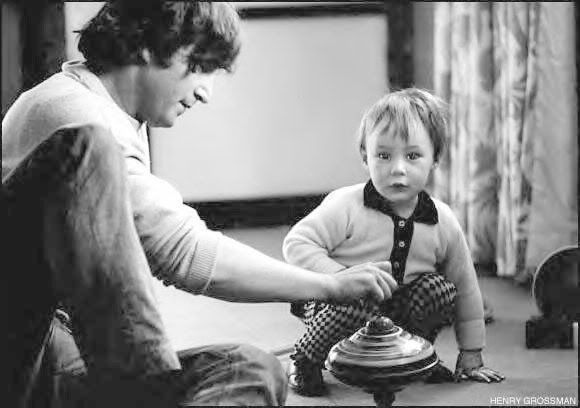
The Beatles were a early and formative influence on Cobain. A video survives of him singing Hey Jude at the age of two and he remembers walking around the neighbourhood singing Beatles songs while playing a toy bass drum. He wrote he was "forever grateful" to his Aunt Mari for giving him three Beatles albums and heartbroken when he learned in 1976 that the band had split up years before.


In high-school Kurt wrote a 2000 word essay on Give My Regards To Broad Street after he spent much of the winter of 1984-5 listening to the soundtrack*.

About a Girl was written after Kurt spent three hours listening to Meet The Beatles on repeat to get in the mood and the In Bloom video is a parody of the Beatles appearance on the Ed Sullivan show.


In my Life was played at his funeral.


Here are a few quotes.

I don’t value music much. I like the Beatles, but I hate Paul McCartney. I like Led Zeppelin, but I hate Robert Plant. I like the Who, but I hate Roger Daltrey.

John Lennon was definitely my favourite Beatle, hands down. I don’t know who wrote what parts of what Beatles songs, but Paul McCartney embarrasses me. Lennon was obviously disturbed [laughs]. So I could relate to that. And from the books I’ve read - and I’m so sceptical of anything I read, especially in rock books - I just felt really sorry for him. To be locked up in that apartment. Although he was totally in love with Yoko and his child, his life was a prison.

John Lennon has been my idol all my life but he’s dead wrong about revolution… find a representative of gluttony or oppression and blow the motherf***er's head off.
Flavorwire

Even in Nirvana — the Beatles [were] such a huge influence. Kurt loved The Beatles because it was just so simple. Well, it seemed simple… they sound easy to play, but you know what? They’re f**cking hard!
Dave Grohl: Access Online

Everyone talks about Kurt's love affair with ... the whole punk scene, but he was also a huge Beatles fan, and the more time we spent together the more obvious their influence on his songwriting became.
Butch Vig: NME

Here is Cobain covering McCartney twice (without embarrassment!) And I Love Her (extra links here and here) ...


And Hey Jude (aged 2).


Sources

*I loved Paul McCartney … He meant more to me than my own parents.
Christopher Sandford: McCartney (p.297) - I can find no sources for Sandford's quotes, which seem to be at odds with other quotes. If you can confirm or deny let me know!
Rolling Stone 
Flavorwire 
Access Online 
NME interview 2004
Charles R. Cross: Heavier Than Heaven

LINKS

Dave Grohl on the Beatles

Thursday, 18 April 2019

White Album 50th Anniversary Notes (pt.2) - Later Lyrics

More Lyric Facsimiles (Probably Post Rishikesh)


Performance Notes

Several of John's songs have some kind of vocal performance direction above the title.

I'm So Tired - “Smokey then heavy voice” a reference to Smokey Robinson?

Revolution - “Marha [?] - Diana - light voice” perhaps another Motown reference - Martha Reeves and Diana Ross?

Bungalow Bill “Band (Water Melon). children!” possibly a (faintly racist?) reference to the band singing backing vocals?


Lyrical Evolution


I'm So Tired

Verse 2, line 2: my mind is set on you is missing.
Verse 3, line 2: Although I'm so tired > Although I'm choked – Lennon obviously later went back to his first choice.
Verse 3, line 3: I believe Sir Walter Raleigh he was > And curse Sir Walter Raleigh he was

When I wrote about this song I was unsure whether to call the “You'd say I'm putting you on” section a chorus or a bridge but it's labelled “8” so in Lennon's mind it was a middle eight – a bridge.


Don't Pass Me By

Penned in purple felt-tip are (unused) lines that Hunter Davis calls “funny in their awfulness” dubbing Ringo “a modern day William McGonagall”

I feel a little foolish sitting here alone
Instead of eating crackers I think I'll just get stoned

You came all wrapped in cellophane
With purple bursting free
The card said open carefully
And pay for C.OD [sic]


Yer Blues

My Mother was of the earth > My Mother was of the sky
My Father was of the sky > My Father was of the earth
But I am of the underworld > But I am of the universe

I'm feeling so uptight now just Dylan's Mr Jones > I feel so suicidal just Dylan's Mr Jones


Back In The USSR

The final verse is added. The last line is initially missing then added as

Let me hear your balalaika working out > Let me see your balalaika working out

Recorded as Let me hear your balalaika ringing out


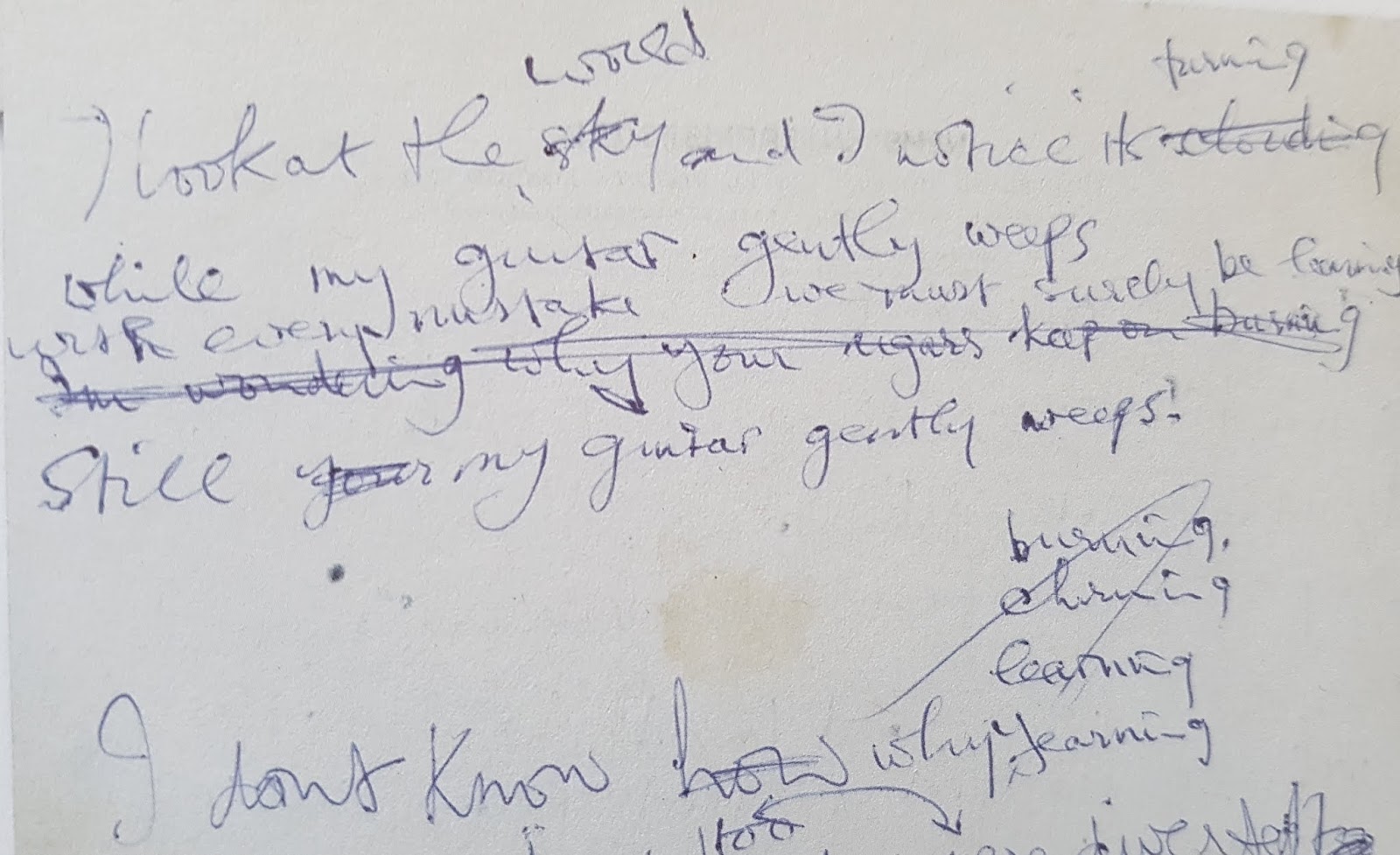
While My Guitar Gently Weeps


Written on 'NEMS London' headed paper While My Guitar Gently Weeps begins with a list of rhymes

Tampering – tapering, Tempering – thundering,
Tittering – Tottering, Towering, Toppling [TICK]
Wandering - Watering, Wavering, Weathering
Whimpering, wintering, whispering, Wondering [TICK]

and later on the manuscript

Burning
churning
learning
yearning

adding further supporting evidence that Harrison was suffering from a bad case of rhyme's disease when he penned this otherwise excellent song. The manuscript gives a window into the lyrical development. Verse 1 is fully formed but verse 2 develops from

I look at the sky and I notice it's clouding

which is then replaced by

I look at the world and I notice it's turning
While my guitar gently weeps
I'm wondering why your nigars[?*] keep on burning
still your guitar gently weeps! > still my guitar gently weeps!

[*Everett has it as 'cigars' but it certainly doesn't look like a 'c'!]


After the Burning/churning/learning/yearning list the lyric takes it's final form as

I look at the world and I notice it's turning
While my guitar gently weeps
With every mistake we must surely be learning
Still my guitar gently weeps!

I don't know how, someone controlled you, how they
blindfolded you.

Then the bridge undergoes a minor change

I don't know how
You were perverted – you were diverted too
I don't know why you got inverted
No one alerted you

as 'why' and 'how' change places

I don't know why
You were perverted – you were diverted too
I don't know how you got inverted
No one alerted you

George makes a number of attempts to start verse 3

I look at the powers around

I look at the wars of the world that are raging

I'm thinking of wars everywhere that is raging

I look at the trouble and hate that is raging

none of which he seems as happy with as verse 3 line 3

While I'm sitting here doing nothing but ageing

which is tweaked to

As I'm sitting here doing nothing but ageing

This verse survived to the Esher demo

I look at the trouble and pain that is raging
While my guitar gently weeps
As I'm sitting here doing nothing but ageing
Still my guitar gently weeps

by the time they got to Abbey Road (the 'Version 1' acoustic guitar/harmonium 'demo' that appears on Anthology 3 and 'Love') it's become

I look from the wings at the play you are staging
While my guitar gently weeps
As I'm sitting here, doing nothing but ageing
Still my guitar gently weeps

By the final version it's been replaced by a restatement of the first verse

I look at you all see the love there that's sleeping
While my guitar gently weeps
Look at you all
Still my guitar gently weeps


Birthday

After the section marked “SOLO” [1:28] is one called “STAGGERS” – the guitar/bass solo break [1:48]

Helter Skelter


An embryonic version of the 'jazz-style intro verse' is written after the 'do you don't you' verse supporting my theory that the intro was originally the chorus and the chorus was originally the bridge (or 'middle' as Paul notates it)

I go back to the top of the hill (ride)
And I stop and I turn and I give you a thrill
Till I see you again


Piggies

This is a post Esher version (in pencil) as it containing Lennon's line "Clutching forks and knives to eat their bacon" (Harrison had sung "Clutching forks and knives to cut their pork chops" on the demo). Mrs. Harrison's line "what they need's a damn good whacking!" is overwritten in red pen for emphasis!

There is also a cut 4th verse that George reinstated on the 1992 Live In Japan album.

Everywhere there's lots of piggies
Playing piggy pranks
You can see them on their trotters
At the piggy banks
Paying piggy thanks
To THEE pig Brother


Revolution

contains a Harrison-style list of rhymes

constitution
institution
desolation
revelation
pollution
dissolution
confusion
intrusion
distribution [?]
Constitution [?]


Glass Onion

Written on the back of an envelope, Glass Onion omits the word 'man' from the Walrus and me/close as can be lines and reveals that Lennon was even more ambitious about trying to cram in self-references

Trying to make a dovetail joint for a yellow submarine


The Continuing Story of Bungalow Bill

is titled '(the continuing story of) BUNGALOW BILL'


Hey Jude

She has found you now go and get her > You have found her now go and get her

The final version was only settled on very late in the recording sessions


Next: Recording Notes


Join the mailing list to get the free, exclusive, Beatles Songwriting Academy podcast!

Monday, 11 April 2016

Under The Influence: Douglas Adams


I vaguely remember my schooldays. They were what was going on in the background while I was trying to listen to the Beatles.

Author Douglas Adams referenced the Beatles through out his writing career from the essay on religious poetry that got him into St John's College, Cambridge to the first Dirk Gently novel in 1987.


As a guest on the BBC radio show Desert Island Discs he picked Drive My Car because his favourite Beatles song was “too obvious” and his favourite album was Plastic Ono Band - “for my money the greatest album ever made by anybody under any circumstances”. Throughout his life Douglas listened to at least one Beatles album at least once a week. His top 20 songs, in order of preference -

1. Hey Jude
2. A Day In The Life
3. Drive My Car
4. Don't Let Me Down
5. I Will
6. If I Fell
7. Hello Goodbye
8. Rain
9. Martha My Dear
10. Strawberry Fields
11. We Can Work It Out
12. This Boy
13. Ticket To Ride
14. Can't Buy Me Love
15. All You Need Is Love
16. I'm Fixing A Hole
17. And Your Bird Can Sing
18. She's A Woman
19 You Can't Do That
20 Here, There & Everywhere

Here is a tribute he wrote on Paul McCartney's 50th birthday


I vaguely remember my schooldays. They were what was going on in the background while I was trying to listen to the Beatles.

When “Can’t Buy Me Love” came out, I was twelve. I sneaked out of school during morning milk break, bought the record, and broke into matron’s room because she had a record player. Then I played it, not loud enough to get caught, but just loud enough to hear with my ear pressed up against the speaker. Then I played it again for the other ear. Then I turned the record over and did the same for “You Can’t Do That.” That was when the housemaster found me and put me into detention, which is what I had expected. It seemed a small price to pay for what I now realize was art.

I didn’t know it was art then, of course. I only knew that the Beatles were the most exciting thing in the universe. It wasn’t always an easy view to live with. First you had to fight the Stones fans, which was tricky because they fought dirty and had their knuckles nearer the ground. Then you had to fight the grownups, parents and teachers who said that you were wasting your time and pocket money on rubbish that you would have forgotten by next week.

I found it hard to understand why they were telling me this. I sang in the school choir and knew how to listen for harmony and counterpoint, and it was clear to me that the Beatles were something extraordinarily clever. It bewildered me that no one else could hear it: impossible harmonies and part playing you had never heard in pop songs before. The Beatles were obviously just putting all this stuff in for some secret fun of their own, and it seemed exciting to me that people could have fun in that way.

The next exciting thing was that they kept on losing me. They would bring out a new album and for a few listenings it would leave me cold and confused. Then gradually it would begin to unravel itself in my mind. I would realize that the reason I was confused was that I was listening to Something that was simply unlike anything that anybody had done before. “Another Girl,” “Good Day Sunshine,” and the extraordinary “Drive My Car.” These tracks are so familiar now that it takes a special effort of will to remember how alien they seemed at first to me. The Beatles were now not just writing songs, they were inventing the very medium in which they were working.

I never got to see them. Difficult to believe, I know. I was alive at the time the Beatles were performing and never got to see them. I tend to go on about this rather a lot. Do not go to San Francisco with me, or I will insist on pointing out Candlestick Park to you and bleating on about the fact that in 1966 the Beatles played their last concert there, just shortly before I’d woken up to the fact that rock concerts were things you could actually go to, even if you lived in Brentwood.

A friend of mine at school once had some studio tickets to see David Frost’s show being recorded, but we ended up not going. I watched the show that night, and the Beatles were on it playing “Hey Jude.” I was ill for about a year. Another day that I happened not to go to London after all was the day they played their rooftop concert in Savile Row. I can’t—ever—speak about that.

Well, the years passed. The Beatles passed. But Paul McCartney has gone on and on. A few months ago the guitarist Robbie McIntosh phoned me and said, “We’re playing at the Mean Fiddler in a few days, do you want to come along?”

Now this is one of the daftest questions I’ve ever been asked, and I think it took me a few moments even to work out what he meant. The Mean Fiddler, for those who don’t know, is a pub in an unlovely part of northwest London with a room at the back where bands play. You can probably get about two hundred people in.

It was the word we that temporarily confused me, because I knew that the band that Robbie was currently playing in was Paul McCartney’s, and I didn’t think that Paul McCartney played in pubs. If Paul McCartney did play in pubs, then it would be daft to think that I would not saw my own leg off in order to go. I went.

In front of two hundred people in a pub, Paul McCartney stood up and played songs he’d never, I think played in public before. “Here, There and Everywhere” and “Blackbird,” to name but two. I’ve played “Blackbird” in pubs, for heaven’s sake. I spent weeks learning the guitar part when I was supposed to be revising for A-levels. I almost wondered if I was hallucinating.

There were two moments of complete astonishment. One was the last encore, which was an immaculate, thunderous performance of, believe it or not, “Sgt. Pepper’s Lonely Hearts Club Band.” (Remember, this was in a pub.) And the other was one of the world’s greatest rock ’n’ roll songs, “Can’t Buy Me Love,” which I had first heard crouching with my ear cupped to the Dansette record player in the school matron’s room.

There is a game people like to play that goes, “When would you most like to have lived and why?” The Italian Renaissance? Mozart’s Vienna? Shakespeare’s England? Personally, I would like to have been around Bach. But I have a real difficulty with the game, which is that living at any other period of history would have meant missing the Beatles, and I honestly don’t think I could do that. Mozart and Bach and Shakespeare are always with us, but I grew up with the Beatles and I’m not sure what else has affected me as much as that.

So Paul McCartney is fifty tomorrow. Happy birthday, Paul. I wouldn’t have missed it for the world.


Source: Wish You Were Here by Nick Webb
The [London] Sunday Times, June 17, 1992 Quoted in The Salmon Of Doubt.


Would you like to receive exclusive bonus Beatles Songwriting Tips? Join the mailing list right here!

70+ Songwriting Tips From The Beatles

Monday, 23 November 2015

10:50 Hey Jude (pt.4) More Melody


Last time we looked at how Paul constructed wonderful wandering melodies but there's more than one source of melodic stickiness.

Fragments

Paul uses a fragment of the verse to craft the melodies in the bridge and coda (Ticket 9).

The opening motif ('Hey Jude') reappears in the bridge over a Bb chord. In the verse it's C - A (the 5th to 3rd of the F chord) in the bridge F - D (the 5th to 3rd of the Bb chord). Similar two note descending motifs appear all through the bridge

Hey Jude (F - D) refrain (F - Bb) don't car- (F - D) - ry the world upon (D - C) your should- (Bb - A) - ders

This “Hey Jude” motif occurs in all three sections of the song, moving in the same direction and by the same amount - dropping down a minor 3rd (or one and a half tones). The only variation is the coda slurs the 'He-ey' over two notes.

Verse – C A
Bridge – F D
Coda - Eb D C

The childlike simplicity of the chord progression

F C C F Bb F C F

and the melody's 'conversational' rhythm perfectly represent the subject matter and intention of the song. Note also Paul's gift for placing words - the way he goes down on the words 'bad' and 'sad' but then lifts up on 'song'. It really makes the melody 'sing' (pardon the pun).

How much of this is conscious or premeditated? Probably very little. We're witnessing a genius at work. But, for lesser mortals like us, the more we consciously emulate great techniques the more likely we are to become instinctual artists. (hey, I can live in hope!)

The verse is notable for it's use of anacrusis. Look at the number of syllables that precede the first beat of each bar.

Hey 1
don't make it 3
Take a 2
and make it 3
Re 1
to let her into your 6
Then you can sta 4
to make i-t be 5


Constrasts

Another point is the contrast between the three sections (Ticket 5). There's is no repetition in the 8 bar verse melody, but the bridge is a 4 bar melody which is repeated and the coda melody, short and simple though it is, consists of 3 one bar phrases with only the 'middle' bar repeated

FAC – Nah nah nah
GFGF – na na nah nah
EbDC - He-ey Jude

This contrast between verse and bridge (unrepeating melody vs. tune played twice) is exactly the same as Mother Natures Son and the coda's melodic structure (ABBC) is the same as the chorus of Carry That Weight.

Boy you're gonna
Carry that weight
Carry that weight
A long time

The verse has a solid root inversion chord progression that is almost hymn-like compared to the bridge's elegant descending bassline that moves at twice the speed.

Bb Bb/A Bb/G Bb/F C/E C F

The symmetrical verse contrasts with the bridge's odd shape - an extra bar of F7 serves as a transition between the two sections (0:52) but then reoccurs in the middle of the bridge (a Lennon Extension - Ticket 52).

Lastly there's a key change (of sorts). The verse is solidly in F major but the transitional F7 seems to imply we've transposed to Bb major (Ticket 45) or at least to F mixolydian (Ticket 51). My money's on the latter, as the coda is clearly mixolydian.

Ambiguity

The bridge sections ends with F7 to C7 which implies McCartney loves tonal ambiguity. He continually messes with our heads by switching between E natural and Eb throughout the song. The aforementioned F7 (containing Eb) fools us we're heading into a Bb major bridge. But a few bars later we get a C/E (E natural) which remains in effect for a 2 bars till we get the F7 (again) followed by the C/E (again). This F7 segues awkwardly into C7 which gets us safely back to the verse.

The Eb to E natural clash is highlighted in the ascending melody at end of the bridge (nah nah – I know, quoting the lyrics is not that helpful... [1:23] and by the descending chromatic piano lick going into the bridge (Ticket 3).


Another cool hook involving chromatic movement is the transition into the coda

(better, better, better...) E - F, G# - A, B - C, E - F, G# A, B - C, F.

Paul is simply singing the intervals of the F major chord (F A C) but approaching each one from a semitone below. Again this hook is an extension of a smaller melodic motif. In just the same way Paul used the opening 'Hey Jude' tune to create more ideas, here he takes the closing note of the verse (better E - F). John Barry (or Monty Norman) used the same thing to create the ending of the James Bond Theme (Ticket 4).

Just like The Long And Winding Road all the out of key chord (Ticket 28) action is due to one note. Eb is the common denominator in the melodic weirdness, the F7, and the coda's Eb major chord, where it is part of a trip backwards through the circle of fifths (Ticket 43) or if you want to get grandiose 'double plagal' cadence (Eb Bb F).

The modest attempts at a descant at 1:42 and the way Lennon switches from low to high harmony (just like the old days) show flashes of brilliance and togetherness (Ticket 58).

That wraps up Hey Jude. I'm working on the second episode of the podcast (get on the mailing list now if you want to receive it) and next up on the blog will be Sexy Sadie!


Would you like to receive exclusive bonus Beatles Songwriting Tips? Join the mailing list right here!

Links

Wednesday, 14 October 2015

Golden Ticket: Keep The Tonics Apart Till The End (Ticket 74)


How to write a McCartney-style flowing, non-repeating, melody

I'm going to interrupt the regular (ha!) Hey Jude posts to look at one way McCartney manages to write such memorable, yet non-repetitive melodies.

In the musical language the tonic note and the tonic chord function as a 'full stops' [US – 'period'] in the music. The effect is particularly strong when they happen at the same time. Here are three examples (all verses) where McCartney cleverly uses the tonic and it's chord sparingly and delays them occurring together till the end of the section. In this way McCartney uses our inbuilt longing for resolution to keep us hooked till the very end.

Hey Jude

Hey Jude starts on the tonic chord (F) with the melody moving from 5th to 3rd (Hey Jude). Landing on the third is just enough to give an open ended feel and keep a sense of forward motion. Try singing Hey Jude on C to F (5 to 1) or A to F (3 to 1). Lands with a thud doesn't it?

Next comes a tonic NOTE, the high F on sad SONG AND make but far from resolving this sits very unstably on top of a C7 chord.

The next time we hear the tonic CHORD the melody descends through D C Bb to A (a 6th to the 3rd) on Be - te - e - er. Again landing on the 3rd feels unfinished.

There are some 'blink and you miss them' tonic NOTES over a Bb chord (let HER inTO) before we land on the tonic CHORD again but this time the word HEART is sung on the 5th.

Another fleeting F, this time low (THEN you can start), before finally melody and harmony unite on the tonic to make it BettER. But then we're off again on another delayed gratificational mystery tour as we launch into the next section.

Mother Nature's Son

Here we're in the key of D.

Line one starts and ends on the tonic chord but the melody starts and ends on the 5th.

On MOTHER naTURes son we get the (high) tonic NOTE over the Bm (vi) chord giving us a partial resolution.

Fast moving 3rd, 5th and 6th's appear over the tonic CHORD in line three (all day long), though the tonic chords are D/A's and feel slightly less resolved in themselves than straight D major chords.

We conclude with high D notes over a D major (tonic) chord on EVeryONE.

Again Paul is delaying the point that the tonic chord and tonic note coincide to the very end of the section.

The Long and Winding Road

Here we're in the key of Eb major.

Though the second note is a high Eb (the LONG and) we start on a Cm chord (vi).

By the time we hear our first fleeting tonic CHORD (Eb maj) the melody lands on a Bb (the 5th) (that LEADS to your door) this only lasts for 2 beats anyway before twisting round with an Eb7 (I7) giving the false impression that we're about to change key to Ab major*.

The next time we hear the tonic NOTE (will neVER disappear) it's sitting unstably on a Gm chord (iii). This idea repeats exactly on alWAYS leads me.

Between these twin motifs the melody descends C Bb G F Eb on the word BEFORE. This time the low tonic note is sitting on top of a Db/Eb chord, which functions in exactly the same way as the Eb7 chord - pulling strongly towards an Ab major chord.

Finally, as I have written about before, the melody ascends directly to the tonic note C C D Eb Eb (lead me to YOUR DOOR) at the same time as the chords move in a very strong 'circle of fourths' movement** (Fm Bb7 Eb) towards the tonic chord.

Practical Application

Many melodies never 'get off the ground' because they are rooted (literally) to the ground, returning to the 'root note' over the 'root chord' again and again through their course. With this method of melody writing, both tonic note and tonic chord can appear - but not together (or at least for any length of time). Keeping them apart till the very end of the section builds suspense.

*This is the same V of IV move recognisable in the link between the verse and the bridge in Hey Jude.

**This is often referred to as circle of fifths which is something of a misnomer as the chords are travelling BACKWARDS through the circle of fifths, thus from Fm we move up a fourth to Bb7 and then up a fourth again to Eb major.


Would you like to receive exclusive bonus Beatles Songwriting Tips? Join the mailing list right here!


Links
More 'Golden Ticket' Posts
70+ Songwriting Tips From The Beatles

Friday, 2 October 2015

Hey Jude Bonus Post (What Does The Vox Say?)


Here's the internet's best guess at the Hey Jude fade out lyrics. You're welcome.

Ju-Judy Judy Judy Judy Judy
OW, WAHOW! 

Ow hoo, na na na 

JUDE Jude JUDE Jude Joooo... 

Na na na na na, yeah yeah yeah 

Yeah you know you can make it, yeah
Jude, you not gotta break it 

Don't make it bad Jude 

Take a sad song and make it better 

Oh Jude, Jude
Hey Jude
WHAAAAOOOOW 

Ooo, Juuuude 

Yeah 

Hey, hey, hey, hey, hey-ee-yay-yay-yay 

Hey, hey, hey 

Now Jude Jude Jude Jude Jude Jude
Yeah yeah yeah yeah 

Woh yeah yeah 

Ah nanananananana cause I wanna 

Nanananana ... nanalala ow ow ow 

Oh God 

The pain won't come back Jude 

Yeah, eh hehe heh 

Make it Jude 

YEAHYEAHYEAH YEAH! 
YEAH! YEAH! HA HA HA HA HA.... 
 
Goodeveningladiesandgentlemen
Mymymymy my my mahhhh 
 oooo 

Woooh 

A-well a naaaa-nanan (fade)

More useful posts on the Hey Jude lyrics here and here.

GET EXCLUSIVE CONTENT BY JOINING THE BEATLES SONGWRITING ACADEMY MAILING LIST right here!

Tuesday, 29 September 2015

10:49 Hey Jude (pt.3) Rhyme Scheme Slight Return - Nicholas Tozier Guest Post


There are many excellent websites and books around but I'm fortunate to have a few real live people I can call on for advice when I hit a bump in the road as well. I'm honoured to have Nicholas Tozier from Song Written as a blogging buddy and one of my 'Beatles Brain Trust'. He's made stellar contributions to BSA in the past (here and here) and his reply to my questions about Hey Jude's rhyme scheme was so interesting I got his permission to post it here.

Hey Matt

I’d never looked at Hey Jude on the page, but you’re right; looking down the line ends is less than half the story with this rhyme scheme. There are lots of surprises in this one.

I think the simplest way to explain it is:

End-rhyme is the default in most lyrics, but verse one of Hey Jude uses chain rhyme and internal rhyme – meaning the rhymes resolve and turn around more quickly. It’s analogous to when a melody touches on the tonic for a sense of resolution, then immediately moves off the tonic.

What’s actually happening is a little more nuanced than that, but that’s most of the story.

I don’t think a linear list of rhymes does justice to this verse.

Hey Jude, don't make it bad
Take a sad song and make it better
Remember, to let her under your skin
Then you'll begin to make it better

Let’s reduce it to a wireframe of syllables (x), with rhyme and refrain positions labeled:

x x x x x A
x x A x x x x BR
x B x x B x x x x C
x x x x C x x BR

Whatever’s going on here, we sure can’t call it end rhyme. The rhymes tend to open at the end of one line, then resolve at the beginning of the next line. Lines one, two, and the beginning of three are straight-up chain rhyme.

Then, in the middle of line three Paul adds a plot twist with another internal “B” rhyme, surprising our ears. This sets the new rhyme-point as the middle of the line. “C” sets up as expected at the end of line three, and then “C” resolves toward the middle of the verse’s last line, like line three did.

Still, I think the best way to get a feel for the truth of Verse One’s sonic mysteries is just staring at the diagram.

Thanks again for sharing this. I had a blast trying to deconstruct it.

—Tozier

P.S. Kinda intriguing that the refrain “make it better” has a different melody each time, so we actually don’t hear it as an obvious refrain so much. Its repetition is downplayed by the melody. That might be significant to the verse’s overall lyrical feel, because the refrain is the only end rhyme, and since the melody changes, the end of the quatrain sounds less resolved, more unsettled, building our anticipation for the next section.

Song Written is one of the best songwriting sites out there. Check it out.

Related Posts


Links

SIGN UP! Join the BSA mailing list for free and exclusive content right here!

Monday, 21 September 2015

10:48 Hey Jude (pt.2) Lyrics - How Do You Solve A Problem Like McCartney?


I'll be honest folks. When I started work on Hey Jude I was tempted to induct it into the Lyrical Hall Of Shame. The combination of dummy lyrics that never got replaced, words chosen for the way they sound, and 'it-means-whatever-you-want-it-to-mean-man' attitude adds up to a lame lyric riding the coattails of a world class melody. And that's before you realise that half the song consists of the word 'nah' sung 209 times.

But digging deeper I've realised the lyrics display such structural genius that I'm more than willing to give Paul a pass on this one. But let's look at the negatives first.


Star Wars For Dummies

As was often the case, McCartney had the music locked by the time the recording started but the lyrics were still in flux (like Rocky Racoon and I Will). If you listen to the Anthology 3 rehearsal Paul doesn't have them all (or he doesn't know them). He indulged in a Yodaism in the phrase “for well you know that it's a fool” and the song contains placeholders lines, as Paul admitted

I remember I played it to John and Yoko, and I was saying, 'These words ['The movement you need is on your shoulder,'] won't be on the finished version'... and John was saying, 'It's great!' I'm saying, 'It's crazy, it doesn't make any sense at all.' He's saying, 'Sure it does, it's great.'" *


Creepy Words Of Wisdom

Secondly, the song had an odd genesis, which goes some way to explaining the bizarre interpretations that have followed.
It was optimistic, a hopeful message for Julian: 'Come on, man, your parents got divorced. I know you're not happy, but you'll be OK.' I eventually changed 'Jools' to 'Jude'**

Changing Jools to Jude cos it 'sings' better is all well and good. But this is a song written to comfort a 5 year old boy about his parents divorce, yet it seems to consist of philosophical advice on getting a girlfriend - a flower-powered take on the 'love life advice' sub-genre that dates back to She Loves You.


There were clearly other biographical currents bubbling up into the song. Paul was in the no(wo)mansland between Jane Asher and Linda Eastman. John heard it as an endorsement for his relationship with Yoko, a thumbs up from Macca's subconscious. Both Beatles were caught between their commitment to making art with multiple (even unintended) meanings and their contempt for the public reading their own meanings into Beatles lyrics. John in particular felt embarrassed at doing exactly what he condemned in others

He said it was written about Julian … But I always heard it as a song to me. Now I'm sounding like one of those fans reading things into it... Think about it: Yoko had just come into the picture. He is saying. 'Hey, Jude'-- 'Hey, John.' Subconsciously, he was saying, 'Go ahead, leave me.' On a conscious level, he didn't want me to go ahead. The angel in him was saying, 'Bless you.' The devil in him didn't like it at all, because he didn't want to lose his partner***

The debate over open interpretation was thrown into sharp focus once Charles Manson got his hands on a copy of the White Album, read murderous things into the lyrics of Helter Skelter and Piggies, and put his crazy interpretations into action.

Advice on preschool love and loss? The Pre-Ballad Of John And Yoko? Or a Dear Jane letter, containing a deep and meaningless line about a parrot?**** No wonder Manson et al had a field day.

Lennon for what it's worth never changed his assessment, calling Hey Jude

“[Paul's] best song" and “a damn good set of lyrics” *****

So what do I know? Let's look at the good stuff.


A fine line between stupid and clever

For starters verse 4 is a mutated hybrid of verse 1 and 2. This makes it feel familiar but not totally predictable. As usual the song is full of parallel words and phrases (Ticket 24)

make it bad/better/you were made

let her into your heart/under your skin

let it out/in

don't make it bad/be afraid/let me down

remember to/the minute you let her into your heart

plays it cool/a little colder

carry the world upon your shoulders/movement you need is on your shoulder


Also McCartney manages to 'break' the rhyme scheme in the second bridge without making it feel wrong or awkward.

In the first bridge the rhyme scheme is

AAB - CCB (pain/refrain/shoulders – fool/cool/colder)

but the second bridge is

AAB – CCD (in/begin/perform with – you/do/shoulder).

Feels really jarring when you focus solely on the last words doesn't it? (Another case for not keeping a meaningless dummy lyric) but in the song it sounds fine. (Be honest. Have you ever noticed it before?). McCartney's masterstroke is that he breaks the rhyme using a word that rhymes with the first bridge, so it feels right even though it's totally 'wrong'.

We've encountered this technique before in The Long And Winding Road (and Ringo break a rhyme for a different reason in Octopus's Garden) so it's high time it got it's own ticket. Welcome Ticket 73.


But the crowning achievement is the way Paul uses internal rhymes to create a kind of odd-meter, seven line stanza that transforms the verse from this

Hey Jude, don't make it bad
Take a sad song and make it better
Remember, to let her under your skin
Then you'll begin to make it better

into this

A7 - Hey Jude, don't make it bad
A3 - Take a sad

B6 - song and make it better
B6 - Remember to let her

C4 - into your heart
C4 - Then you can start

B5 - to make it better

More amazingly he maintains this punishing rhyme scheme perfectly through the three remaining verses

Hey Jude, don't be afraid
You were made
to go out and get her
The minute you let her
under your skin
Then you begin
to make it better

Hey Jude, don't let me down
You have found
her, now go and get her
Remember to let her
into your heart
Then you can start
to make it better

And there's a few other internal rhymes scattered around. The first verse contains a bonus rhyme

Hey Jude, don't make
it bad, Take
a sad song...

Beautiful. And we're not done yet. There's a few more things to say about lyrics...

Footnotes

* Paul 1974  Beatles Songwriting And Recording Database
** Paul Anthology (p.297)
*** John in David Sheff: All We Are Saying
**** Paul called the line “a stupid expression; it sounds like a parrot" Anthology (p.297)
***** John 1972 interview and All We Are Saying Beatles Songwriting And Recording Database 


Links

Monday, 14 September 2015

10:47 Hey Jude (pt.1) – Mistakes And Myths In A Song Of Two Halves


Hey Jude was written by McCartney on the way to visit Lennon's newly-estranged family. He crooned his way though rehearsals at Abbey Road (as heard on Anthology 3) but recorded at Trident Studios in Soho, lured no doubt by the relative ease of doing orchestral overdubs on 8 track tape.

The recording itself was a comedy of errors - some cool, some not.

Ringo walked out to go to the toilet … but … I still thought he was in his drum booth. I started what was the actual take … and while I was doing it I suddenly felt Ringo tiptoeing past my back rather quickly, trying to get to his drums. And just as he got to his drums, 'boom boom boom', his timing was absolutely impeccable. So I think when those things happen, you have a little laugh and a light bulb goes off in your head and you think ... “this has got to be the take, what just happened was so magic!”

Paul McCartney in Many Years From Now (p.466)

At some point during the tracking someone shouted an expletive which remained undetected (or at least 'uncorrected') in the finished mix [at 2:58]. The usual suspects are

Paul McCartney hitting a wrong chord on the piano track and shouting “Wrong chord! F***in hell!”

John Lennon hitting a wrong chord on the acoustic guitar track and shouting “Wrong chord! F***in hell!”

John Lennon recording backing vocals finding the volume levels in his headphones way too loud shouting “Oh! F***in hell!”

According to John (via Geoff Emerick/John Smith) it was Paul* (in which case it was allowed to stand with their full knowledge like many other Beatles 'mistakes'). Personally I'd accuse Lennon in the studio with the guitar, though I can't hear anyone play a wrong chord and the mystery voice seems to have a yorkshire rather than scouse accent.

Problems with the equipment at Trident meant that once the tapes got back to Abbey Road for mixing they had to be heavily re-EQ'd by Geoff Emerick (the cymbals still sound particularly horrible at 0:52).

There's an urban myth that Paul used the same piano as Freddie Mercury used on Bohemian Rhapsody – he didn't**. And Walter Everett*** say the bass guitar was muted in the coda to make room for the 'bottom heavy orchestra', but Paul's bass track is clearly audible until 6:54, where it stops for 6 seconds and then comes back in.


Let's talk about that coda.

The song is a standard AABA structure (Ticket 26) with a huge C section on the end that doubles the running time. While it may sound like a remnant glued on from another song it was always part of Hey Jude and shares a number of musical elements with the A and B sections.

Imagine the song without the coda (and the 'better, better...' link). Perhaps the final verse winds down with Paul delivering the final line solo. What's left is a sweet little ballad. A great example, but one of many piano ballads by Paul McCartney, one of many gifted piano balladeers. But with the C section the song is lifted into a different league. The coda is literally a 'release', a huge, joyful, inarticulate yet cathartic, 'musical group hug'.

Repeated chord cycles of any length are rare throughout the entire Beatles catalogue****. and very long ones even rarer***** (as are fade outs) yet this slow moving four bar melody cycles round NINETEEN TIMES(!) which does become tiresome when the only real variations are George Martin's uncharacteristically bland orchestration and Paul's impression of Little Richard with Tourette's.

So why is it so long?

McCartney says they were having so much fun jamming they decided to keep going******. Others think that Paul had a point to prove, wanting to outdo other artists. Richard Harris had recently scored a hit with MacArthur Park which ran for 7:21. Composer Jimmy Webb (who visited Abbey Road around this time) said George Martin once told me the Beatles let Hey Jude run to over seven minutes because of MacArthur Park”. Webb's story is believable (the band were in the process of recording a really long album) but, if length was Paul's goal he would never have settled for Hey Jude falling 14 seconds short of the record. Whatever the motive was for the coda's length it probably wasn't an artistic consideration. How long it should be is up for grabs but the coda is 'too' long.

In future posts we'll look at one way to write meandering McCartney melodies and why the lyrics look terrible but are actually brilliant.

Footnotes

*Here There And Everywhere p. 262-3
**Queen did use this studio (and piano) but not for Bohemian Rhapsody. See the long thread here if you have time to kill
***The Beatles As Musicians Vol 2
**** See The Band Who Kept Expanding
***** I Want You (She's So Heavy) is a similar length and similarly structured
******But I can't for the life of me find the source. I am a bad researcher. BAD RESEARCHER!


Links

Tuesday, 27 May 2014

10:31 Glass Onion (pt.1)


John Lennon was a man of many contradictions. On the one hand he hated people over analysing, and reading hidden meanings into, his songs. From intellectuals enraptured by his aeolian cadences, though 'Paul is Dead' stupidity, to the Manson Family's lethal interpretations. But on the other hand , for all his protestations, he was just as guilty as his audience - convincing himself that Hey Jude was REALLY about his love affair with Yoko rather than a song of comfort for his own abandoned son.


Arguably his attempts to ridicule and infuriate the obsessives DaVinci-coding their way through lyrics sheets only added more fuel to the fire. In Glass Onion, if you look closely, you can clearly see, not the Freemason's all seeing eye, but the Lennon's raised middle finger as he references five other Beatles songs - including one which references a song which references another song. Deep man!

1) Glass Onion - Strawberry Fields Forever

I told you about Strawberry Fields you know the place where nothing is real

Let me take you down 'cause I'm going to Strawberry Fields Nothing is real


2) Glass Onion - I Am The Walrus

I told you about the walrus and me/here's another clue for you all/the walrus is Paul

I am the egg-man, they are the egg-men, I am the walrus, goo goo a' joob


3) Glass Onion - Lady Madonna - I Am The WalrusLucy In The Sky With Diamonds

Lady Madonna trying to make ends meet

Lady Madonna, children at your feet/Wonder how you manage to make ends meet?


Lady Madonna - I Am The Walrus

Monday's child has learned to tie his bootlace/See how they run

See how they run like pigs from a gun


I Am The WalrusLucy In The Sky With Diamonds

See how they fly like Lucy in the sky

With your head in the clouds and you're gone/Lucy in the sky with diamonds


4) Glass Onion - Fool On The Hill

I told you about the fool on the hill

But the fool on the hill sees the sun going down


5) Glass Onion - Fixing A Hole

Fixing a hole in the ocean/Tryin' to make a dovetail joint

I'm fixing a hole where the rain gets in/And stops my mind from wandering


   The song is another example of Lennon's trippy lyrical style aka 'stream of consciousness, free-association, psychedelic, nonsense literature, surrealism'. It's something that is often attributed to LSD use but was evident in his prose and poetry even from childhood. I think drugs receive far too much credit for inspiring the Beatles songwriting (something I plan to write about in more detail) - anyone who grew up on The Goon Show, Stanley Unwin & Lewis Carroll wouldn't need much chemical encouragement to bring the weird.

Like Happiness Is A Warm Gun most of the weird phrases are simply real life details made startlingly poetic. The bent back tulips were an unusual flower arrangements in a posh London restaurant called Parke's, a perfect place for 'seeing how the other half lives', a dovetail joint is something in carpentry (and a cheeky drug reference) and the Cast Iron Shore was a real place in Liverpool.


Next time we'll look at what Glass Onion does well from a songwriting point of view.


Monday, 28 April 2014

10:30 If I Will It Dude, It Is No Dream (I Will pt.2 – Melody, Structure, Chords)


I've had an interesting problem analysing I Will. Having taken it apart it's hard to see where the magic resides. On the whole it's not brimming over with originality or rule-breaking quirkiness but I think I've found a few points we can take away. The very plain diatonic melody is transformed by a clever rhythmic device and the standard structure is tweaked throughout by a number of interesting substitutions.

Melody

The vocal melody is constructed largely of chord tones moving in intervals of 2nds or 3rds and Lennon and McCartney's usual 'blue notes' spices (b3, b5, b7) are absent. But what we do have is a vocal melody filled with 'pushes'. Just about every other note comes before the beat.


Who KNOWS how LONG I've LOVED YOU (4 AND - 2 AND - 4 AND – AND)

What this means is that we're constantly arriving on a chord tone BEFORE we hear the chord it belongs to. So Paul sings the F which should be over F major while the guitar is still on C major. He sings

G over Dm leading into Gm7
C over Dm leading into Am
D over F7 leading into Bb
G over Bb leading into C7
A over C7 leading into Dm

and so on. This constant, but temporary dissonance, propels the song forward because your brain craves the resolution that comes when the correct chord 'catches up'.

Structure


The Beatles' use of AABA, or verse/verse/bridge/verse structure (Ticket 26) dates back to the first single and first album track (Love Me Do/I Saw Her Standing There) but there are a few twists.

We have no intro other than a vocal pick up (Ticket 2 cf All My Loving)

A1 – Paul turns the would-be 8 bar sequence into a 9 bar one by replacing the usual 'final bar on the I chord' with a 2 bar turnaround lifted from the first two bars.

A2 - is 8 bars long but the final bar uses I to I7. This out of key F7 chord is what theorist call the dominant tonic, or V of IV. It prepares us for the IV chord (Bb) so strongly that it implies we've changed key to Bb. Hey Jude, which was recorded about 6 weeks earlier, pulls this exact same moves just before the line “and anytime you feel the pain”.

B - Whether we're in F or Bb now is unclear because the 8 bar bridge uses a number of chords that don't belong in either key (ticket 28). The 4th bar ends on F7 again leading us back to Bb and bars 6 – 8 lead us backwards through the circle of fifths - Dm G7 C7 F. The G7 to C7 (the V of V*) has a particularly strong homing instinct to our starting point of F.

A3 - Just to shake things up, this time we get 'stuck' on bars 5&6, playing them 3 times linked by some out of key passing chords. We then pick up with bar 7 before going into false/delayed ending on Db (the bVI7) for 2 bars before finally landing on the root.

B2 (CODA) – did I say finally? The coda is bars 1- 4 of the original B section with a modified melody.

So we have a coda and a turnaround constructed from other parts of the song (ticket 4) lots of judiciously applied out of key chord (ticket 28) like the Billy Shears approved bVI (ticket 1), two false endings (ticket 47). Not bad. Let's finish by looking at the bridge chord progression and figuring out what those passing chords are.


7 Drop

We last saw the 7 drop (Ticket 60) in I'm So Tired but let's compare how Paul uses it here with his most famous example, the opening of Yesterday.

If we put Yesterday and I Will in the same key for a moment, the first 4 chords are

Yesterday (verse) - F5 | Em7 A7 | Dm Dm/C
I Will      (bridge) - F     Em | Am  Dm |

Yesterday - I vii III7 vi
I Will -        I vii iii    vi

For the record I don't think the bridge in I Will involves a key change, so the 7 drop starts on the IV chord not the I. Making the progression

F   Em | Am Dm (in the key of Bb)
IV iii      vi    ii

But, as Paul says, it doesn't really matter. Once you get used to an unusual move like this it becomes an option you can slip into your song, whether you kick it off from the root (like Yesterday) or the IV chord (like I Will).

Mystery Chords

If you check the chord sites you'll find a lot of agreement on the chords till you get to the “easy to be near you line” (1:15). The chords are played

x4x3xx = Bb, Db
x3x2xx = A, C
x2x1xx = Ab, B

But what ARE they? Bbm, Am, Abm? Gb maj, F maj, E maj? Some combination? The easiest way to get clarity is by factoring in the melody notes. Doing that makes me lean towards calling them Bbm, F and F dim.


Believe it or not that was my 100th Beatles song folks!

Next up – Glass Onion.


*G7 is the fifth chord in the key of C, and C7 is the fifth chord in the key of F (our home key). So in theory shorthand G7 is the fifth of our fifth or V of V. In practical terms hearing a G7 followed by a C7 makes it feel almost inevitable that we'll end up back on F.