Showing posts with label Matt Blick. Show all posts

Tuesday, 7 April 2020

10:66 Revolution (pt.6) Fake Mistakes


Embrace (or Fake) Your Mistakes


One little detail that gives Revolution 1 the edge over Revolution for me are the little editing mistakes in the album version (Ticket 72: Embrace your mistakes).

At the beginning of the track there is studio chatter, a false start on guitar, followed by engineer Geoff Emerick saying "take 2"* and Lennon saying "OK" and near the end (3:23) a tape edit spliced together incorrectly resulting in an unintended 2/4 bar*. Lennon can be heard talking on an unmuted track (3:28) and you could even make a case for Lennon's "count me out … in" as something of a 'deliberate' error.

These all contribute to a very specific loose vibe for the track and what's important to remember is that though all of these things were genuine 'accidents', their appearance on the finished recording were not. Even with the fairly primitive recording gear available, they had the opportunity to go back and mute channels, redo tape edits and even take five minutes to say "John, make up your mind – are you 'in' or 'out'?". But they didn't. They chose to 'put a frame' around the mistakes and make them part of the art. Sometimes mistakes will result in a musical choice that you would never have thought of (the 2/4 bar) and sometimes it just helps to communicate a mood. Here the band wants to say "we're just having a jam, everybody join in" but rather than play sloppy with no rehearsal, the band is tight but communicates the mood by these little extras*.

Every time you hear a count-in on a Beatles record it's a deliberate choice. After all, most takes started with a count-in and almost every one was later edited out. But I Saw Her Standing There, Yer Blues and Taxman retained theirs, to communicate the "we're gonna rock out!" vibe. And not just retain them. Each count-in was edited in from a different take, presumably one that had more energy*.
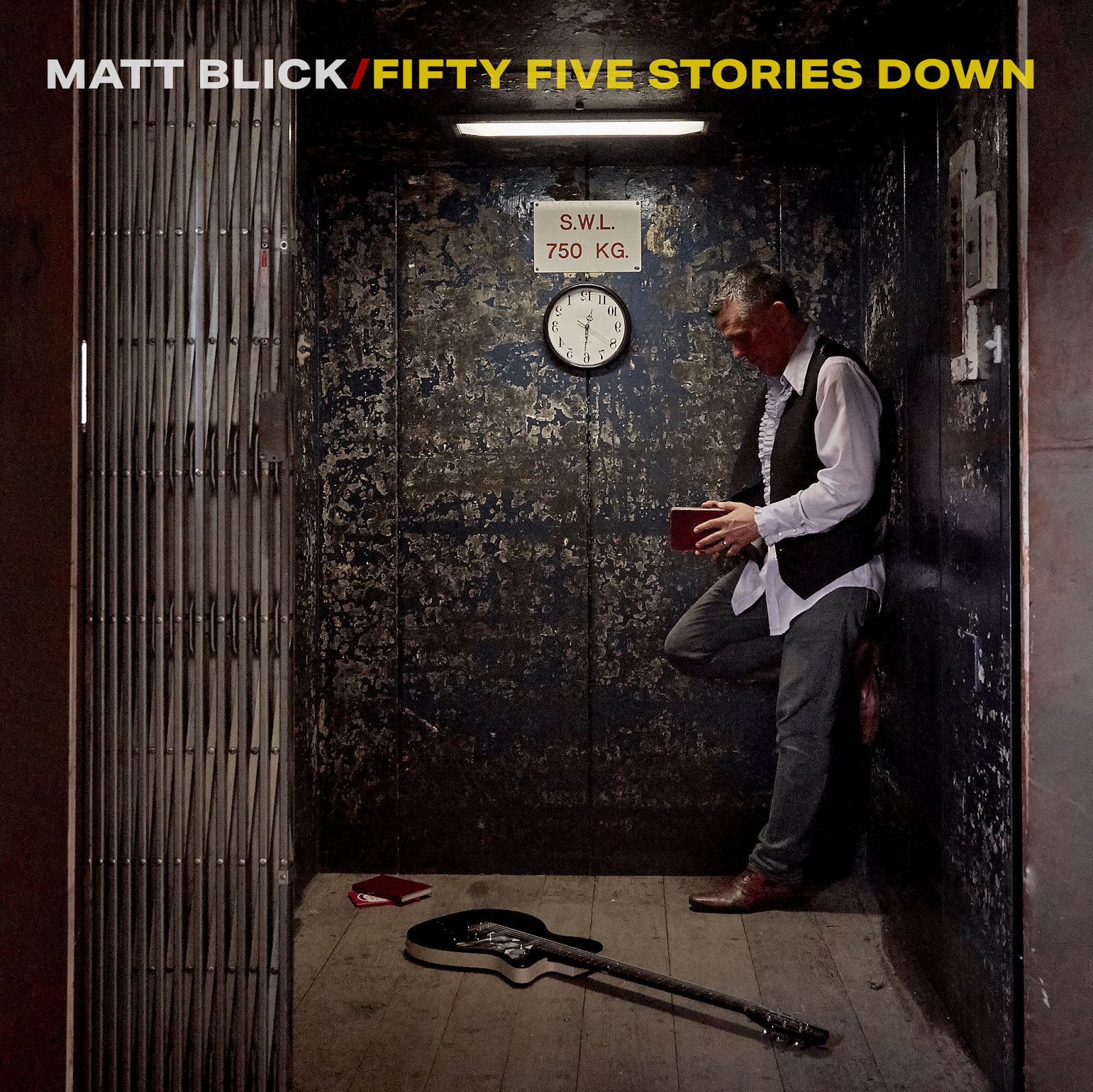


On my album Fifty Five Stories Down I wanted the listener to have the feeling of being 'in the room' rather than being a distant audience. So I recorded every sessions in entirety and cherry picked snippets of conversation between me and producer Daniel Wright to bookend the tracks (some so long they merited their own track). Nothing was staged or scripted* but comments were spliced together or moved to different songs to improve the flow. And there were happy accidents too like the mournful police siren during the song River of Suffering (3:08).

Edits And Extensions: The Strange Rhythm Scene Of John Lennon

I dig the people that notice that I have a sort of strange rhythm scene, because I've never been able to keep rhythm on the stage. I always used to get lost. It's me double off-beats.
John Lennon: The Rolling Stone Interview (Nov 23 1968)

The unintended tape edit in the chorus is not the only 2/4 bar. Every other section has one as part of the composition. The verse is a classic example of The Lennon Extension (Ticket 52) where his "well you know" needs a extra space to fit in. Try singing without the "well..."

You say you want a revolution, you know
We all want to change the world

The lyrics fit into 4/4 and is the way someone without 'double off-beats' might play it. The single-only solo retains the same half bar. The end of the pre-chorus has a 2/4 bar to allow a full two bars of building.


Cool And Unusual Embellishments


Though the 'shooby doo' is a pretty mundane example of a descant (Ticket 58) it's also a musical idea borrowed from another genre, in this case Doo-Wop. The guitar's shuffle pattern is borrowed from the blues and the switches from A to D and E hint at a 12 bar blues progression. The vocal melody utilises the major pentatonic scale almost entirely except for 'bluesifying the melody' (Ticket 22) with a b3 on "it's gonna be AL – right". All of which gives this folk song a playful, doo-wop/blues flavour (Ticket 25).

The song has some great instrumental hooks (Ticket 3) - the acoustic guitar riff at end of each chorus, the electric guitar fill at the end of verse 2 and the 'Indian' bass run down in the (album version) pre-chorus.

There's a couple of unusual choices too. It's normal practice to edit down a song for single release and the first thing to go is usually the solo but Revolution one of the few songs to add a solo rather than take it out. The single's solid blues ending is an improvement on the album's fade out. Fading is something the Beatles hardly ever did but on this song even the Esher demo fades.

Footnotes


Geoff Emerick saying "take 2"
As the take is actually Take 18, It's unclear why he is saying "take 2." It may be in response to Paul "humorously announcing the next take off mic as "take three?" or be a clipped part of a longer phrase "I'll take it to...".

Humorously announcing the next take off mic as "take three?"
Beatles Book.com

Unintended 2/4 bar
As 2/3rd of a triplet you could make a case for it being a 5/4 bar or even a 14/8. But that's above my mathematical pay grade.

The band is tight but communicates the mood
Ironically Give Peace A Chance uses the opposite method to achieve the same effect. It genuinely is sloppily performed and badly recorded and required later studio vocal overdubs to make it acceptable for release.

Each count-in was edited in from a different take
If you listen to Taxman you can hear two overlapping count-ins.

Nothing was staged or scripted
As a example of 'staged recording' listen to the start of Cigarettes And Alcohol by Oasis. The hissing guitar amp (and whistling) was overdubbed later for effect on top of the track, which becomes clear when it slowly fades out when the rest of the band enters.

Other posts on Revolution/Revolution 1

Monday, 1 July 2019

What Goes Online - Jul 2019


My new album is finally out on all digital platforms! 

Fifty Five Stories Down is a 12 song collection sung live in an abandoned Police Station with only a baritone electric guitar for accompaniment. Personal and political, intimate and irreverent, boneheaded and beautifully-crafted, you can buy or stream it wherever you do those kind of things (I like Bandcamp).

And if you're a Spotifier please follow me and add my music to any playlists you have lying about the place.

Podcasts

I recently had the honour of being a guest on the Musicality Podcast talking about (what else?) songwriting as part of 'Beatles Week'. Download it here or stream it below. Be sure to check out some of the other guests too.


My buddy Lee Pat has a cool video that I'd recommend - digging deep into the line cliches of Something - he's found a few more than me!


More on line cliches? Check out the descending root, descending flat 7th, and the ascending 5th (aka James Bond). Oh, and I've updated the Circle of Fifths playlist page too.

Live Chat


The legendary Mark Lewisohn is on tour! I've booked my tickets - how about you?


Long time friend of the site Famous Patrick paid me a visit from Minneapolis via Berlin. As well as viewing the 'holy city' he had to come and check out "where the Beatles played the Odeon in '63". Nice having you Pat!

Monday, 19 March 2018

What Goes Online Mar 2018


What have I been up to this year? Well you can always check in on my 'now' page but here's the savedyouaclick version ...


RE:BEATLED

I've been composing/arranging the mother of all Beatles mashups for Inspire Youth Arts for the ReBeatled Project with a mixed ensemble of young singer/songwriters, multi-instrumentalists and members of the Able Orchestra. You can hear and see the results here


And here


And the massed jam on Come Together


NEW ALBUM

I've also been prepping my new album with producer Dan Wright (The Most Ugly Child) which I hope to start soon.


If you can't wait I also have Home Truths a free album of demos ranging from instrumentals, political songs, love songs, style parodies to a song about York, a love song for my wife, a song called Biscuit that’s not about biscuits and lots more. Silly & serious, light-hearted and heartfelt, There’s also chord sheet pdfs for most songs and even a few pages of guitar TAB. Download it here or here.

LINKS

Landr were kind enough to link to a BSA post in 10 Ridiculous Songwriting Tips That Actually Work.

Temporary Bad Boys Podcast featured a song I co-wrote with the late great Hoopshank here. (Head Temporary Bad Boy Balance Lost produced and co-wrote my rap single My Ride).


BEATLES LINKS

Sick of the sound of me and just want to get back to the Beatles? Check out these stellar episodes of the Something About The Beatles Podcast -

Something About Middle 8's
Something About Ringo
Something About Skiffle (with Billy Bragg)


Join the mailing list to get the free, exclusive, Beatles Songwriting Academy podcast!

Tuesday, 27 September 2016

What Goes Online (Sep 2016)


I'm very pleased to announce my new EP Everything In The World Is Fighting Everything In The Sky will be released via Bandcamp iTunes and all on Nov 1st. Dean Jackson had the world premiere of my track Me And The Devil on his BBC Introducing show and you can stream it for the next 30 days here. I'm on around 1:33:30. You can read the blog post on what Charles Dickens and Tori Amos have to teach songwriters mentioned here

Speaking of streaming I want to recommend the Compleatly Beatles podcast. One mammoth episode per album (Revolver is 2 hours plus) humorous and informative. Find it on iTunes

Some great general Beatles writing: John Medd on discovering the Beatles and Martin Fitzgerald's introduction to the Help album

And in a more technical post Aaron Krerowicz looks at the way Paul McCartney extends melody lines in I Will.

Neil McCormick in The Telegraph imagines a Beatles 'Worst Of' album called (appropriately) 'Misery'

And Billboard interviews Donovan

In 1966, your album Sunshine Superman came out, as did Revolver, Pet Sounds, and Blonde on Blonde. What was going on that year creatively that we have these albums that 50 years later still resonate? 
Three things came together: There was the invasion of pop culture, with what they called folk music. Folk music ... invaded pop culture with meaningful lyrics. That meant protest, that meant civil rights, that meant explorations of the levels of consciousness. The second thing was ... the bohemian invasion of bohemian ideas, and that was self-change and responsibility for the future ... And the third element was we were really good. In 1966 we proved to everybody that the engineers, the producers, the songwriters and the fans were ready for something extraordinary and that’s what happened. The '60s burst wide open in '66 into full colour!


Would you like to receive exclusive bonus Beatles Songwriting Tips? Join the mailing list right here!

Saturday, 18 April 2015

The Legend Of Liverpool Football Club (Djimi Traore)


Don't normally toot my own flugel horn here on BSA, but here's a new video for my (remixed) song Djimi Traore which gives a very big nod towards the Fab Four, both lyrically and musically. The Beatles played a significant role in the development of the terrace singing which the song celebrates.


Download Djimi Traore here
Read more about the song here

Links

Monday, 2 September 2013

10:21 Honey Pie (pt.2)


Last time we saw how well McCartney wears the 1920's clothing of Honey Pie but for me the most impressive songwriting element is the way he rams together odd ill fitting chords but then smooths them over with an elegant melody.

How Strange The Change...

The odd chords may be old Beatles standbys - the Cm (m4 - ticket 8), the Eb7 (bVI - ticket 1) and the chords derived from going backwards through the circle of fifths (ticket 43) but Paul gets them in early (ticket 61) with the Cm (iv) in the 3rd bar of verse and the Eb7 (bVI) in the 3rd bar of the chorus and stays off the C maj (IV – ticket 7) till half way through the song (1:13 “thought of meeting you”). Though this sounds like a recipe for atonal disaster the reverse circle of fifth (or circle of fourths) movement actually keeps us grounded.

A7 D7 (G) - 0:24 end of verse “and if she...”
E7 A7 D7 G – 0:44 end of chorus A section “I'm in love...”
E7 Am D7 (G) – 1:14 end of chorus B section “makes me weak..”

The magic happens combining Eb7 and E7 – both the bVI and the VI are common substitutions but putting them next to each other (0:42) is a really arresting chord change.

You Can't Do That


Paul bluesifies his melody (ticket 22) as you might expect in a jazz style number but most of the out of key b3s are supported by chords

eg “Crazy” (Bb G Bb) over Eb7 (Eb G Bb Db)

and the melody is chord based with a few cool exceptions.

“North of England” (0:05) - b c a b over a Cm chord is a very spicy morsel. Though the the G major scale melody is fighting the out of key chord, Paul boldly goes for it.

The end of the B section is even more daring. Here the D# E F melody is not demanded by the key or the chords underneath (C E7 Am) yet Paul goes atonal for a few bars (1:13-1:18) “thought of meeting you makes me weak in the knee” and pulls it off with ease. I think we're afraid of dissonance in the west and could use it a lot more than we do, but you have to be a confident singer to pull it off. Remember – semitones are you friend!

He Got Rhythm

Another element that holds the tune together is the rhythmic cell of accented notes on the first beat and the “and” after the second beat. This is normally expressed as a three note phrase with notes either on

1 and (2) and
 or
1 (and) 2 and

- the loose phrasing means it's not always easy to say which is which!

You can hear this in action when Paul sings “working girl/ honey pie /crazy /lazy /you became /silver screen /thought of meet /makes me weak” and the same 'pushed third beat' rhythm is picked by the whole band through the song (1:36, 1:44, 1:49, 2:29, 2:37).

Something In The Way He Moves


But the most effective tool in wrangling unruly chords is the way Paul uses melodic fragments (ticket 9). Faced with tying together G - Eb7 with E7 - A7 and having almost no commonality with notes, Paul uses the same melodic shape* on the second and third lines. Here's the notes -

A Honey Pie - B D G
B You are making me crazy – D E G E D Bb G Bb
B I'm in love but I'm lazy - Bb B E B A G E G
C So won't you please come home - D B C D Bb A G

Notice we're not talking about repeating the notes or supporting chords, which are all totally different, but the shape -

A Honey Pie - 1st note up down
B You are making me crazy - 1st note up up down down down down up
B I'm in love but I'm lazy - 1st note up up down down down down up
C So won't you please come home - 1st note up up up down down down

The middle two lines also rhyme in the same place for emphasis and the last three intervals are an exact copy - note, drop a minor 3rd, return to first note. Has to be deliberate!

I guess the big takeaways from this song are

  • Listen to other genres of music and try to play them. For every fruity song that Paul wrote there are 10 'regular' Beatles tracks that were spiced up with a weird chord or progression that they discovered banging out show tunes in Hamburg. John and Paul didn't learn C#m7b5 or Daug5 from Chuck Berry songs.
  • Practice singing odd intervals over chords till they feel comfortable. Don't always go for the root third and fifth of everything.
  • Pay attention to and repeat shapes in your melody, not just notes. Especially when you're trying to sing over weird chords.


Next up. Happiness Is A Warm Gun. Oh boy. They just keep getting more challenging...

*I hadn't pulled apart Honey Pie at the time, but I used this approach to navigate the crazy chords in the verse of The Ballad Of NDC - though obviously Paul get's better results! In fact, nobody does it better...


Saturday, 9 March 2013

Back To Business


FAWM is over, my EP has been rammed down the giant pipe that leads to CD Baby, iTunes and Amazon (release date Mar 18th) and my single is out. So I'm going to try to get back on the Beatles train and have a new post for you soon. In the mean time have a look at this video for my single, constructed from clips of the animated short Paperman.


Download Let's Build An Airport - free from Noisetrade

Thursday, 14 February 2013

Let's Build An Airport


Long time readers of Beatles Songwriting Academy will know that a rarely post stuff about my own music here. I prefer to keep the focus on the mighty Lennon and McCartney (and Harrison) and present my own meagre offerings over at www.mattblick.com. However today is a VERY special day. I've released my debut single Let's Build An Airport on Noisetrade and (as you're ALL my close personal friends) you're welcome to a free copy!


Since this song, and all the others on my forthcoming EP, were written since starting BSA the fab four have had a profound effect on my writing. I'm hoping to detail a few things I've applied myself in future posts. But for now I hope you enjoy the single. Please share it, like it, tweet it, or whatever else it is you young people do in this technological age we live in!


Monday, 10 December 2012

10:11 I'm So Tired (pt.3)


12 Bar Snooze

One of the great mysteries to me about the Beatles evolution is how a band that cut their teeth playing 12 bar blues covers in Hamburg nightclubs could go on to pen so few 12 bar blues songs themselves. To be sure the influence survived in the bluesy vocal lines and inflections in melodies like From Me To You and She Loves You. But the 12 bars structure seems to be something they outgrew. Or did they? Because a surprising number of tracks that don't appear bluesy from Don't Bother Me to The Fool On The Hill are built on 12 bar sequences (ticket 35).

In I'm So Tired the chorus chord progression clearly owes a debt to the American south

A A A A
D D D D
E E A A

just switch the D's in bars 7 and 8 to A's and you have the most basic 12 bar you can have. But the AABBC rhyme scheme does a great job of disguise the origins.


On the verse

A G#7 D E
A F#m D E
A E+ F#m Dm Dm

we have 13 bars, but the Dm is really nothing more than the Lennon extension (ticket 52). John drags out the sequence merely to add “no no no” in precisely the way that John Lee Hooker or Robert Johnson might stretch a pattern to squeeze in one more fill or phrase.

In the verse, though the chords are a 106 miles from Chicago, the lyrical structure again reflects the blues.

Consider the stock lyrics scheme

“When you got the blues, you repeat the the opening line
I said, when you got the blues, you repeat the the opening line
Then sing something else, just make sure it rhymes”


essentially a three section structure with two parts the same (or similar) followed by one contrasting part. In I'm So Tired we have and 2 lines that start “I'm so tired...” sung over almost the same chord progression twice

A G#7  D E
A F#m D E

followed by a line that contrasts musically and lyrically -

  A                         E+            F#m           Dm
I wonder should I get up and fix myself a drink...

All in all a stellar example for ticket 35 - a non blues 12 bar structure.


Chords and Contrasts


While we're looking at that last line check out the chords. The song has only (!) three out of key chords (ticket 28) but each is an absolute gem. First the Dm in last two bar of the verse is the classic Beatles doo wop chord the minor 4 (iv) a trick so ubiquitous it's earned it's own ticket (ticket 8). Here instead of the doo wop approved progression IV iv I (D to Dm to A) we slam into it from a minor 6 (F#m to Dm to A) which is a progression we ran into last time in Bungalow Bill

He’s the E all-American G bullet-headed Am Saxon mother’s Fm son

Note: the final verse chord in both songs is a iv, both are Lennon songs recorded on the same day. Who says you can't recycle ideas?

You can hear this on She Loves You, You Won't See Me and I Will amongst others.

The other two chords, E augmented (E+) and G#7, both contain C natural which is the only out of key note that appears in the melody. The G#7 is the VII7 chord and is of interest because it's same striking chord Lennon used in Sexy Sadie

I'm So Tired - A G#7 D   E   -  I  VII7  IV  V
Sexy Sadie   -  G  F#7 Bm      -  I  VII7  vi

McCartney did something similar (using the minor version – vii7) on his most famous song

Yesterday - F Em7 A7 Dm - I vii7 III7 vi

Stuart Kidd and I used exactly the same G – F#7 Bm move on our song Sadie's Sister (hey, if you're gonna steal be shameless!) but this time the key is D major renedering the progression

Sadie's Sister - G F#7 Bm - IV III7 vi

which is similar to what Radiohead do in Karma Police

Lastly we have a lot of cool contrasts between sections (ticket 5). The verse has one chord per bar but the chorus spends a long time on each chords. Lyrically the verse states “I'm tired” but the chorus talks about why he's tired. And reflecting that distinction the rhythm of the verse melody is very dragged out with lots of melisma but the chorus is more rhythmic and bursting with nervous mental energy.

Monday, 3 September 2012

10:5 Julia (pt. 4) Lyrics


Half of what I sing is meaningless?

Julia is a fantastic example of odd structures and out of key chords. But that was something John Lennon often excelled at. Rarer, though not unique, is his brilliant command of lyrical imagery and form here.

The lyrics here really draw you in to the singers headspace – all the more remarkable when you realise the Beatles method of parallel lyrics (ticket 24) is largely absent and is there is no rhyme scheme at all! How does Lennon craft such compelling lyrics without the most common structural device in pop music?

Firstly we are dealing with a very compact lyrics (ticket 23) only 54 words in total. The title appears 15 times, the refrain so I sing a song of love 5 times and the hook lines calls me/touch me appear twice each.

The title bookends the 12 bar verses

Julia, seashell eyes,
Windy smile, calls me.
So I sing a song of love, Julia.


and appears twice at the beginning of the first and third of these longer verses.

Julia, Julia,
Ocean child, calls me.
So I sing a song of love, Julia.


No one ever walked away from this song asking “what was that track called again?”


Internal Rhymes

Lennon uses poetic devices like internal rhymes

shimmering glimmering
sea-shell eyes windy smile
reach you Ju-lia

and alliteration

sing a song
sea-shell
her hair
sky is shimmering
morning moon
sleeping sand

to make the lyrics 'sing', but for me the high point of the lyrics is where Lennon rhymes an idea rather than a vowel sound creating a brilliantly unique turn of phrase.

When I cannot sing my heart
I can only speak my mind


cannot pairs with can, sing pairs with speak, heart pairs with mind

this technique is a major component of ancient hebrew poetry like the book of Psalms.


Sea And Sky


Lastly John is incredibly consistent with his imagery. Though the song is about a real woman almost all the imagery is focused on sea and sky.

Sea - ocean child, sea-shell eyes, sleeping sand
Sky - windy smile, hair of floating sky, shimmering, glimmering in the sun, morning moon, silent cloud

This last ticket to write is something I employed on a song called There Goes The Moon. It's another song about a mysterious lady, but in that instance I tried to employ only lunar imagery. (You can download a free mp3 demo here). Honing a songs images like this can give a real sense of unity to a lyric and limiting yourself in this way can also force you to come up with lots of fresh phrases.

(By the way – I used the 'rhyming idea' concept to generate the title. Can you work out which Beatles song's title concept 'rhymes' with There Goes The Moon?)

Tuesday, 3 April 2012

Beatles Songwriting Academy/Krown Media Promo Video

Here's a promo video I filmed while doing a photo session with the very excellent and cool Krown Media


Monday, 18 April 2011

The Facial Hair/Creativity Ratio Theorem


Studying the Beatles for the last few years, I can't help but notice the link between their creativity and varying amounts of facial hair. At long last I'm finally ready to present my findings - in song!


Want some free downloads? You got 'em!

Chord sheet The Facial Hair/Creativity Ratio Theorem CHORD sheet 
mp3 The Facial Hair/Creativity Ratio Theorem MP3

Want some more free songs? OK!

Download all my FAWM 2011 songs for free!!!
Other free songs by Matt Blick

Up next: You Never Give Me Your Shaving Cream...I mean Money


[If you're subscribed to this blog via email, you will have to click on the post's title to watch any video content (the link will take you my site).