Showing posts with label Yer Blues. Show all posts

Tuesday, 7 April 2020

10:66 Revolution (pt.6) Fake Mistakes


Embrace (or Fake) Your Mistakes


One little detail that gives Revolution 1 the edge over Revolution for me are the little editing mistakes in the album version (Ticket 72: Embrace your mistakes).

At the beginning of the track there is studio chatter, a false start on guitar, followed by engineer Geoff Emerick saying "take 2"* and Lennon saying "OK" and near the end (3:23) a tape edit spliced together incorrectly resulting in an unintended 2/4 bar*. Lennon can be heard talking on an unmuted track (3:28) and you could even make a case for Lennon's "count me out … in" as something of a 'deliberate' error.

These all contribute to a very specific loose vibe for the track and what's important to remember is that though all of these things were genuine 'accidents', their appearance on the finished recording were not. Even with the fairly primitive recording gear available, they had the opportunity to go back and mute channels, redo tape edits and even take five minutes to say "John, make up your mind – are you 'in' or 'out'?". But they didn't. They chose to 'put a frame' around the mistakes and make them part of the art. Sometimes mistakes will result in a musical choice that you would never have thought of (the 2/4 bar) and sometimes it just helps to communicate a mood. Here the band wants to say "we're just having a jam, everybody join in" but rather than play sloppy with no rehearsal, the band is tight but communicates the mood by these little extras*.

Every time you hear a count-in on a Beatles record it's a deliberate choice. After all, most takes started with a count-in and almost every one was later edited out. But I Saw Her Standing There, Yer Blues and Taxman retained theirs, to communicate the "we're gonna rock out!" vibe. And not just retain them. Each count-in was edited in from a different take, presumably one that had more energy*.
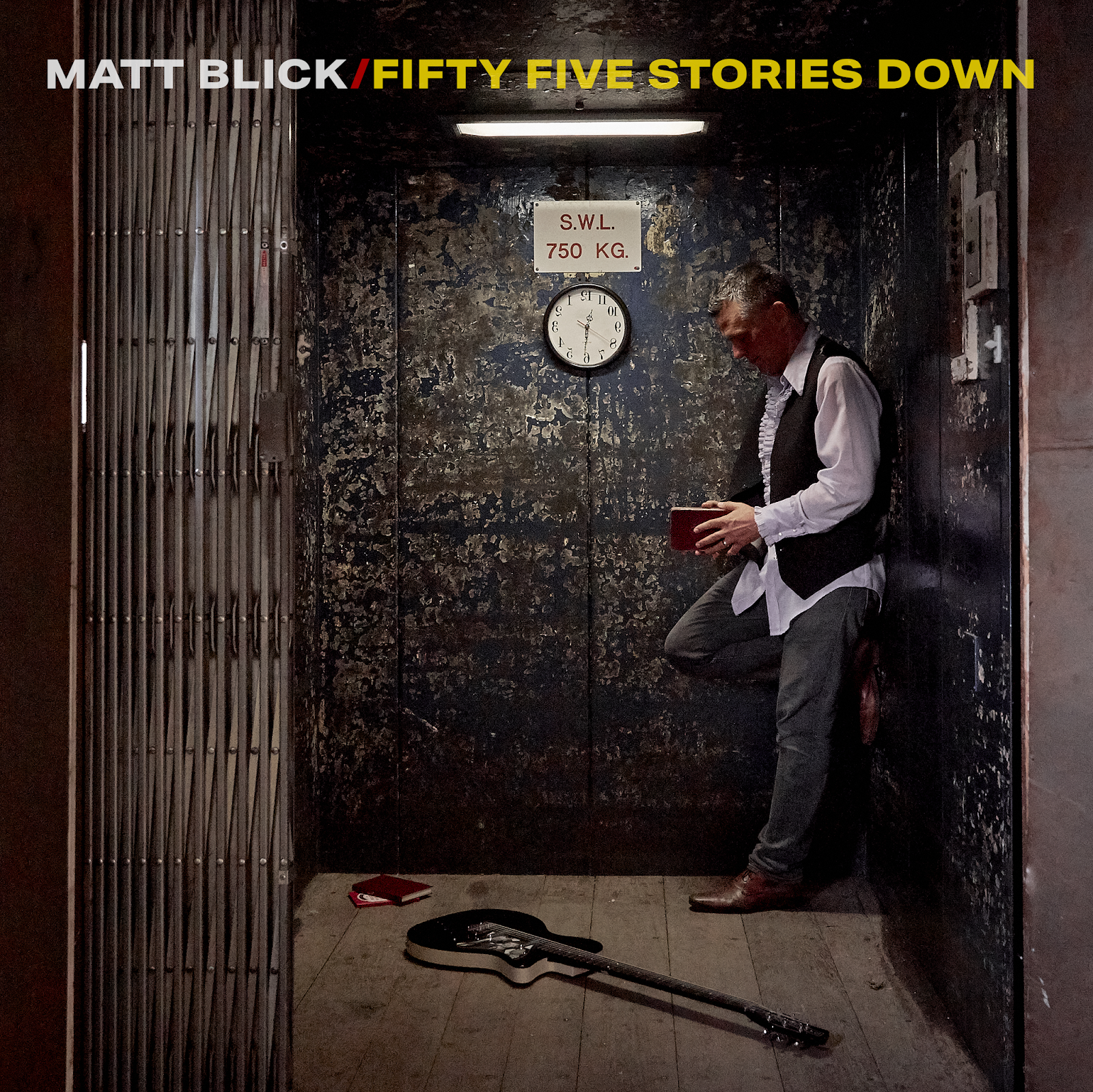


On my album Fifty Five Stories Down I wanted the listener to have the feeling of being 'in the room' rather than being a distant audience. So I recorded every sessions in entirety and cherry picked snippets of conversation between me and producer Daniel Wright to bookend the tracks (some so long they merited their own track). Nothing was staged or scripted* but comments were spliced together or moved to different songs to improve the flow. And there were happy accidents too like the mournful police siren during the song River of Suffering (3:08).

Edits And Extensions: The Strange Rhythm Scene Of John Lennon

I dig the people that notice that I have a sort of strange rhythm scene, because I've never been able to keep rhythm on the stage. I always used to get lost. It's me double off-beats.
John Lennon: The Rolling Stone Interview (Nov 23 1968)

The unintended tape edit in the chorus is not the only 2/4 bar. Every other section has one as part of the composition. The verse is a classic example of The Lennon Extension (Ticket 52) where his "well you know" needs a extra space to fit in. Try singing without the "well..."

You say you want a revolution, you know
We all want to change the world

The lyrics fit into 4/4 and is the way someone without 'double off-beats' might play it. The single-only solo retains the same half bar. The end of the pre-chorus has a 2/4 bar to allow a full two bars of building.


Cool And Unusual Embellishments


Though the 'shooby doo' is a pretty mundane example of a descant (Ticket 58) it's also a musical idea borrowed from another genre, in this case Doo-Wop. The guitar's shuffle pattern is borrowed from the blues and the switches from A to D and E hint at a 12 bar blues progression. The vocal melody utilises the major pentatonic scale almost entirely except for 'bluesifying the melody' (Ticket 22) with a b3 on "it's gonna be AL – right". All of which gives this folk song a playful, doo-wop/blues flavour (Ticket 25).

The song has some great instrumental hooks (Ticket 3) - the acoustic guitar riff at end of each chorus, the electric guitar fill at the end of verse 2 and the 'Indian' bass run down in the (album version) pre-chorus.

There's a couple of unusual choices too. It's normal practice to edit down a song for single release and the first thing to go is usually the solo but Revolution one of the few songs to add a solo rather than take it out. The single's solid blues ending is an improvement on the album's fade out. Fading is something the Beatles hardly ever did but on this song even the Esher demo fades.

Footnotes


Geoff Emerick saying "take 2"
As the take is actually Take 18, It's unclear why he is saying "take 2." It may be in response to Paul "humorously announcing the next take off mic as "take three?" or be a clipped part of a longer phrase "I'll take it to...".

Humorously announcing the next take off mic as "take three?"
Beatles Book.com

Unintended 2/4 bar
As 2/3rd of a triplet you could make a case for it being a 5/4 bar or even a 14/8. But that's above my mathematical pay grade.

The band is tight but communicates the mood
Ironically Give Peace A Chance uses the opposite method to achieve the same effect. It genuinely is sloppily performed and badly recorded and required later studio vocal overdubs to make it acceptable for release.

Each count-in was edited in from a different take
If you listen to Taxman you can hear two overlapping count-ins.

Nothing was staged or scripted
As a example of 'staged recording' listen to the start of Cigarettes And Alcohol by Oasis. The hissing guitar amp (and whistling) was overdubbed later for effect on top of the track, which becomes clear when it slowly fades out when the rest of the band enters.

Other posts on Revolution/Revolution 1

Friday, 3 July 2015

10:44 Yer Blues (pt. 2) Renewing The Blues


According to John Lennon Yer Blues (like I'm So Tired) was part of the “last batch of best songs”* he wrote with the Beatles, even though he also viewed it as a self-conscious attempt at Blues that bordered on parody.

All four members squeezed into “a room about eight by eight, with no separation” next door to the control room to lay down the basic track. So it's probably no surprise such unfriendly working conditions produced such a horrible sounding, badly-played track. Paul is using a Fender Jazz Bass for once but his leaden playing sound like early Alice Cooper at his most witless, George & John's solo are both saddled with super-wobbly 'wasp-in-a-jam-jar' tones. Even the tape edit at 3:17 is obvious and brutal, hacking into the '12 bar' sequence after 10 1/2 bars to splice in an earlier take ruined by clearly audible guide vocals bleeding all over the drum track. Only Ringo escapes with honour, skilfully navigating the time changes like Keith Moon with a restraining order.


But despite the recording and performance being well under-par there's a lot of interesting things in the songwriting itself.

New Blues Hues

One of the biggest challenges in doing blues is to do something new fresh with a well worn, constricted and predictable form.

Lennon tackles this head on by

  • Augmented a straight 4/4 or shuffle with odd time signatures and tempo changes (see the previous post) 
  • Departing from the stock 12 bar chord progressions
  • Substituting cosmically existential, and wittily referential, lyrics for the usual gritty 'here and now' everyday problems


As for chords, a standard blues turnaround in E would be

B7 | A | E | B7

Lennon's turnaround is essentially

G | B7 | E A | E B7

While the lasts two bars are a common substitution, flipping B7 for G and then switching the A with B7 really takes the blues in a new direction (literally, replacing the descending B7 to A with the ascending G to B7).

Lyircally, when people 'wanna die' in the blues, it's usually because of unfaithful partners and bad business deals (plus the occasional brush with the devil at the crossroads). Lennon takes things to a whole new level with lines like

My mother was of the sky
My father was of the earth
But I am of the universe
And you know what it's worth

Note this is the second white album song that is written for Yoko, about Lennon's mother, that mentions the sky.

My Mother was of the sky (Yer Blues)
Her hair of floating sky is shimmering (Julia)

Though it's slightly unusual for a blues to reference a song by another artist it's even rarer for the Beatles to quote anyone other than themselves.

Feel so suicidal just like Dylan's Mr Jones

is a reference to Bob Dylan's "Ballad of a Thin Man" from the Highway 61 Revisited album.

And Finally

Like most blues songs this doesn't use all 7 notes in the key (Ticket 40) and has a static melody over changing chords (usually the I and IV chord) (Ticket 48). The band stopping to emphasise lyrics (1:01) is also common but no less effective for it (Ticket 30)

The guitar lick that is the highpoint of every turnaround is a cool hook that is an irreplaceable part of the song (Ticket 3). Taken in isolation as triads it's

B – A – G#m – Gm – F#m.

If you're looking at it as upper part of the B chord it's

B – B11 – B6 sliding into B9.


*Rolling Stone interview with Jann Wenner (8 Dec 1970)


Links

Monday, 29 June 2015

10:43 Yer Blues (pt. 1) John Got (No) Rhythm


...Or The Art Of The 12.333 Recurring Bar Blues

John was a brilliant rhythm guitarist, despite the fact that he didn't have any real sense of timing

Ringo Starr: Rolling Stone

I dig the people that notice that I have a sort of strange rhythm scene, because I've never been able to keep rhythm on the stage. I always used to get lost. It's me double off-beats

John Lennon: Rolling Stone

John Lennon was too much of a free spirit and had too short of an attention span to be locked down to anything as mundane as a time signature. And for someone like that the only options are to function largely as a solo artist (in the Robert Johnson/John Lee Hooker mould), where you're free to add or subtract beats as you feel, or hope you find a band charmed by your talents and technically able to follow and interpret your whims. Every rhythmical idiot savant needs a group of geniuses with the patience to spot and interpret his genius. In the Beatles Lennon found his perfect support group. Johnny Lennon and the Enablers would have been a great name for the band.

Yer Blues, like Happiness Is A Warm Gun, is an important song because it reveals what Lennon's maverick approach to counting could produce when indulged

The 'fake' count in reveals* Lennon envisioned the song as a very slow 12/8 time. Making it a 6 bar blues. But the 5th bar has two extra 8th notes

12/8   E | E | A | E |
14/8   G B7 |
12/8   E A E B7 |

How you subdivide that 5th bar is up for grabs – 6/8 and 8/8? 12/8 then 2/8? But the genesis is clear. Lennon's just delaying the next bar to allow the guitar lick and the vocal line to finish. This is the essence of the Lennon Extension (Ticket 52). There is a way to keep to 12/8 by slightly overlapping the guitar and vocals. And many bands would have forced their rhythmically challenged singer into it. But all credit to the Beatles for having the guts to their wayward genius be.

So if this is a 6 bar oddity, why does it feel like a 12 bar blues? Well, if you hear it as 6/8 instead of 12 you can immediately see the standard progression take shape.

6/8   E | E | E | E |
6/8   A | A | E | E |
6/8   G |
8/8   B7 |
6/8   E A | E B7 |

Four bars on the tonic (I) chord two on the subdominant (IV) back to the tonic for two (I) then a four bar turnaround. Replace G - B7 with B7 - A and lose the rhythmic shenanigans and we could be playing any of a million blues songs. As it is Lennon adds a 3rd of a bar making this a 12 and 1/3 bar blues, or if you prefer 12.333 recurring bar blues.

In the 3rd and 4th verses Lennon introduces more rhythmic weirdness. The first four bars (sticking to our 12 bar template) switch to double time. Millions of songs double (or halve) time with no sense of crunching gear change.

So 1  +  2  +   3  +  4  +

becomes 1 2 3 4 1 2 3 4

but in 12/8 or 6/8 each beat is divided into three

1 + a 2 + a 3 + a 4 + a

so the new double-time beat is falling in between the + and the 'a'. This makes the switch from one to the other very tricky to pull off - kudos to Ringo here who uses his fills in bar four to ease the band back into the half time feel of bars 5-12. In the 5th verse the band never switches back, remaining at the double-time tempo right through the solos.

All this makesYer Blues an important song for using polyrhythms (Ticket 29) and changing time signatures between sections (Ticket 15).

PS

The Ocean by Led Zeppelin has a number of things in common with this song.

  • Odd time signatures
  • A change in feel to straight ahead shuffle after a very noticeable tape edit
  • A reference to old timey music connected with the shuffle (Lennon: “Even hate my rock and roll” Plant: “Doo-wop be dooby dooby”)
  • Ending in a fade out (rare for Zep – very rare for Beatles)
  • A vocal count in

* Lennon's count in is the third fake one we've come across – both I Saw Her Standing There and Taxman have count-ins spliced in from different takes just for effect.

More on Yer next time...


Links

Monday, 22 June 2015

For Yer Blues


Was [Yer Blues] deliberately meant to be a parody of the English blues scene?

John Lennon: Well, a bit. I'm a bit self-conscious — we all were a bit self-conscious and the Beatles were super self-conscious people about parody of Americans which we do and have done. I know we developed our own style but we still in a way parodied American music... there was a self-consciousness about singing blues. We were all listening to Sleepy John Estes and all that in art school, like everybody else. But to sing it was something else.


Rolling Stone interview with Jann Wenner (8 Dec 1970)


Links

Monday, 5 November 2012

The Band Who...Stated Their Name Clearly For The Record


Pop Quiz! What do all the following songs have in common?

Unchained Melody - The Righteous Brothers
Space Oddity – David Bowie
Sympathy For The Devil – Rolling Stones
The Weight - The Band
Paranoid – Black Sabbath
Immigrant Song – Led Zeppelin
Bohemian Rhapsody – Queen
Smells Like Teen Spirit – Nirvana
She Sells Sanctuary – The Cult
Song 2 – Blur
Enter Sandman - Metallica
Paranoid Android – Radiohead
The Scientist – Coldplay


Answer: None of the titles listed above appear anywhere in the lyrics.

Some bands are serial offenders, taking 'Title Avoidance Syndrome' to the extreme, like My Chemical Romance

You Know What They Do to Guys Like Us In Prison
Honey, This Mirror Isn't Big Enough For The Two Of Us
It's Not A Fashion Statement, It's A F***ing Deathwish

or employing it in a tasteful minimalist way like U2

Bad
Wire
Gone
Exit

But these bands are exceptions. One of the most foundational principles for making a song memorable is combining the title with a hooky melody and repeating it enough times for it to worm it's way into your subconscious. Now perhaps if your chorus lyrics are

“I need your love, I need your love, God speed your love to me”

“Woo hoo, well I feel heavy metal”


or even

“Argh argh aaaaaaaaargh....ARGH”*

you might be wise to write something else on the label. But successful songs with obscure titles are a rarity, if for no other reason than people can't buy a record if they have no idea what it's called. The Beatles understood this principle.


Of 211 tracks released by the Beatles, 
199 feature the title prominently.


Of the 12 exceptions, 1 is an instrumental (Flying, the incidental music from Magical Mystery Tour). Five more feature fragments of the title, but not the whole -

Revolution 9 - Number 9, number 9
The Continuing Story Of Bungalow Bill - hey Bungalow Bill, what did you kill?
She Said She Said - She said, I know what it's like to be dead
Love You To - I'll make love to you, if you want me to
Wild Honey Pie - (the only title that's longer than the lyrics) Honey pie, honey pie

This leaves a grand total of 6 songs that never mention the title

For You Blue
The Inner Light
A Day In The Life
The Ballad Of John And Yoko
Tomorrow Never Knows
Yer Blues

They are almost all album tracks (apart from Ballad Of.., and b-side, The Inner Light). But what's most interesting about this list is that every one is a Lennon or Harrison song. There is not one genuine McCartney song among them**.

If you want to understand Paul's success as a commercial pop writer this is one small, but undeniable, key.

---------------------------------------------------------------------------

*Unchained Melody (The Righteous Brothers), Song 2 (Blur) and Immigrant Song (Led Zeppelin) respectively.

**McCartney was a co-writer on Flying, and let's be honest Wild Honey Pie is a weird outtake rather than a song in any traditional understanding of the word.


Read more about the Band Who...

...Kept Expanding
...Lived Outside
...Needed No Introduction
...Were Men Of Few Words

Friday, 6 July 2012

Beatles Coverville 8


Every thanksgiving Brian Ibbott's show Coverville is given over to a special double length Beatles episode. The latest episode has some great tracks. I loved Girl In A Coma's jangle pop cover of While My Guitar Gently Weeps and Halestorm's brutal take on I Want You (She’s So Heavy) so much that I'm going to feature them in future posts. Also worth a listen is Yer Blues in the capable hands of The Jeff Healey Band.


The Vegetarians cover Magical Mystery Tour and manage to shoehorn in quotes from most of the other MMT songs, Greensky Bluegrass turn Got To Get You Into My Life into a country waltz and Dick Hyman manages to turn an annoying song into... well, you be the judge!

Download the show here