Showing posts with label The Long And Winding Road. Show all posts

Wednesday, 14 October 2015

Golden Ticket: Keep The Tonics Apart Till The End (Ticket 74)


How to write a McCartney-style flowing, non-repeating, melody

I'm going to interrupt the regular (ha!) Hey Jude posts to look at one way McCartney manages to write such memorable, yet non-repetitive melodies.

In the musical language the tonic note and the tonic chord function as a 'full stops' [US – 'period'] in the music. The effect is particularly strong when they happen at the same time. Here are three examples (all verses) where McCartney cleverly uses the tonic and it's chord sparingly and delays them occurring together till the end of the section. In this way McCartney uses our inbuilt longing for resolution to keep us hooked till the very end.

Hey Jude

Hey Jude starts on the tonic chord (F) with the melody moving from 5th to 3rd (Hey Jude). Landing on the third is just enough to give an open ended feel and keep a sense of forward motion. Try singing Hey Jude on C to F (5 to 1) or A to F (3 to 1). Lands with a thud doesn't it?

Next comes a tonic NOTE, the high F on sad SONG AND make but far from resolving this sits very unstably on top of a C7 chord.

The next time we hear the tonic CHORD the melody descends through D C Bb to A (a 6th to the 3rd) on Be - te - e - er. Again landing on the 3rd feels unfinished.

There are some 'blink and you miss them' tonic NOTES over a Bb chord (let HER inTO) before we land on the tonic CHORD again but this time the word HEART is sung on the 5th.

Another fleeting F, this time low (THEN you can start), before finally melody and harmony unite on the tonic to make it BettER. But then we're off again on another delayed gratificational mystery tour as we launch into the next section.

Mother Nature's Son

Here we're in the key of D.

Line one starts and ends on the tonic chord but the melody starts and ends on the 5th.

On MOTHER naTURes son we get the (high) tonic NOTE over the Bm (vi) chord giving us a partial resolution.

Fast moving 3rd, 5th and 6th's appear over the tonic CHORD in line three (all day long), though the tonic chords are D/A's and feel slightly less resolved in themselves than straight D major chords.

We conclude with high D notes over a D major (tonic) chord on EVeryONE.

Again Paul is delaying the point that the tonic chord and tonic note coincide to the very end of the section.

The Long and Winding Road

Here we're in the key of Eb major.

Though the second note is a high Eb (the LONG and) we start on a Cm chord (vi).

By the time we hear our first fleeting tonic CHORD (Eb maj) the melody lands on a Bb (the 5th) (that LEADS to your door) this only lasts for 2 beats anyway before twisting round with an Eb7 (I7) giving the false impression that we're about to change key to Ab major*.

The next time we hear the tonic NOTE (will neVER disappear) it's sitting unstably on a Gm chord (iii). This idea repeats exactly on alWAYS leads me.

Between these twin motifs the melody descends C Bb G F Eb on the word BEFORE. This time the low tonic note is sitting on top of a Db/Eb chord, which functions in exactly the same way as the Eb7 chord - pulling strongly towards an Ab major chord.

Finally, as I have written about before, the melody ascends directly to the tonic note C C D Eb Eb (lead me to YOUR DOOR) at the same time as the chords move in a very strong 'circle of fourths' movement** (Fm Bb7 Eb) towards the tonic chord.

Practical Application

Many melodies never 'get off the ground' because they are rooted (literally) to the ground, returning to the 'root note' over the 'root chord' again and again through their course. With this method of melody writing, both tonic note and tonic chord can appear - but not together (or at least for any length of time). Keeping them apart till the very end of the section builds suspense.

*This is the same V of IV move recognisable in the link between the verse and the bridge in Hey Jude.

**This is often referred to as circle of fifths which is something of a misnomer as the chords are travelling BACKWARDS through the circle of fifths, thus from Fm we move up a fourth to Bb7 and then up a fourth again to Eb major.


Would you like to receive exclusive bonus Beatles Songwriting Tips? Join the mailing list right here!


Links
More 'Golden Ticket' Posts
70+ Songwriting Tips From The Beatles

Monday, 21 September 2015

10:48 Hey Jude (pt.2) Lyrics - How Do You Solve A Problem Like McCartney?


I'll be honest folks. When I started work on Hey Jude I was tempted to induct it into the Lyrical Hall Of Shame. The combination of dummy lyrics that never got replaced, words chosen for the way they sound, and 'it-means-whatever-you-want-it-to-mean-man' attitude adds up to a lame lyric riding the coattails of a world class melody. And that's before you realise that half the song consists of the word 'nah' sung 209 times.

But digging deeper I've realised the lyrics display such structural genius that I'm more than willing to give Paul a pass on this one. But let's look at the negatives first.


Star Wars For Dummies

As was often the case, McCartney had the music locked by the time the recording started but the lyrics were still in flux (like Rocky Racoon and I Will). If you listen to the Anthology 3 rehearsal Paul doesn't have them all (or he doesn't know them). He indulged in a Yodaism in the phrase “for well you know that it's a fool” and the song contains placeholders lines, as Paul admitted

I remember I played it to John and Yoko, and I was saying, 'These words ['The movement you need is on your shoulder,'] won't be on the finished version'... and John was saying, 'It's great!' I'm saying, 'It's crazy, it doesn't make any sense at all.' He's saying, 'Sure it does, it's great.'" *


Creepy Words Of Wisdom

Secondly, the song had an odd genesis, which goes some way to explaining the bizarre interpretations that have followed.
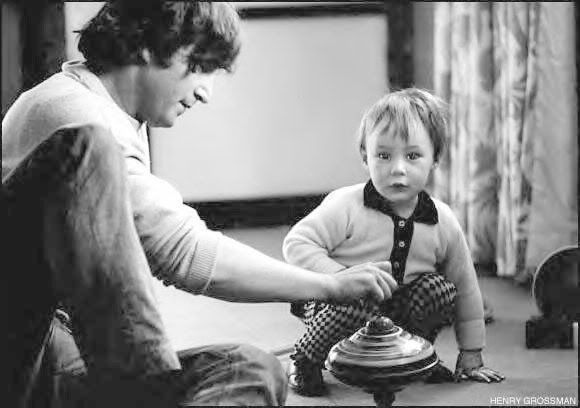
It was optimistic, a hopeful message for Julian: 'Come on, man, your parents got divorced. I know you're not happy, but you'll be OK.' I eventually changed 'Jools' to 'Jude'**

Changing Jools to Jude cos it 'sings' better is all well and good. But this is a song written to comfort a 5 year old boy about his parents divorce, yet it seems to consist of philosophical advice on getting a girlfriend - a flower-powered take on the 'love life advice' sub-genre that dates back to She Loves You.


There were clearly other biographical currents bubbling up into the song. Paul was in the no(wo)mansland between Jane Asher and Linda Eastman. John heard it as an endorsement for his relationship with Yoko, a thumbs up from Macca's subconscious. Both Beatles were caught between their commitment to making art with multiple (even unintended) meanings and their contempt for the public reading their own meanings into Beatles lyrics. John in particular felt embarrassed at doing exactly what he condemned in others

He said it was written about Julian … But I always heard it as a song to me. Now I'm sounding like one of those fans reading things into it... Think about it: Yoko had just come into the picture. He is saying. 'Hey, Jude'-- 'Hey, John.' Subconsciously, he was saying, 'Go ahead, leave me.' On a conscious level, he didn't want me to go ahead. The angel in him was saying, 'Bless you.' The devil in him didn't like it at all, because he didn't want to lose his partner***

The debate over open interpretation was thrown into sharp focus once Charles Manson got his hands on a copy of the White Album, read murderous things into the lyrics of Helter Skelter and Piggies, and put his crazy interpretations into action.

Advice on preschool love and loss? The Pre-Ballad Of John And Yoko? Or a Dear Jane letter, containing a deep and meaningless line about a parrot?**** No wonder Manson et al had a field day.

Lennon for what it's worth never changed his assessment, calling Hey Jude

“[Paul's] best song" and “a damn good set of lyrics” *****

So what do I know? Let's look at the good stuff.


A fine line between stupid and clever

For starters verse 4 is a mutated hybrid of verse 1 and 2. This makes it feel familiar but not totally predictable. As usual the song is full of parallel words and phrases (Ticket 24)

make it bad/better/you were made

let her into your heart/under your skin

let it out/in

don't make it bad/be afraid/let me down

remember to/the minute you let her into your heart

plays it cool/a little colder

carry the world upon your shoulders/movement you need is on your shoulder


Also McCartney manages to 'break' the rhyme scheme in the second bridge without making it feel wrong or awkward.

In the first bridge the rhyme scheme is

AAB - CCB (pain/refrain/shoulders – fool/cool/colder)

but the second bridge is

AAB – CCD (in/begin/perform with – you/do/shoulder).

Feels really jarring when you focus solely on the last words doesn't it? (Another case for not keeping a meaningless dummy lyric) but in the song it sounds fine. (Be honest. Have you ever noticed it before?). McCartney's masterstroke is that he breaks the rhyme using a word that rhymes with the first bridge, so it feels right even though it's totally 'wrong'.

We've encountered this technique before in The Long And Winding Road (and Ringo break a rhyme for a different reason in Octopus's Garden) so it's high time it got it's own ticket. Welcome Ticket 73.


But the crowning achievement is the way Paul uses internal rhymes to create a kind of odd-meter, seven line stanza that transforms the verse from this

Hey Jude, don't make it bad
Take a sad song and make it better
Remember, to let her under your skin
Then you'll begin to make it better

into this

A7 - Hey Jude, don't make it bad
A3 - Take a sad

B6 - song and make it better
B6 - Remember to let her

C4 - into your heart
C4 - Then you can start

B5 - to make it better

More amazingly he maintains this punishing rhyme scheme perfectly through the three remaining verses

Hey Jude, don't be afraid
You were made
to go out and get her
The minute you let her
under your skin
Then you begin
to make it better

Hey Jude, don't let me down
You have found
her, now go and get her
Remember to let her
into your heart
Then you can start
to make it better

And there's a few other internal rhymes scattered around. The first verse contains a bonus rhyme

Hey Jude, don't make
it bad, Take
a sad song...

Beautiful. And we're not done yet. There's a few more things to say about lyrics...

Footnotes

* Paul 1974  Beatles Songwriting And Recording Database
** Paul Anthology (p.297)
*** John in David Sheff: All We Are Saying
**** Paul called the line “a stupid expression; it sounds like a parrot" Anthology (p.297)
***** John 1972 interview and All We Are Saying Beatles Songwriting And Recording Database 


Links

Monday, 12 March 2012

11:12 Two of Us


Two of Us was still called On Our Way Home when it was recorded which, though it may not be a better title, is in a more prominent place melody-wise. The song seems like a return to the early Beatles style with dual-lead vocal and all acoustic guitars. There's a 3 note guitar intro that's very hooky (Ticket 3) coupled with a false ending (Ticket 47) and even a whistling coda. The song motors along nicely, though it does slow down over the duration.

McCartney demonstrate his trademark lyrical vagueness in this song. Are the 'two of us' Lennon and McCartney or Paul and Linda? Most likely a mutated combination of both.

Technically the lyrics run the gamut of good, bad and ugly. The internal rhyme of hard earned pay/on our way back home is clever and moves the song along. The mildly nonsensical sending postcards / writing letters on my wall could be a play on words (letters of the alphabet vs written epistles) but two of us...standing solo? And just like The Long And Winding Road, Paul sets up a rhyme scheme only to abandon it when the going gets tough.

pay-way/driving-arriving
wall-way/matches-latches
sun-way/paper-nowhere (with bonus 'nearly rhyme' raincoats-solo)

The real songwriting gold though, is in the odd time changes coupled with the melodic cells and we'll look at those next time.


Monday, 13 February 2012

Golden Ticket: Madrigalism


In my post about The Long And Winding Road I introduced a rather abstract songwriting tip (Ticket 49) which was to have the music reflect the theme of the lyrics in some overarching, profound or hidden way. At the simplest level this is called word (or text) painting or, in broader terms, madrigalism.

Here's a few exploratory thoughts on this with examples from other artists.


Word Painting

The simplest way to make your music reflect your lyrics is word painting - including a few notes or a sound effect that illustrates your lyrics at that point. Think of the keyboard part that follows "visible shivers running down my spine" (1:16) in Watching the Detectives (Elvis Costello) or the cymbal/bell/chime after “sends shivers down my spine” (2:05) in Bohemian Rhapsody (Queen). Pink Floyd have a little bell sound after "Just a little pin-prick" (2:49) in Comfortably Numb  and A Day In The Life's “woke up, got out of bed” is preceded by the sound of an alarm clock.

All of these could be classed as icing on the cake and are usually little 'post production touches' (with the exception of Paul's alarm call which was on the original track).

Groove, Timbre, Range

More fundamental to the start of the songwriting process is the letting the lyrics dictate the whole groove of the song.


Iron Maiden give two good examples with the galloping rhythm of Run To The Hills (0:48 onwards) and The Trooper (strangley enough also 0:48 onwards) accompanying tales of Crimean calvary battles and Native American warriors.

Trains also suggest a particular groove as Elvis Presley (Mystery Train) and Johnny Cash (Folsom Prison Blues) can testify. And lyrics can even suggest the timbre and range. Spinal Tap found the perfect way to accompany Big Bottom – play it on THREE bass guitars!

Mood

Next, what about ways to embody the mood? Eminem's Lose Yourself captures the claustrophobic battle against obscurity by a constantly pushing rhythm that never escapes the driving D bass note.


Private Investigations (Dire Straits) on the other hand is about a world weary private detective. The track is painfully slow and the always descending, always modulating chord progression (0:53) is like puzzle to be solved.

One Season by The Roches is a tale of love gone sour. Though the tune starts rationally enough but, as the relationship becomes more dysfunctional, so do the backing vocal harmonies (starting around 2:23).

In my own song [Everything Is] Broken I tried to reflect brokenness not only in the lyrics (which are full of broken things from coffee cups and plumbing, to peace treaties and marriages) but in broken vocal phrases and odd time signatures with missing beats. Even the very last word of the song is missing.

Melody Shape

More fundamental than mood or groove, the lyrics can shape the very melody that supports them. The ever rising "Love lift us up where we belong" in the Nitzsche/Sainte-Marie/Jennings hit is one technique that's been around at least since Handel wrote “Every valley shall be exalted...”, but one of the smartest examples must be Roger's and Hammerstein's Do-Re-Mi from The Sound Of Music.


Everyone knows the chorus

Doe- a deer, a female deer
Ray- a drop of golden sun
Me- a name I call myself
Far- a long long way to run
Sew- a needle pulling thread
La- a note to follow so
Tea- a drink with jam and bread
That will bring us back to do oh oh oh

but not everyone knows the context. The song is about musicians practicing their scales. So we have a song about scales using the solfège words for the intervals (Do-Re-Mi-Fa-So-La-Ti-Do) where you sing the very intervals you are singing about. Genius.

Chord Progression, Structure


That same kind of literalism can shape the chord progression or even the overall structure. Hallelujah (Leonard Cohen) describes the chord progression he is playing in the lyrics - “It goes like this, the fourth, the fifth, the minor fall, the major lift” just as Cole Porter had done 40 years earlier in Every Time We Say Goodbye, "How strange the change from major to minor". Natasha Beddingfield went for a similar, though less accurate, effect in These Words “Threw some chords together, the combination D-E-F”. (The chords are actually Bb/D, C/E and F but that doesn't quite sing as well!). At the subtle end of the spectrum you have The Long And Winding Road's weary trek to the 'home' chord. At the other end the song becomes a musical in-joke as in 10CC's, I Bought a Flat.

I bought a flat
Diminished responsibility
You're de ninth person to see
To be suspended in a seventh
Major catastrophe
It's a minor point but gee
Augmented by the sharpness of your
See what I'm going through
Ay to be with you
In a flat by the sea


and Matching Mole's (Robert Wyatt) Signed Curtains doesn't so much break the fourth wall, as demolish the whole house.

Opposites

Lastly, you can deliberately do the opposite of what your lyrics say. This works best in humour songs or when it serves to reveal something about the subject. Gilbert and Sullivan's pirates bellowing about how quiet and sneaky they are in With Cat-Like Tread (The Pirates of Penzance) only confirms how useless they are. And Mary Poppins, who sings lullabies entitled “Stay Awake” and slides up bannisters, natural goes UP when singing “a spoonful of sugar makes the medicine go DOWN”.

Conclusion and application

The great thing about this approach is can work in several ways and be employed at different stages of writing and recording.


First it can function as a way to beat the blank page. Rather than just strumming aimlessly with a set of lyrics or a title, ask yourself what kind of groove would suit the concept, what instrumentation, what tempo? Or what melodic shape would the key individual lines naturally take?

The method can also serve to function as what some authors call a 'spine' for your story (or song). Some key idea that give your song a sense of internal logic or identity. Whether it's plain to the listener or not isn't so important. Some things are obvious, some things only reveal themselves on the 10th (or 100th listen) but they do give a unity to the song.

Finally you can just use it as inspiration to add little finishing touches to a mix with sound effects or momentary overdubs.

So to recap, cheat sheet style, consider working on

  • Word Painting/sound effects – 'shivers', alarm clocks
  • Groove/Timbre/Range – Horses, Trains
  • Mood – Lose Yourself, Private Investigations
  • Melody Shape – Do Re Mi
  • Chord Progression/Structure – Hallelujah, Every Time We Say Goodbye
  • Opposites – A Spoonful Of Sugar


Know any other examples of these techniques?
Have you used them successfully in your own songwriting?
Leave me a comment!


Thanks to everyone on FAWM, MattBlick.com and Twitter who suggested ideas and songs for this post, especially Ashley ChittockCheekmeat, Rod Johnson, Nancy Rost
, David Hendricks, Thomas Spademan of Cookiefinger and, of course Wikipedia.

Monday, 28 November 2011

11:8 The Long And Winding Road (pt.4)


In this final post on The Long And Winding Road we get to the heart of why this song is such a success. The song is about being on a never ending journey home to a loved one. Every element - chords, melody and lyrics - work together perfectly to that end.

Chords

More than anything else the chord progression is the key to the mood. As soon as we hear a root chord (in this case Eb major) we have a sense of arriving 'home' (in fact it is often called the home chord). So if you were writing a song about trying to get home but never really arriving what would you do with the 'home' chord? Well Paul McCartney doesn't really arrive at the home chord till the last word of the verse. And he never gets to it in the bridge.

But he's even smarter than that. Here's the verse chord progression

Cm, Ab/Bb , Eb Eb7, Ab
Ab Gm, Cm, Fm Bb7, Db/Eb
Ab Gm, Cm, Fm Bb7, Eb

as you can see we have a root chord in the 3rd bar. Isn't that home? Not when all we get is a lousy two beats we're interrupted by Eb7, which leads us strongly to the key of Ab major.

So now we're a little disorientated. Are we in Eb major or Ab major?

The Gm to Cm change quickly make us suspect we are in Eb major. Everything points to Eb and when we get Bb7 it seems beyond doubt. There is no other chord that leads to Eb as strongly. Let's go home!

Hey! Wait a minute! Db/Eb? That's not even in the same key! In fact it leads us strongly back again to, you guessed it, Ab major.

So are we in Eb major or Ab major? (and haven't we been here before?).

And now we have exactly the same chords cycling by again, like familiar landmarks turning up just when we thought we had taken a different path.

Yep! There's the Bb7 again!

Ah, you can't fool us so easily. Sure, it looks like you're going to lead us to Eb, but you tricked us and lead me back here once before.

Eb major! We're home.

Home Sweet Home

So chord-wise we thought we were heading home, but we took a few detours, which led us back to the long and winding chord sequence that eventually led us to (the) home (chord).

And it's more than a single V chord like Bb7 that tricked us into thinking we re going home.

Consider the progression that occurs twice in the verse

Gm, Cm, Fm Bb7, Eb

we are cycling through the circle of 5ths G - C – F – Bb – Eb (ticket 43) the long and winding road through the keys!

Let's look at the bridge chord progression -

Eb/Bb Ab, Eb/G Fm Bb7
Cm (verse)

This ends with a shorter version of the circle (F – Bb – Eb), the first time heading to Eb/Bb (a brief root chord unsettled by a different bass note) and the second time landing on the vi chord (Cm) instead of the root when it heads back to the verse. Another false ending!

If you listen to the LIB Naked album you can even hear that McCartney further delays the Eb chord in the final verse (lead me to your door) while he restates the main theme instrumentally over Cm*, before finally finishing on one glorious full root chord.

Home Sweet Home.

Melody & Lyrics

The verse melody, like the chords is long and winding. It keeps returning to themes, without ever repeating the entire melody, it hits the root note but never rests there till the final note of the section.

Though the lyrics don't make complete sense they really capture a feeling of being on an epic journey,  in one way in particular. Whenever we do land on the root note and the home chord together we get a phrase that speak of being home. As Paul sings lead me to your door and let me know the way the melody is literally leading him home to the root note.

Beautiful stuff. Let's call that Ticket 49.

Next Let It Be.

*Restates the main theme instrumentally over Cm
Paul is still playing the Cm on the 'original' Let It Be album - it's just that Phil Spector is totally obliterating Paul's harmony by superimposing his orchestral cast of thousands playing a different chord on top. Add that to the list of Paul's beefs with this track.

Monday, 21 November 2011

11:7 The Long And Winding Road (pt.3)


So we've looked at the lyrics and whole sackful of songwriting tricks. Today let's look at the cool way McCartney develops the main theme in the first, third and fifth lines of the verse.

Here's the opening phrase – chords above, melody notes below

        Cm                           Ab/Bb
The long and win - ding road
D     Eb   D    Bb     G     C

The Beatles repeatedly emphasis this as a hook by doubling the vocal melody on the piano and dropping out as a band (ticket 30). The melody is basically a descending Gm arpeggio (D Bb G ). But superimposing this over the top of the Cm chord transforms it into a Cm9 arpeggio – C Eb G Bb D.

Ab         Gm                       Cm
      Will ne - ver dis – ap - pear
      C     D    Eb  Bb   G     C

the third phrase is very similar the same five notes end the phrase, but the order of the D and Eb are reversed. This gives a real sense of familiarity, but now the D Bb and G appear over the Gm chord and the Eb becomes a dissonant passing note, so it sounds different at the same time.

Ab     Gm                         Cm
       it  al - ways leads me back
       C D    Eb    Bb     G   C

The fifth phrase is a carbon copy of the second, chords and all.

So could we formulate what Paul is doing into a songwriting ticket? How about this?

Ticket 48 repeat the same melodic idea over a changing chord progression.

Can you think of any other Beatles songs that do this?


Monday, 14 November 2011

11:6 The Long And Winding Road (pt.2)


Last time we picked around the musical buffet of this song. Today let's have big slice of lyrics.

Firstly we have a parallel lyrics masterclass (ticket 24).

Long and winding road/long winding road
leads to your door/lead me to your door/lead me here/lead me back
many times I've been alone/many times I've cried
anyway/many ways
I've cried/crying for the day
Why leave me standing here/you left me standing here
Don't leave me waiting here/don't keep me waiting here
Long winding road/I've seen that road
Long and winding road/a long long time ago

We talked about the musical contrast between the verse and bridge last time, but that extends into the rhyme scheme too. The bridge is a plain old vanilla ABAB but the verses are ABCBCB or ABCBCD.

V1 ABCBCB - line 2 and 6 end on the same word
V2 ABCBCB - line 2 and 6 rhyme
V3 ABCBCD - the D line doesn't sound wrong though (be honest, did you even notice before I mentioned it?). Why? Even though lead me to your door doesn't even half-rhyme it is lifted directly from V1. In fact verse 1, 3 & 4 end with leave me to your door.

Next time – All Your Thematic Development Are Belong To Us!


Wednesday, 9 November 2011

11:5 The Long And Winding Road (pt.1)


Let's dig into the song that is arguably McCartney's last great Beatles song (feel free to disagree that's what the comments section is for!) with some background and a roundup of cool songwriting points. Future posts will look at how McCartney develops the central melodic theme and how he evoked such a strong sense of being on a restless journey.

If you want any evidence of what a songwriting monster Paul McCartney was (is? Discuss!) how about this – He wrote The Long And Winding Road and Let It Be on the same day!!! (sorry I don't think that as enough exclamation marks. !!!!). Feeling inadequate yet?

Both this song and Harrison's Something were written with Ray Charles in mind. You can hear this on the way Paul sings a b3 over a Db/Eb chord (seen that road before). Very jazzy, very Ray. Bluesifying the melody (ticket 22) also happens on the second line of the verse (leads to your door) but this time using a b7. The sparse and tasteful use of this 'trick' really rescues the song from just being a straight melodic ballad and gives it a slight cool edge.

It's no coincidence that the only two 'out of key' chords in the song (ticket 28) occur in the same place as the 'blue notes' in the melody. There's a lot of subtlety and restraint here, Paul is not bashing you over the head with wrong chords 'Walrus' style (though there's nothing wrong with that!). The chord progression in general is quite creative, avoiding the V chord (Bb major) till the end of bar 7 (ticket 7) and not really coming to rest on the root chord (Eb major) till the end of the verse (ticket 6).

The AABA structure (ticket 26) harks back to the earliest songs like Love Me Do – verses and a bridge, but no chorus. The strong contrast between the two sections (ticket 5) helps keep the song interesting - the bridge is short, regular and repetitive but the verse is long, meandering and only cycles through the melody once. The 12 bar long verse - a 'non 12 bar blues' (ticket 35) also hints at the Beatles influences. It's almost as if 12 bar blues were so ingrained in Paul that he slipped into writing sections 12 bars long even when he wasn't using blues progressions. He did this a few times, most notably on the verse of Fool On The Hill. The old Beatles economy comes back too – there's no intro (ticket 2) and the ending is an instrumental restatement of the vocal hook (ticket 4).

Speaking of the ending, McCartney uses an Aeolian cadence (ticket 10) at the end, using the vi chord, Cm, instead of the I, Eb major (listen to 'Naked'). But unfortunately Lennon (and Harrison?) miss the substitution and play Eb anyway (listen closely to Anthology 3) which caused Richard Hewson to orchestrate it as a Eb (I) on the original album. Shame.

Next time we'll take a quick look at the lyrics.


Friday, 14 October 2011

Under The Influence: Ozzy Osbourne


John Lennon was my God ... Lennon knew how to be aggressive with a great melody, and I find that's something that's lacking in a lot of current music: it's just aggression; where's the f***** melody? Lennon could deliver the heaviest message with a terrific melody. And at the same time he'd paint this abstract, Salvador Dali picture in your head.


They did every form of music and made it their own. I owe my career to the Beatles. I wanted that excitement – they gave me a reason to carry on with my life...They had as much impact as World War II, but in a positive way. I remember feeling so good about buying [Strawberry Fields Forever]. It somehow made me feel good about myself. My confidence went up. The Beatles gave me hope.


Everybody knows what an incredible Beatles fan I am by now! But they influenced everybody, one way or another... If I ever get some terminal disease, just give me my medication, put on any Beatles album and just let me die like a f***** Viking. That's my last request.

Ozzy Osbourne selected I Am The Walrus, Strawberry Fields Forever & The Long And Winding Road for his ultimate mix tape in Guitar World, Dec 1998.


Wednesday, 12 October 2011

Everyone Hates The Long And Winding Road


If there's one Beatles song that is truly buried under controversy it's this one. It's hard to 'hear' the song for what it is because of all the broohaha surrounding it. Let's try to look at what the beef different people have with it.


Paul McCartney

hates this because he claims Spector ruined it by putting a female choir all over it.

The reality is he took a really lousy demo without McCartney's permission or input and released it. Thus ruining Paul's chances of ever releasing a decent definitive version.


John Lennon

dismissed the song as Paul's attempt to write 'Bridge Over Troubled Water'. The reality. McCartney wrote his ballad before Paul Simon.

Correction: that was Let It Be

The song obviously bored the pants off John, explaining, in part, his abysmal bass playing. He later characterised it as part of Paul's "little spurt just before we split" and "the last gasp".


Syrup haters

generally those who detest McCartney for his saccharine streak point to this song as exhibit A in the court of cheesy winsomeness.

The reality. Though it's certainly a mushy ballad, it's not worse than Let It Be, Yesterday or even the first half of Hey Jude. I suspect that the poor performance makes it an easy target.

What do YOU think of this song? Leave me a comment.

Next time – we'll get to the song itself

Tuesday, 11 October 2011

The Best Of Let It Be (pt.3) - The Long And Winding Road


LIB - built on a demo recorded on Jan 26 there's a nice ascending string 'solo' brass, female choir ahhing and oohing. Harrison plays acoustic and Lennon plays some awful bass and McCartney's vocal are a little out of tune in places. This may have been covered by vocal double tracking but we'll never know. Spector wiped one of McCartney's vocal tracks to have room for orchestral overdubs.

A3 - The same take as LIB minus all the overdubs. We find that the strings solo was covering a short spoken interlude and we can clearly hear how out of tune some of the vocals are (eg 1:20 - 24 and 1:34). There's a little piano reprise that fades out.

LIBN - A different take recorded on 31 January 69, with Harrison on electric guitar and Billy Preston on electric piano. There are no orchestral or choir overdubs. The line "anyway you'll never know the many ways I've tried," is "anyway you've always known the many ways I've tried" on this version. The solo is now a tasteful organ like one from Preston. There is more straight playing on the hi hat rather than swing on the ride cymbal and a lot less drums overall. The sound is generally much bigger and less compressed.


We have to bear in mind the the LIB track was built on a demo that was never intended for release (as far as McCartney was concerned). The vocals are some of McCartney's worst and Spector did a good job of covering them. He replaced the terrible spoken section with a beautiful string section. Anthology reveals how bad the original track was. Everyone's performance on the LIBN version is far superior, so much so that it's hard to understand why Spector did not use this track. I suspect that in the remixing that every modern digital fix available was used to make this track sound as good as it does.

Verdict: LIBN by a million miles.

LIB - Let It Be
LIBN - Let It Be Naked
A3 - Anthology 3


Monday, 10 October 2011

She Said She Said (10 Beatles Songs Featuring Female Vocalists)


(this post has been updated Nov 15, 2011)


I would never have female voices on a Beatles record 
– Paul McCartney (Many Years From Now p.575)

...apart from Marianne Faithful, all our wives, 2 fans, 1 girlfriend, 2 choirs and an orchestra...

More than any other song The Long And Winding Road epitomises the whole clash of vision, and lack of reality that killed the Let It Be album. Before we take a closer look, let's dispel one of the arguments Paul had for why he hated the recording. He claimed that female vocals were somehow anathema to the Beatles sound. However there are nine other songs where he was quite happy to include the ladies...

1) 14 voice female choir - The Long And Winding Road

This is the one that provoked Paul's odd comment, glacial operatic oohs and ahhs. lady style mushiness to the power of 14.

2) Linda McCartney - Let It Be

The lovely Linda join Paul and George for overdubbed oohs on a song inspired by a dream about Paul's mother.

3) 14 voice female choir (Spector version) Lizzie Bravo & Gayleen Pease (Wildlife version)  - Across The Universe 

The same set up as The Long And Winding Road didn't annoy Paul as much, presumably because Across The Universe was an old Lennon 'b side' rather than a new McCartney ballad. On the original version Lizzie & Gayleen became probably the most famous Beatles fans (after Charles Manson) after they were plucked from their vigil at the Abbey Road gates to contribute some childishly squeaky vocals to the chorus (which Spector wisely deleted). 


4) Yoko Ono & Maureen Starkey - The Continuing Story Of Bungalow Bill

Not only do a wife and future wife contribute BVs, but Yoko sings one line of lead vocals “Not when he looks so fierce”. Lennon follows this with “...his Mummy butted in”. Feel free to discuss any irony in the statement “his Mummy butted in” in the comments section.

5) Pattie Harrison & Yoko Ono - Birthday

Another wife duet on McCartney's written in the studio rocker.

6) Members of Session Orchestra - Hey Jude

The 36 classical musicians booked for this session famously became the knights who sing “Na” after the Beatles doubled their rates in exchange for backing vocals on the longest fade out in history.

7) The Mike Sammes Singers – Goodnight

The middle of the road vocal group add some gooey love mush to Lennon's song for Julian. This time Phil Spector has an alibi, being 3000 miles away from Abbey Road at the time. I accuse George Martin in the studio with the lead piping.

8) The Mike Sammes Singers - I Am The Walrus

George Martin employs one of the UK top vocal groups. Lennon gets them to sing “Everybody's got one” and “Umpah Umpah, stick it up your jumper”

9) Marianne Faithful, Pattie Harrison & Jane Asher - All You Need Is Love

Joining everyone and his brother in the studio for the live TV broadcast before 400 million viewers. Keith Moon played hi hat.

10) Marianne Faithful & Pattie Harrison - Yellow Submarine

The first sighting of women in the Beatles Boys club. This means that the most recorded woman on the Beatles songs is – Pattie Harrison!

Next time I'll try to unpack why everyone hates The Long And Winding Road.


Monday, 11 October 2010

Blessed Are The Prolific (pt. 1)


In a way this goes right to the heart of why Lennon & McCartney were such great songwriters. All other Be-atletudes lead to this. Being a singletasker, having a co-writer and limiting your options all allow you to be prolific and that is the one thing that will turn a good songwriter into a great one.

Here’s a favourite illustration

A ceramics teacher divided his class into two groups. One group would be graded solely on quantity of work – fifty pounds of pottery would be an “A”, forty would be a “B”, and so on. The other group would be graded on quality. Students in that group had to produce only one pot – but it had better be good.
Amazingly, all the highest quality pots were turned out by the quantity group. It seems that while the quantity group kept churning out pots, they were continually learning from their disasters and growing as artists. The quality group sat around theorising about perfection and worrying about it – but they never actually got any better.
Apparently – at least when it comes to pottery- trying and failing, learning from failure, and trying again works a lot better than waiting for perfection. No pot, no matter how misshapen, is really a failure. Each is just another step on the road to an “A”. It is a road littered with imperfect pots. But there is no other road.
John Ortberg: If You Want to Walk on Water, You've Got to Get Out of the Boat (p.148) The story he quotes is from 
David Bayles & Ted Orland: Art & Fear (p.29)


 200 Songs


Why were Lennon & McCartney so good?

Between 1962 and 1970 Lennon & McCartney wrote close to 200 songs. Almost all were recorded and released. The majority were top 10 hits as singles or album tracks. Whereas most writers today would throw away a song that wasn’t good enough for their next album or didn’t fit stylistically, the boys always had a reason to finish that song. And because of their insane recording schedule they always had to come up with more songs.

Here, There & Everywhere


The norm for today’s artists seems to be that they are either writing OR recording OR touring. Letting the studio or the road disrupt the habit of writing is a problem somewhat unique to SONGwriters.

For example, on the rare occasions that a novelist does go on a promo tour he doesn’t spend 200 nights a year for 2 years reading people his most recent book.

What could be more damaging to fresh creativity than regurgitating your previous efforts night after night without attempting anything new? Yet this is everyday life for many successful recording artists.

Road Songs


For a band with a schedule as insane as the Beatles had from 62-66 writing on tour was a necessary evil. From Me To You was written on a tour bus, All My Loving backstage, She Loves You in a hotel room. Can’t Buy Me Love was not only written on tour but recorded in a studio in Paris while they played a residency there!

It's All Too Much


Of course the band stopped touring in ’66 but The Beatles didn’t regard recording as a legitimate reason to take a break from songwriting either (which makes sense as they were always recording). And I’m not referring to the way many successful bands enter the studio with unfinished songs (though they were guilty of that too). I mean continuing to write new songs even as they were laying down songs they’d just finished.

Assistant producer Chris Thomas remembers Harrison playing Something to him on the harpsichord while they were recording Piggies for the White Album. McCartney gave Lennon a preview of MMT’s The Fool On The Hill while writing With A Little Help From My Friends for Sgt Pepper.

When the time came for shooting a video for the Lady Madonna single, instead of miming to the song the band decided to record a completely new song, Hey Bulldog, and let the crew film them doing that instead.

You would think that recording 32 songs for the White Album would have exhausted the supply but by the time it was mixed they already had Polythene Pam, The Long And Winding Road, Let It Be, Something & Maxwell’s Silver Hammer lined up ready to go.

Slow Down


With such a workload did they ever just relax and take a holiday?

McCartney wrote most of the lyrics to Yesterday while on holiday in Portugal with Jane Asher (having written the bridge while filming Help!). When the Beatles went off to find the meaning of life in India, Lennon, Harrison & McCartney wrote 23 songs in couple of month.

So I guess the answer is no.

Read Blessed Are The Prolific part two