Showing posts with label She Loves You. Show all posts

Monday, 21 September 2015

10:48 Hey Jude (pt.2) Lyrics - How Do You Solve A Problem Like McCartney?


I'll be honest folks. When I started work on Hey Jude I was tempted to induct it into the Lyrical Hall Of Shame. The combination of dummy lyrics that never got replaced, words chosen for the way they sound, and 'it-means-whatever-you-want-it-to-mean-man' attitude adds up to a lame lyric riding the coattails of a world class melody. And that's before you realise that half the song consists of the word 'nah' sung 209 times.

But digging deeper I've realised the lyrics display such structural genius that I'm more than willing to give Paul a pass on this one. But let's look at the negatives first.


Star Wars For Dummies

As was often the case, McCartney had the music locked by the time the recording started but the lyrics were still in flux (like Rocky Racoon and I Will). If you listen to the Anthology 3 rehearsal Paul doesn't have them all (or he doesn't know them). He indulged in a Yodaism in the phrase “for well you know that it's a fool” and the song contains placeholders lines, as Paul admitted

I remember I played it to John and Yoko, and I was saying, 'These words ['The movement you need is on your shoulder,'] won't be on the finished version'... and John was saying, 'It's great!' I'm saying, 'It's crazy, it doesn't make any sense at all.' He's saying, 'Sure it does, it's great.'" *


Creepy Words Of Wisdom

Secondly, the song had an odd genesis, which goes some way to explaining the bizarre interpretations that have followed.
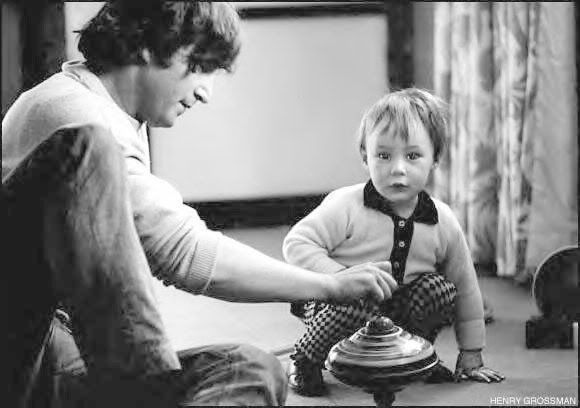
It was optimistic, a hopeful message for Julian: 'Come on, man, your parents got divorced. I know you're not happy, but you'll be OK.' I eventually changed 'Jools' to 'Jude'**

Changing Jools to Jude cos it 'sings' better is all well and good. But this is a song written to comfort a 5 year old boy about his parents divorce, yet it seems to consist of philosophical advice on getting a girlfriend - a flower-powered take on the 'love life advice' sub-genre that dates back to She Loves You.


There were clearly other biographical currents bubbling up into the song. Paul was in the no(wo)mansland between Jane Asher and Linda Eastman. John heard it as an endorsement for his relationship with Yoko, a thumbs up from Macca's subconscious. Both Beatles were caught between their commitment to making art with multiple (even unintended) meanings and their contempt for the public reading their own meanings into Beatles lyrics. John in particular felt embarrassed at doing exactly what he condemned in others

He said it was written about Julian … But I always heard it as a song to me. Now I'm sounding like one of those fans reading things into it... Think about it: Yoko had just come into the picture. He is saying. 'Hey, Jude'-- 'Hey, John.' Subconsciously, he was saying, 'Go ahead, leave me.' On a conscious level, he didn't want me to go ahead. The angel in him was saying, 'Bless you.' The devil in him didn't like it at all, because he didn't want to lose his partner***

The debate over open interpretation was thrown into sharp focus once Charles Manson got his hands on a copy of the White Album, read murderous things into the lyrics of Helter Skelter and Piggies, and put his crazy interpretations into action.

Advice on preschool love and loss? The Pre-Ballad Of John And Yoko? Or a Dear Jane letter, containing a deep and meaningless line about a parrot?**** No wonder Manson et al had a field day.

Lennon for what it's worth never changed his assessment, calling Hey Jude

“[Paul's] best song" and “a damn good set of lyrics” *****

So what do I know? Let's look at the good stuff.


A fine line between stupid and clever

For starters verse 4 is a mutated hybrid of verse 1 and 2. This makes it feel familiar but not totally predictable. As usual the song is full of parallel words and phrases (Ticket 24)

make it bad/better/you were made

let her into your heart/under your skin

let it out/in

don't make it bad/be afraid/let me down

remember to/the minute you let her into your heart

plays it cool/a little colder

carry the world upon your shoulders/movement you need is on your shoulder


Also McCartney manages to 'break' the rhyme scheme in the second bridge without making it feel wrong or awkward.

In the first bridge the rhyme scheme is

AAB - CCB (pain/refrain/shoulders – fool/cool/colder)

but the second bridge is

AAB – CCD (in/begin/perform with – you/do/shoulder).

Feels really jarring when you focus solely on the last words doesn't it? (Another case for not keeping a meaningless dummy lyric) but in the song it sounds fine. (Be honest. Have you ever noticed it before?). McCartney's masterstroke is that he breaks the rhyme using a word that rhymes with the first bridge, so it feels right even though it's totally 'wrong'.

We've encountered this technique before in The Long And Winding Road (and Ringo break a rhyme for a different reason in Octopus's Garden) so it's high time it got it's own ticket. Welcome Ticket 73.


But the crowning achievement is the way Paul uses internal rhymes to create a kind of odd-meter, seven line stanza that transforms the verse from this

Hey Jude, don't make it bad
Take a sad song and make it better
Remember, to let her under your skin
Then you'll begin to make it better

into this

A7 - Hey Jude, don't make it bad
A3 - Take a sad

B6 - song and make it better
B6 - Remember to let her

C4 - into your heart
C4 - Then you can start

B5 - to make it better

More amazingly he maintains this punishing rhyme scheme perfectly through the three remaining verses

Hey Jude, don't be afraid
You were made
to go out and get her
The minute you let her
under your skin
Then you begin
to make it better

Hey Jude, don't let me down
You have found
her, now go and get her
Remember to let her
into your heart
Then you can start
to make it better

And there's a few other internal rhymes scattered around. The first verse contains a bonus rhyme

Hey Jude, don't make
it bad, Take
a sad song...

Beautiful. And we're not done yet. There's a few more things to say about lyrics...

Footnotes

* Paul 1974  Beatles Songwriting And Recording Database
** Paul Anthology (p.297)
*** John in David Sheff: All We Are Saying
**** Paul called the line “a stupid expression; it sounds like a parrot" Anthology (p.297)
***** John 1972 interview and All We Are Saying Beatles Songwriting And Recording Database 


Links

Monday, 10 December 2012

10:11 I'm So Tired (pt.3)


12 Bar Snooze

One of the great mysteries to me about the Beatles evolution is how a band that cut their teeth playing 12 bar blues covers in Hamburg nightclubs could go on to pen so few 12 bar blues songs themselves. To be sure the influence survived in the bluesy vocal lines and inflections in melodies like From Me To You and She Loves You. But the 12 bars structure seems to be something they outgrew. Or did they? Because a surprising number of tracks that don't appear bluesy from Don't Bother Me to The Fool On The Hill are built on 12 bar sequences (ticket 35).

In I'm So Tired the chorus chord progression clearly owes a debt to the American south

A A A A
D D D D
E E A A

just switch the D's in bars 7 and 8 to A's and you have the most basic 12 bar you can have. But the AABBC rhyme scheme does a great job of disguise the origins.


On the verse

A G#7 D E
A F#m D E
A E+ F#m Dm Dm

we have 13 bars, but the Dm is really nothing more than the Lennon extension (ticket 52). John drags out the sequence merely to add “no no no” in precisely the way that John Lee Hooker or Robert Johnson might stretch a pattern to squeeze in one more fill or phrase.

In the verse, though the chords are a 106 miles from Chicago, the lyrical structure again reflects the blues.

Consider the stock lyrics scheme

“When you got the blues, you repeat the the opening line
I said, when you got the blues, you repeat the the opening line
Then sing something else, just make sure it rhymes”


essentially a three section structure with two parts the same (or similar) followed by one contrasting part. In I'm So Tired we have and 2 lines that start “I'm so tired...” sung over almost the same chord progression twice

A G#7  D E
A F#m D E

followed by a line that contrasts musically and lyrically -

  A                         E+            F#m           Dm
I wonder should I get up and fix myself a drink...

All in all a stellar example for ticket 35 - a non blues 12 bar structure.


Chords and Contrasts


While we're looking at that last line check out the chords. The song has only (!) three out of key chords (ticket 28) but each is an absolute gem. First the Dm in last two bar of the verse is the classic Beatles doo wop chord the minor 4 (iv) a trick so ubiquitous it's earned it's own ticket (ticket 8). Here instead of the doo wop approved progression IV iv I (D to Dm to A) we slam into it from a minor 6 (F#m to Dm to A) which is a progression we ran into last time in Bungalow Bill

He’s the E all-American G bullet-headed Am Saxon mother’s Fm son

Note: the final verse chord in both songs is a iv, both are Lennon songs recorded on the same day. Who says you can't recycle ideas?

You can hear this on She Loves You, You Won't See Me and I Will amongst others.

The other two chords, E augmented (E+) and G#7, both contain C natural which is the only out of key note that appears in the melody. The G#7 is the VII7 chord and is of interest because it's same striking chord Lennon used in Sexy Sadie

I'm So Tired - A G#7 D   E   -  I  VII7  IV  V
Sexy Sadie   -  G  F#7 Bm      -  I  VII7  vi

McCartney did something similar (using the minor version – vii7) on his most famous song

Yesterday - F Em7 A7 Dm - I vii7 III7 vi

Stuart Kidd and I used exactly the same G – F#7 Bm move on our song Sadie's Sister (hey, if you're gonna steal be shameless!) but this time the key is D major renedering the progression

Sadie's Sister - G F#7 Bm - IV III7 vi

which is similar to what Radiohead do in Karma Police

Lastly we have a lot of cool contrasts between sections (ticket 5). The verse has one chord per bar but the chorus spends a long time on each chords. Lyrically the verse states “I'm tired” but the chorus talks about why he's tired. And reflecting that distinction the rhythm of the verse melody is very dragged out with lots of melisma but the chorus is more rhythmic and bursting with nervous mental energy.

Monday, 21 June 2010

Blessed Are The Single-Taskers


On 15th Aug 1969, while the Woodstock festival was kicking off in Bethel, New York, George Martin & The Beatles were in London laying down the orchestral overdubs for five of the songs on Abbey Road . For once the Beatles weren’t at the centre of the musical universe. But more remarkable from a songwriter’s perspective this was one of the few times they worked on several songs at once.


Saving the world, one song at a time


Like every other songwriter on the planet Lennon & McCartney always had numerous ideas on the back burner but one thing they habitually did (in terms of recording) was work on every song to completion. They very rarely focused on more than one song at a time.

Just let that sink in for a moment.

Picture just about every band you know. They go into the studio to record an album. First they lay down all the drum tracks. With b-sides involved this may be up to 25 songs. And 25 bass tracks. And so on. Weeks may elapse between laying down each instrument. Once the initial scratch tracks are done the rest of the band may not even be present. And even at the point that the songs are tracked the vocal lines and lyrics may still be unwritten. That’s certainly the case with Aerosmith, Led Zeppelin, U2 and Metallica.

The Beatles however went in and hammered away at a song till it was finished and only when it was in the can did they move on to the next one. The only modern artist I know of with a similar way of working is Prince.

Ever wondered how the Beatles (and Prince) were able to handle such a wide range of styles convincingly?

Because this way of working allows you to totally submerge yourself in the song. It’s just too hard to switch gears between being children’s entertainers one minute (Yellow Submarine) and drug-fuelled visionaries (A Day In The Life) the next.

Rather than getting stuck in a “rhythm guitar overdub” frame of mind this approach allows you to get into a “song XYZ” frame of mind. After all, how unified do an album’s worth of bass lines need to be? Not as unified as all the elements of a song do.

Doing a complete song in a short space of time also gives you a much clearer sense of the song’s merits. How many rhythm tracks have been laboriously polished only to discover that, when the vocal track arrives at the 11th hour, the song sucks?

False Economy


So why don’t more people do it the Abbey Road way? Well, when it takes a whole day to mic up a drum kit, it makes financial sense to record as many drum tracks as you can in one go.

Here’s a bunch of observations on that.

This way of saving money leads to poorer songs. Poorer songs = lower sales. Lower sales = less money. So the strategy is “hey, if we spend less money, we’ll make less money!” Not a great idea!

Creating a perfect drum sound has become a quest for the holy grail requiring a mic for every piece of the kit, a channel for every mic & e.q. & outboard effects for every channel. No wonder it takes so long. Is the amount of time and money spent worth it?


There’s a stunning lack of unified drum sounds even on individual Beatles tracks. But be honest. Have you ever noticed the change in drum sounds on She Loves You  (1:23) and Strawberry Fields Forever (1:00) or the accidental phasing on From Me To You  (0:06)? Or is your focus on the song?

Maybe we would be less anal about drum sounds if we were trying to capture more of the bigger picture all at once. Is the kit fetish a symptom of engineers always having to work with vocal-less tracks. Who knows?

What’s best?


What’s best for the band and the song should never be overruled by what’s most convenient for the studio and the producer.What a band needs most is a large room with some separation, which is most like their normal playing environment.

In the 60’s Abbey Road was a combination of outdated gear and huge rooms that was pretty much at the Beatles’ disposal 24/7. By comparison many modern studios are overstocked broom closets too claustrophobic for any band bigger than the White Stripes.

Space matters more than equipment. Really.


Some Application


If your Abbey Road is a laptop and a few mics there’s little advantage doing any instrument wholesale anyway. So immerse yourself in the song, finish it and move on.

In a ‘real’ studio keep the time from the first count in to the final overdub as short as possible. Even if you go back later and remix or rerecord (as they did with Strawberry Fields, Ob-La-Di & Hold Me Tight) you’ve still wasted less time and focus. If one song at a time sounds too radical, try thinking of your album as a collection of 3 track EPs. Finish each EP totally before moving on.

Try to write something out of your genre. A kid’s song, a thrash metal song, a hymn, a comedy number, an R&B jam. Give yourself to it for a few days. Complete it, mix it and move on. Devoting yourself to a single (left field) project for a few days could produce amazing results and even refresh you as a songwriter.


More Be-atletudes


Blessed are the Co-writers 

Wednesday, 2 June 2010

The Minor 4 Chord (pt.4)


From the m2 to the m4

(Read part one here)

This a very Lennon change – he used the exact same progression three times to great effect, most famously in

Nowhere Man

Em Making all his Gm Nowhere plans for D nobody
(and all the other lines that end the verses)

(ii, iv, I)

It also crops up in the verses of

Across The Universe

Po- Em -ssessing and ca- Gm -ressing me. D Jai…
In- Em -citing and in- Gm -viting me. D Limitless…

(ii, iv, I)

and With The Beatles track

All I’ve Got to Do

F#m Call you on the phone
& you’ll come running home
Yeah
Am that’s all I E gotta do.

(ii, iv, I)


Other songs

The progression dates back to the first album where it made an appearance on Do You Want To Know A Secret, in the verse just after “Do you promise not to tell”

G#m Gm Woh F#m oh Am oh E Closer…

(iii, biii, ii, iv/bVI, I)

McCartney plays a C under the Am making it sound even more complex than it already is.

He covers his tracks in a similar way (on piano this time) on the intro to Honey Pie. Instead of playing Am - Cm - G (which would be Nowhere Man transposed) he plays Am/D - Cm – G.

Em She A6 was a Am/D working girl Cm north of England G way

(vi, II, ii/V, iv, I)

As well as appearing in the verse of You Won’t See Me the bridge has the following progression


Bm Time after Dm time you re- D dim fuse to even A listen

ii, iv, iv dim, I (key of A)

A final alteration comes from the chorus of She Loves You (also in the key of G) where, instead of approaching the iv (Cm) from the ‘in key’ Am he uses a major (A7).

She Em loves you yeah, yeah, yeah
She A7 loves you yeah, yeah, yeah
With a Cm love like that
You D7 know you should be G glad

(vi, II, iv, V, I)

Try using this chord pattern in your songwriting. here's the progression in some common keys (the last chord is the root). Keep 'em in your songwriting tool box...

Em - Gm - D
Bm - Dm - A
F#m - Am - E
Dm - Fm - C
Am - Cm - G


1: Introduction
2: Major 4 to minor 4
3: Minor 6 to minor 4
4: Minor 2 to minor 4
5: 1 to minor 4 

Thursday, 27 May 2010

The Band Who...Needed No Introduction


So here I am working my way through With The Beatles and I’m blown away all over again by the Beatles' economy when it comes to intros. Here’s a survey of what happens before the vocals come in.

2 songs have no intro whatsoever

It Won’t Be Long – (song starts with chorus vocals)
All My Loving - (song starts with verse vocals)

6 more tracks have only a single note before the vocals enter

She Loves You – ½ bar drum fill (0.5 sec)
I’ll Get You – one bass note
Please Mr Postman* – single hi-hat
All I’ve Got To Do – single free time guitar chord
Not A Second Time – single piano bass note
I Wanna Be Your Man – single guitar string bend

The rest have intros ranging between 1 and 17 seconds. 

5 of these (including the 3 longest) are cover versions*.

Hold Me Tight – band intro (1 sec)
Don’t Bother Me – guitar solo (4 sec)
Little Child – harmonica solo (6 sec)
I Want To Hold Your Hand – band intro (6 sec)
Devil In Her Heart* – guitar solo (6 sec)
Till There Was You* – guitar solo (7 sec)
This Boy – band intro (9 sec)
You Really Got A Hold On Me* – band intro (14 sec)
Money (That’s What I Want)* – band Intro (15 sec)
Roll Over Beethoven* – guitar solo (17 sec)

Author Jay Frank devotes a whole chapter in his FuturehitDNA book to explaining why intros got progressively longer after the 60s (longer intros suited radio ident jingles) and peaked in the early 90s when the rise of mp3s and the 'skip' function in streaming once again began to reward shorter intros.

Tuesday, 18 May 2010

The Minor 4 Chord (pt3)


The Beatles were masters of slipping chords that didn’t fit the key into their songs. Chord like the minor 4 (iv). Last time we were looking at progressions where they went from the major 4 (IV) to the minor 4 (iv) like this change from In My Life (the iv is Dm)

There are A places E I remember all my D life Dm though A some have changed

25 or 6 to 4


Now lets look at the second most common change – from the minor 6 to the minor 4 (vi to iv)


Ask Me Why (Verse) -  vi, iv, II7, V, I (Key of E)

That C#m I, I, I, I, I should Am never, never, never be F#7 blue B


She Loves You (verse) - I vi iv, V (in G)

She G loves you and you know that can’t be Em bad,
She Cm loves you & you know you should be D glad


Any Time At All (verse) -  I, iii/VII, vi, iv/bVI (in D)

D If you need some F#m/C# body to love,
Bm Just look into my Gm/Bb eyes


I Will (verse tag, as a weird passing chord) - I7, IV, V, vi, iv, I (in F)

F7 Sing it Bb loud so C7 I can Dm hear you Bbm F


The Continuing Story Of Bungalow Bill (verse) - III, V, vi, iv (in C)

He’s the E all-American G bullet-headed Am Saxon mother’s Fm son


The Night Before (verse) - vi, iv, vi, iv, I (in D)

Bm Now today I Gm find,
Bm You have changed your Gm mind D treat me…


The iv resolves to the I chord in every song except Ask Me Why & You Won't See Me..


For a modern example check out If It Kills Me by Jason Mraz. The Chorus progression (in D) is I, iii, vi, iv

D Well all I really want to do is
F#m love you, a kind much closer than
Bm friends use, but I still can't say it after
Gm all we've been through


Once again your homework is simple. Try to get this chord progression into one of your songs!

Friday, 9 April 2010

2:3 She Loves You (pt.3)


‘That’ Chord

The last chord is legendary. It’s a G major but George Harrison is singing an E turning it into G6. George Martin didn’t like it at first saying it sounded like the Andrews Sisters. But they tried it with and without and all agreed it sounded better in.

But the 6th doesn’t just make an appearance on the final chord but also in the line “with a love like that you really” which is an A sung over Cm. No one plays a 6th chord anywhere in the song but the intervals are so strongly placed that they affect the whole tonality of the song.

This is part of Lennon’s spicy vocal melody bag of tricks and his way of making simple chord progressions sound more complicated than they are.

Intros, Outro & Edits

Check out the false ending that slows down and sounds like it’s coming into a gentle landing before the final round of “yeah, yeah, yeahs.” Wouldn’t that sound good in one of your songs?

How long do your songs take to get to the hook? The instrumental intro here is a drum fill lasting 0.5 of a second! Beat that!

Finally the more I listen, the more I can spot the edits. At this stage rather than punching in overdubs complete takes were glued together. I’m sure I can hear one at 1:22.

OK. We’re done with this bad boy. Our next ‘music’ posts will be more of an overview of With The Beatles and related singles.

Saturday, 3 April 2010

2.2 She Loves You pt 2


We covered the chorus of this song in a previous post.

Break New Ground With Every Song

Very early in their careers the Beatles are consciously avoiding repeating themselves. The Verse/Chorus format is a new one for them and, after a run of ‘first person songs’ addressed to their fans they write one about the ‘third person’. So it’s important to keep looking at your recent songs and trying something different. You don’t arrive at Sgt Pepper levels of innovation unless you make it a habit to constantly break new ground in small ways.

Here’s another small example. Trying to play the chorus’s “yeah, yeah, yeah” vocal hook on guitar pushes Harrison into new chord shapes.

They’re played (from D to top E) 5003, 4002, 2000.

The last one is a straight Em, but have you ever played a pattern like that in any other song? Me neither.

Original. But Not Too Original


The chord structure in the verse & pre chorus is simple but effective. They almost go for the traditional doo-wop chord sequence of

G Em C D (I vi IV V)

But they change it just enough to keep it interesting

In the verse it's
G Em Bm D (I vi iii V)

And the pre chorus is
G Em Cm D (I vi iv V)

This is a pretty simple ‘trick’ – anyone can throw in a different chord or two but the Beatles are great at doing as much as possible with very simple patterns. I’m sure it’s part of their memorability – giving you something you’ve heard a hundred times before with a one little twist.

But using the same pattern twice and only changing one chord? Isn’t that too boring? Here’s another trick. Each chord in the verse lasts for one bar. Each chord in the pre chorus lasts for two.

Same yet different. Haven’t I heard that before? No, not quite.

More from this classic song next time.


Friday, 19 March 2010

Chapter 2.1 With the Beatles - She Loves You (The Chorus)


She Loves You is such a masterclass in hooky economical writing that I’m going to devote this whole post just to analysing the chorus.

First, simply having a chorus shows Lennon & McCartney’s development as writers. It’s their first song with a really clear verse/chorus structure. Only Please Please Me & Ask Me Why come anywhere near. Early Beatles songs are dominated by the verse/bridge format, with the title usually coming at the beginning or end of the verse.

A massive factoring the song’s hookiness is that once again the Intro and Coda (though different from each other) are both fashioned from material in the chorus.

Chords


Chorus:
Em Em A7 A7
Cm D7  G   G 

Intro:
Em Em A7 A7
C   C   G   G

Coda:

G G Em Em
C C G   G   

Starting on the vi (Em), then taking in a few non-diatonic chords II7 (A7) & iv (Cm) makes it feel like a bit of a mystery tour (!) till the relief of finally arriving at the I (G).(Ticket 6)

Lyrics


The chorus consist of a two part hook  
She loves you / yeah yeah yeah
and a pay off  
with a love like that…
 The intro just repeats the hook, the second chorus repeats the pay off and the coda uses the 2nd part of the hook.

But that's not all. Lennon & McCartney squeeze even more hooks in by having both the pre chorus and the chorus bookend with the lyrics She Loves You and you know you should be glad.

Lastly notice how well the wide open sound of ‘yeah’ suits the tune as opposed to the ‘yes’ suggested by Paul’s Dad. And if that’s too silly try replacing the yeah’s with a backing vocal echo of “she --- loves --- you.” It works on a basic level but doesn’t come close to the insistence of those iconic affirmatives (he said, coming over all William Mann!)

Melody


The highest part of the melody (barring the trademark oooh’s) is the first bit of the chorus she loves you yeah . This makes the hook stand out all the more.

The vocals are in unison on She loves you, yeah, yeah , yeah and the part is very dependant on chord tones but on the pay off Lennon hangs on a non chord tone (A - the 6th of the Cm) and brings in his trade mark b3 (Bb) which is a bitter tasting clash with the D7 chord.(see Ticket 22).

I find Lennon’s courage in ignoring chord tones remarkable, he seems to have no sense of shame. He milks the same interval over the same chord in the pre chorus for even longer on she loves you and you know you should be glad. (Ticket 13)

The three different melodic parts to the chorus are liberally scattered throughout the song. Though you only hear the full chorus twice you hear the
She loves you 10x (in the intro, pre chorus and chorus)
yeah yeah yeah appears 13x in the intro, chorus and coda as well as being played instrumentally in the pre chorus and coda.
and the with a love like that… pay off appears 3x and also has a strong echo lyrically and melodically 2x in the pre chorus.

Tickets To Write


T26 Unlike Lennon & McCartney, using a verse/chorus structure is nothing remarkable nowadays. So let’s turn the tables. Write a song with a Verse/Bridge structure. Hey Jude, Lady Madonna and The Long And Winding Road are great later example.

T4 Instead of writing a new intro and outro, craft them from parts of your chorus. Try and sneak bits of your chorus melody into your verse or pre chorus (like the guitar fill playing the ‘yeah yeah yeah’ part in the pre chorus)

T27 Experiment with placing your key lyric on the highest point of the melody. Does this make it stand out more effectively?